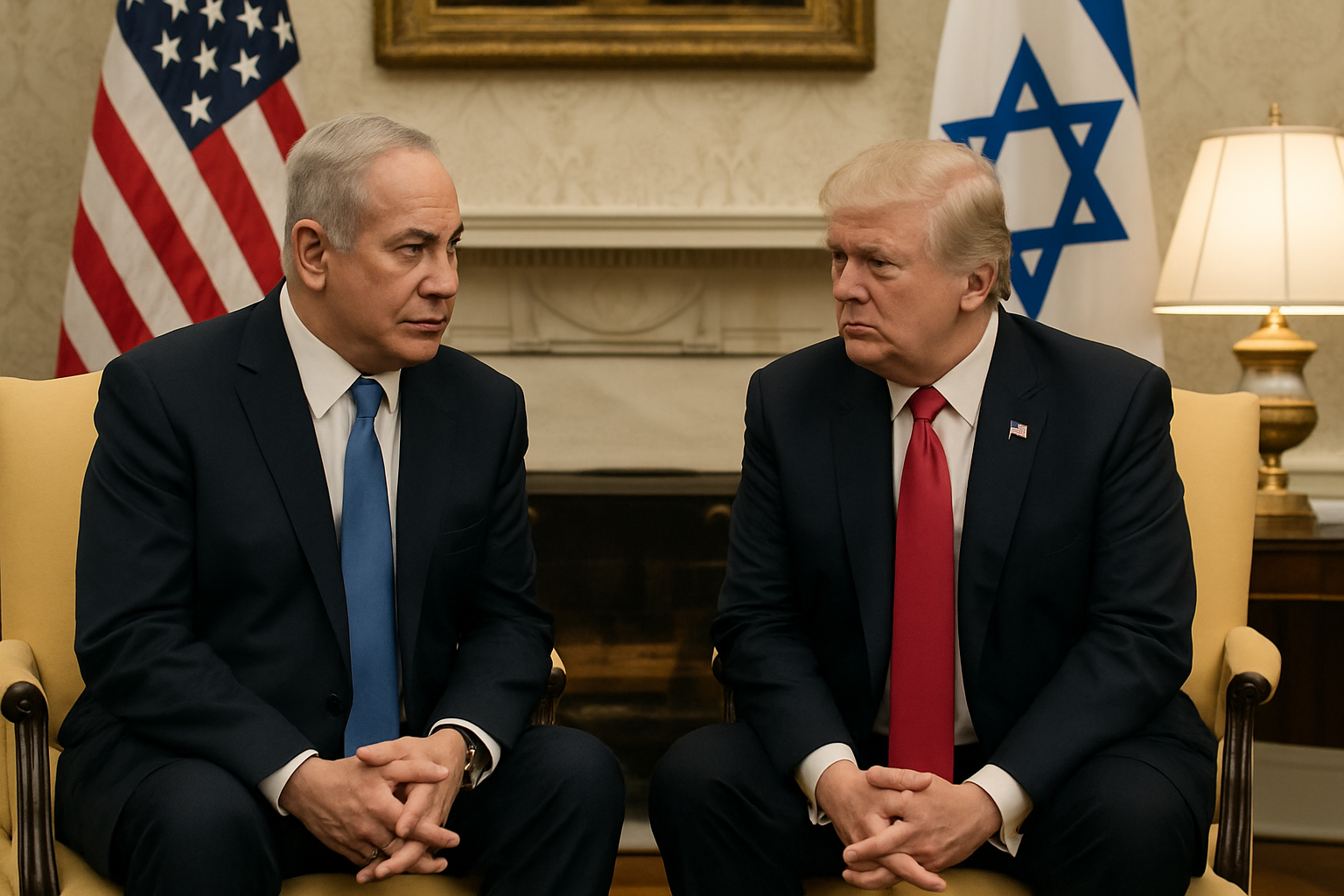
Israeli Prime Minister Benjamin Netanyahu arrived in Washington for his seventh meeting with President Donald Trump since the latter's return to office, with Iran's nuclear program and regional security strategy dominating the agenda as both nations coordinate their approach to ongoing diplomatic negotiations in Oman.
The White House meeting, scheduled for Wednesday, comes at a critical juncture in Middle East diplomacy, occurring just days after US-Iran nuclear talks in Muscat concluded with both sides agreeing to continue negotiations despite fundamental disagreements over scope and substance.
Israeli Security Priorities Take Center Stage
Netanyahu is expected to press Trump to expand ongoing US talks with Iran beyond nuclear issues to include curbs on Tehran's ballistic missile arsenal and support for regional proxy groups, according to diplomatic sources. The Israeli position maintains that any agreement addressing only nuclear concerns while leaving missile and proxy threats unaddressed would be insufficient for Israel's existential security needs.
"All negotiations must include limiting ballistic missiles, ending support for Iranian axis," Netanyahu's office emphasized ahead of the meeting, establishing clear Israeli red lines for any comprehensive regional security framework.
The timing is particularly significant as Iran continues enriching uranium at 60% purity—far exceeding the 3.67% limit established under the 2015 Joint Comprehensive Plan of Action (JCPOA) and approaching the 90% threshold required for weapons-grade material.
Diplomatic Framework Under Pressure
The Netanyahu-Trump coordination meeting follows last week's nuclear talks in Oman, where Iranian Foreign Minister Abbas Araghchi and US Special Envoy Steve Witkoff established a framework for continued negotiations despite maintaining opposing positions on key issues.
Iran has explicitly excluded ballistic missiles and regional proxy activities as "red lines" from nuclear-only discussions, while US Secretary of State Marco Rubio insists that any comprehensive agreement must address Iran's missile program, support for armed groups, and human rights violations.
"This is our seventh meeting with the President since his return to office nearly 13 months ago, and we are looking to influence the next round of discussions with Iran following the nuclear negotiations held in Oman."
— Israeli diplomatic source
Military Tensions Complicate Diplomatic Efforts
The diplomatic engagement occurs against a backdrop of escalating military tensions in the region. Recent incidents include a US F-35C fighter jet from the USS Abraham Lincoln shooting down an Iranian Shahed-139 drone that aggressively approached the aircraft carrier in the Arabian Sea, and Iranian Revolutionary Guard Corps vessels harassing US-flagged tankers in the Strait of Hormuz.
These incidents, which caused oil prices to rise more than $1 per barrel, underscore the delicate balance between diplomatic engagement and military deterrence that both the US and Israel are attempting to maintain.
Trump has repeatedly threatened to carry out strikes on Iran if an agreement is not reached, while Tehran has responded with vows to retaliate, fueling fears of a wider regional conflict that could destabilize the Persian Gulf, through which 40% of global oil transit flows.
Regional Coalition Building Momentum
Despite the tensions, an unprecedented regional coalition has emerged supporting the diplomatic process. Saudi Arabia, the United Arab Emirates, Qatar, and Egypt have all backed the negotiation framework—representing a remarkable consensus among traditionally competing Middle Eastern powers united in their desire to prevent military confrontation.
Oman's role as neutral mediator has proved crucial, leveraging its historical position from the original 2015 JCPOA negotiations to facilitate structured dialogue between the US and Iran despite a significant trust deficit built up over years of escalating tensions.
Domestic Pressures Influence Negotiations
Both Iran and the United States face considerable domestic pressures affecting their negotiating positions. Iran confronts severe economic sanctions and ongoing civil unrest, with over 42,000 protest-related arrests documented since the 2022 uprising, creating regime survival pressure for sanctions relief.
The Trump administration, meanwhile, must balance engagement efforts against pressure from Republican hawks who view any diplomatic outreach to Iran as appeasement, while simultaneously seeking a foreign policy victory that demonstrates effective crisis management.
Technical and Strategic Challenges
Intelligence reports suggest Iran may be considering significant concessions, including a potential three-year uranium enrichment halt and transfer of existing stockpiles to Russia. However, Iran's advanced centrifuge technology and expanded nuclear infrastructure would require unprecedented verification mechanisms far exceeding the complexity of the original JCPOA framework.
The verification challenge is compounded by Iran's current enrichment capabilities at 60% purity, which represents a significant advancement since the 2018 JCPOA collapse and creates technical hurdles for any comprehensive monitoring regime.
Broader International Context
The Netanyahu-Trump coordination occurs amid a broader nuclear governance crisis. The New START treaty between the United States and Russia expired February 5, marking the first time in over 50 years without nuclear arms control constraints between the superpowers. This development, combined with China's expanding nuclear arsenal, creates urgency around preventing Iranian weapons development within a deteriorating global arms control architecture.
The outcome of these negotiations carries implications far beyond the immediate US-Iran relationship, potentially setting precedents for diplomatic engagement with nuclear threshold states and influencing broader Middle East stability at a time when multiple regional conflicts test traditional diplomatic frameworks.
Stakes for Regional Security
The success or failure of current diplomatic efforts will likely determine whether the region moves toward comprehensive conflict resolution or accelerated military solutions. Israeli officials view incomplete nuclear agreements that fail to address missile and proxy threats as potentially more dangerous than the current state of managed tensions.
As Netanyahu and Trump coordinate their approach, the international community watches for signs of innovative diplomatic solutions that could bridge decade-old challenges or evidence that the current talks represent another false start in the long history of Middle East nuclear diplomacy.
The coming weeks will prove decisive in determining whether sustained diplomatic engagement can produce breakthrough agreements or whether the region will see an acceleration toward military confrontation with global energy security and nuclear governance implications that extend far beyond the immediate participants.