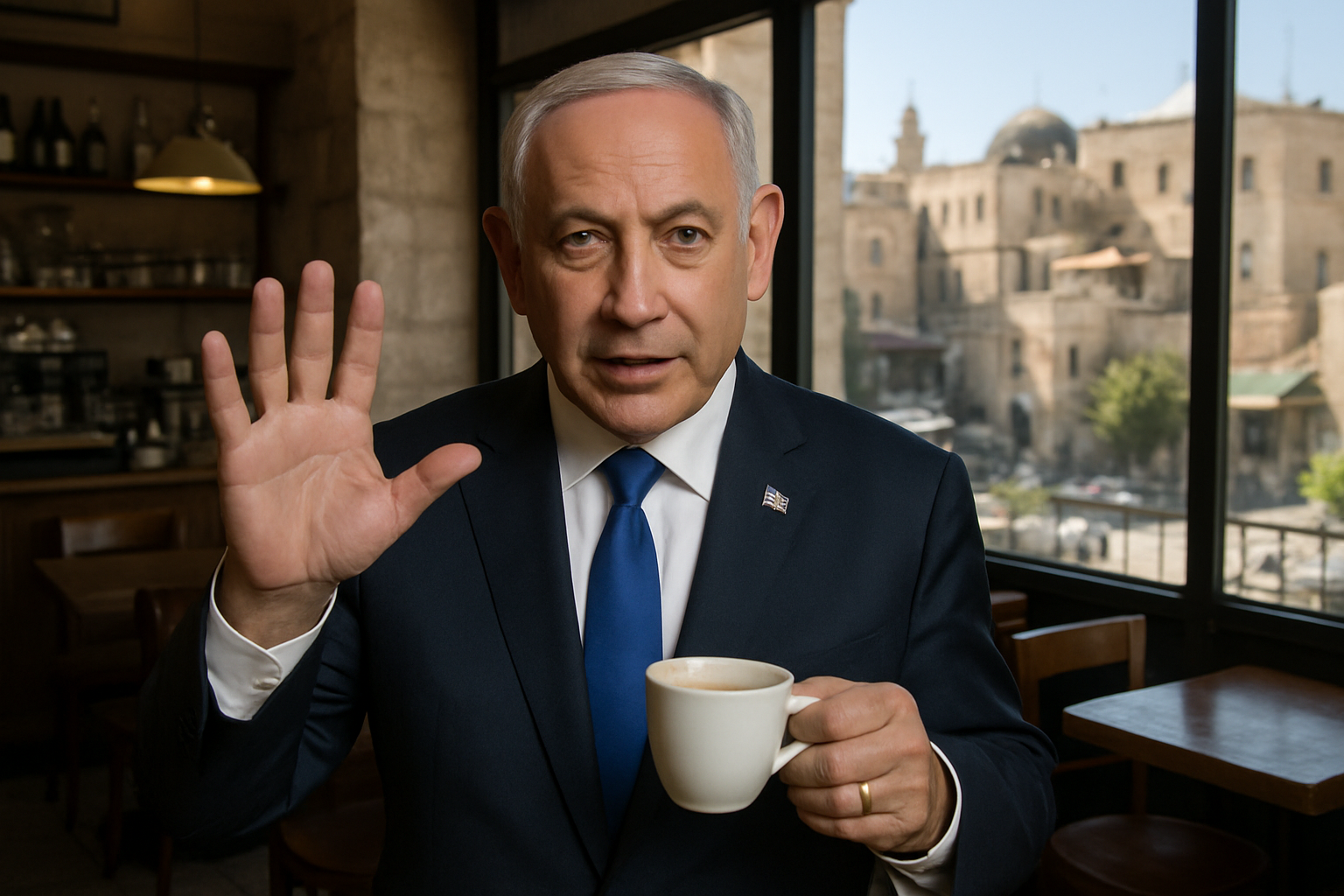
Israeli Prime Minister Benjamin Netanyahu posted a video of himself getting coffee on Sunday in what appeared to be a direct response to online rumors claiming he had died, marking the latest episode in an escalating information warfare campaign during the ongoing Middle East crisis.
The video, posted on X (formerly Twitter), showed Netanyahu holding up his left hand while gripping a coffee cup in his right, effectively countering specific claims that circulated on social media and Iranian state media. The Prime Minister's office had previously debunked the death rumors through official channels, but Netanyahu's personal video response represented a more direct engagement with the disinformation campaign.
Context of Disinformation Campaign
The death rumors emerged amid the broader Middle East crisis that began with "Operation Epic Fury" on March 1, 2026 - the largest US-Israeli coordinated military operation since the 2003 Iraq invasion. The operation resulted in the confirmed death of Iran's Supreme Leader Ali Khamenei and triggered massive Iranian retaliation through "Operation True Promise 4," creating an information environment ripe for false claims and conspiracy theories.
According to memory records from Planet News coverage, similar death rumors and disinformation campaigns have plagued high-profile political figures during periods of heightened regional tensions. The sophisticated nature of these campaigns often includes AI-generated content, manipulated imagery, and coordinated social media amplification designed to create confusion and undermine public confidence.
The Video Response Strategy
Netanyahu's video response demonstrated several strategic elements that media analysts noted as effective counter-disinformation tactics. By showing himself in a recognizable Jerusalem café setting, ordering coffee, and using what sources described as Hebrew wordplay referencing being "dead crazy for coffee," the Prime Minister employed humor to mock the conspiracy theories while providing visual proof of life.
The video specifically addressed claims that had circulated about Netanyahu having "six fingers" in previous appearances, suggesting some conspiracy theorists had questioned whether earlier videos were AI-generated deepfakes. By clearly displaying his left hand with five normal fingers, Netanyahu directly countered these specific allegations.
"They say I am what?"
— Benjamin Netanyahu, Video Caption
Regional Information Warfare Context
The death rumors targeting Netanyahu occurred within a broader pattern of information warfare that has characterized the current Middle East crisis. Iranian media outlets and social platforms have been involved in spreading various false claims targeting Israeli leadership during the ongoing "Operation True Promise 4" retaliation campaign.
This sophisticated disinformation environment has included concerns about AI-generated deepfakes, health speculation, and conspiracy theories targeting political figures across the region. The current crisis has seen unprecedented levels of false information circulating on social media platforms, requiring rapid response strategies from government officials.
Intelligence sources have noted that information warfare has become a critical component of modern conflicts, with state and non-state actors using social media platforms to spread confusion, undermine enemy morale, and shape public opinion both domestically and internationally.
Verification Challenges
Reuters verified the authenticity of Netanyahu's café video through multiple methods, including matching the interior design of the establishment and confirming the date through the café's own social media posts. The verification process highlighted the challenges news organizations face in the current information environment, where sophisticated AI tools can create convincing fake content within seconds.
The video featured what appeared to be a staged conversation with Netanyahu's aide, who asked about the rumors circulating online. This interaction provided additional context for viewers while maintaining the informal, conversational tone that made the video effective as a counter-disinformation tool.
International Media Coverage
The Netanyahu video gained significant international media attention, with coverage extending from Australian outlets like 9News to various European media organizations and Middle Eastern sources. The widespread coverage demonstrated both the global interest in the Middle East crisis and the effectiveness of Netanyahu's direct social media strategy in capturing international attention.
Media analysts noted that the video represented a sophisticated use of social media to counter false information, showing how political leaders can effectively engage with conspiracy theories through direct, humorous responses rather than formal denials that often lack the same viral potential.
Broader Implications for Political Communication
Netanyahu's video response has been viewed by communication experts as a template for how political leaders might address conspiracy theories and false information in the modern media landscape. The approach demonstrated the effectiveness of rapid, direct engagement through social media platforms rather than relying solely on official statements or traditional media corrections.
The incident also highlighted the challenges political leaders face in an era where deepfake technology and AI-generated content can create convincing false narratives within minutes. The need for immediate, verifiable responses to false claims has become a crucial component of crisis communication strategies.
Template for Crisis Communication
According to analysis from international media experts, Netanyahu's approach provided several lessons for addressing disinformation campaigns. The use of humor helped deflect the seriousness of the false claims while making the response more shareable on social media. The specific visual elements directly countered the particular allegations, rather than offering general denials.
The timing of the response - posted on a Sunday when social media engagement typically peaks - also demonstrated strategic thinking about maximizing reach and impact. The informal setting of a café helped humanize the response while providing a recognizable, verifiable location.
Regional Security Implications
The death rumors and Netanyahu's response occurred during one of the most dangerous periods in Middle Eastern politics since the Cold War ended. With ongoing military operations, global aviation disruptions affecting 18,000+ flights, and oil prices surging past $80 per barrel, the information environment has become increasingly critical for maintaining both domestic and international confidence.
Security analysts noted that disinformation campaigns targeting key leaders during active military operations can have strategic implications beyond simple propaganda, potentially affecting decision-making processes, alliance relationships, and public support for ongoing operations.
The incident demonstrated the intersection of traditional military conflict with modern information warfare, where social media platforms have become battlegrounds for competing narratives about the crisis and its key figures.
Looking Forward
As the Middle East crisis continues with no clear resolution in sight, the Netanyahu video response may establish precedents for how political leaders address false information during active conflicts. The rapid spread of disinformation through social media platforms requires equally rapid and effective counter-responses to maintain accurate public understanding of ongoing events.
The effectiveness of Netanyahu's approach in generating positive international media coverage while directly countering false claims suggests that similar strategies may be adopted by other political leaders facing comparable disinformation challenges. The integration of humor, visual proof, and strategic timing created a template that appears adaptable to various contexts and false claims.
As information warfare continues to evolve alongside traditional military conflicts, the ability of political leaders to effectively engage with false narratives through social media platforms may become an increasingly important component of overall crisis management and national security strategies.