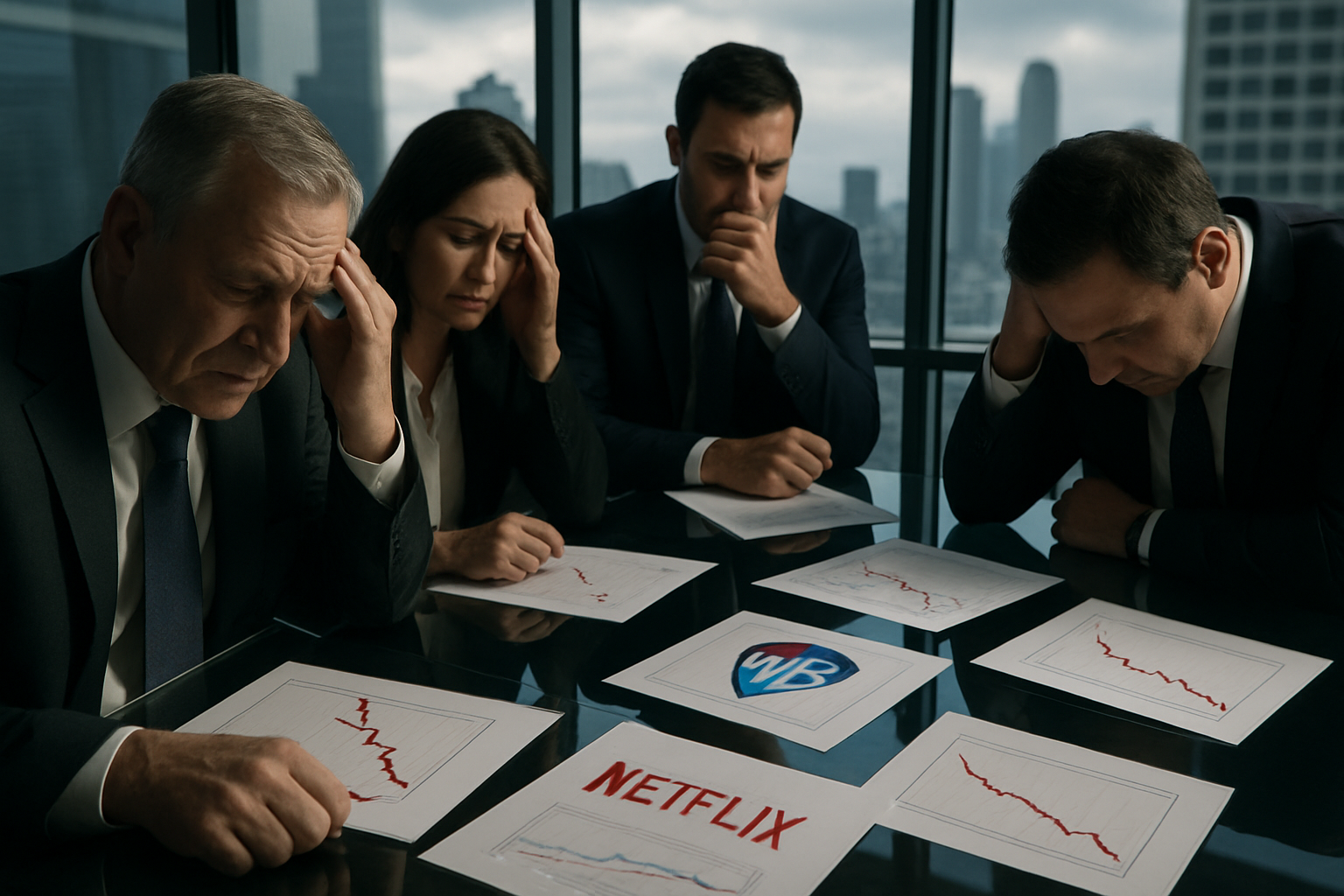
Netflix announced Thursday it would not raise its takeover offer for Warner Bros Discovery, effectively abandoning its pursuit of the media giant after Paramount Skydance's rival bid was deemed "superior" by the Warner Bros board.
The streaming giant's co-CEOs Ted Sarandos and Greg Peters said they were "declining to match" Paramount Skydance's latest offer of $31 per share, stating that the deal was no longer financially attractive. The decision marks a dramatic end to what had become one of the most closely watched corporate takeover battles in Hollywood history.
The Bidding War Ends
Warner Bros Discovery's board declared Paramount Skydance's enhanced proposal a "Superior Proposal" under the terms of its existing merger agreement with Netflix, which had been in place since December 2025. The new offer represents an increase from Paramount's previous $30 per share bid, valuing the entire transaction at approximately $77.9 billion.
Netflix had originally struck an $83 billion deal with Warner Bros Discovery for its streaming services, studios, and intellectual property assets. However, the emergence of Paramount's competing bid for the entire company created a more attractive proposition for Warner Bros shareholders.
"The deal is no longer financially attractive after Paramount Skydance revised its offer for the coveted Hollywood studio to a $31-a-share offer."
— Netflix Statement, February 26, 2026
Strategic Implications for the Streaming Wars
Netflix's withdrawal represents a significant strategic shift in the ongoing consolidation of the entertainment industry. The streaming pioneer had viewed the Warner Bros Discovery acquisition as crucial for strengthening its content library and production capabilities, particularly gaining access to HBO Max's premium content and Warner Bros' extensive film studio operations.
The failed bid leaves Netflix to compete in an increasingly crowded streaming landscape without the additional content firepower that Warner Bros Discovery would have provided. The company now faces intensified competition from Disney+, Amazon Prime Video, and potentially a strengthened Paramount+ backed by Warner Bros Discovery's assets.
Content Library at Stake
The acquisition would have given Netflix control over some of the most valuable entertainment properties in Hollywood, including HBO's prestige programming, CNN's news operations, the Discovery Channel's factual content, and Warner Bros' vast film library spanning decades of blockbuster movies.
Industry analysts had viewed the deal as Netflix's attempt to secure long-term content advantages in a market where streaming services are increasingly investing billions in original programming and exclusive content rights.
Paramount's Strategic Victory
Paramount Skydance's successful counter-bid positions the company to create a formidable entertainment conglomerate combining Paramount's production capabilities with Warner Bros Discovery's extensive content library and distribution networks. The merged entity would compete directly with Disney, Netflix, and other major media players.
David Ellison's Skydance Media, in partnership with Paramount, has successfully outmaneuvered Netflix in what many consider the most significant media consolidation opportunity in recent years. The victory demonstrates the continued appetite for traditional media companies to consolidate rather than be acquired by purely streaming-focused platforms.
Regulatory and Financial Considerations
The transaction will now face comprehensive regulatory scrutiny from antitrust authorities, including the Federal Trade Commission in the United States and European regulatory bodies. Media consolidation of this scale typically requires extensive review to ensure competitive market conditions are maintained.
The all-cash nature of Paramount's offer provides certainty for Warner Bros Discovery shareholders, contrasting with some previous media deals that involved complex stock exchanges or financing structures. This financing approach likely contributed to the board's determination that Paramount's proposal was superior.
International Market Impact
The failed Netflix bid and Paramount's success will have significant implications for international streaming markets. Netflix's global expansion strategy depended partly on securing premium content libraries to compete with local and regional competitors worldwide.
Without Warner Bros Discovery's international content and distribution capabilities, Netflix must rely more heavily on its original programming strategy and international partnerships to maintain its competitive position in key markets.
What's Next for Netflix
Netflix's withdrawal from the bidding war forces the company to pursue alternative strategies for content acquisition and competitive positioning. The streaming giant has been investing heavily in original programming across multiple genres and languages, but losing access to Warner Bros Discovery's established content library represents a significant strategic setback.
The company's leadership emphasized that the decision was based on financial discipline rather than strategic retreat, suggesting that Netflix remains committed to growth through acquisition when opportunities align with its valuation criteria.
Industry Transformation Continues
The conclusion of this takeover battle represents another chapter in the ongoing transformation of the entertainment industry, where traditional media companies, streaming platforms, and technology giants continue to reshape competitive dynamics through mergers and acquisitions.
The success of Paramount's bid over Netflix's offer demonstrates that traditional media consolidation remains viable even in an era dominated by technology-driven streaming platforms. This outcome may encourage other traditional media companies to pursue similar consolidation strategies rather than selling to streaming-native competitors.
As the entertainment industry continues evolving, the Warner Bros Discovery acquisition by Paramount establishes new precedents for how content creation, distribution, and platform competition will develop in the coming years. The deal's completion will create a entertainment powerhouse capable of competing with the largest media conglomerates while maintaining traditional studio capabilities alongside modern streaming distribution.