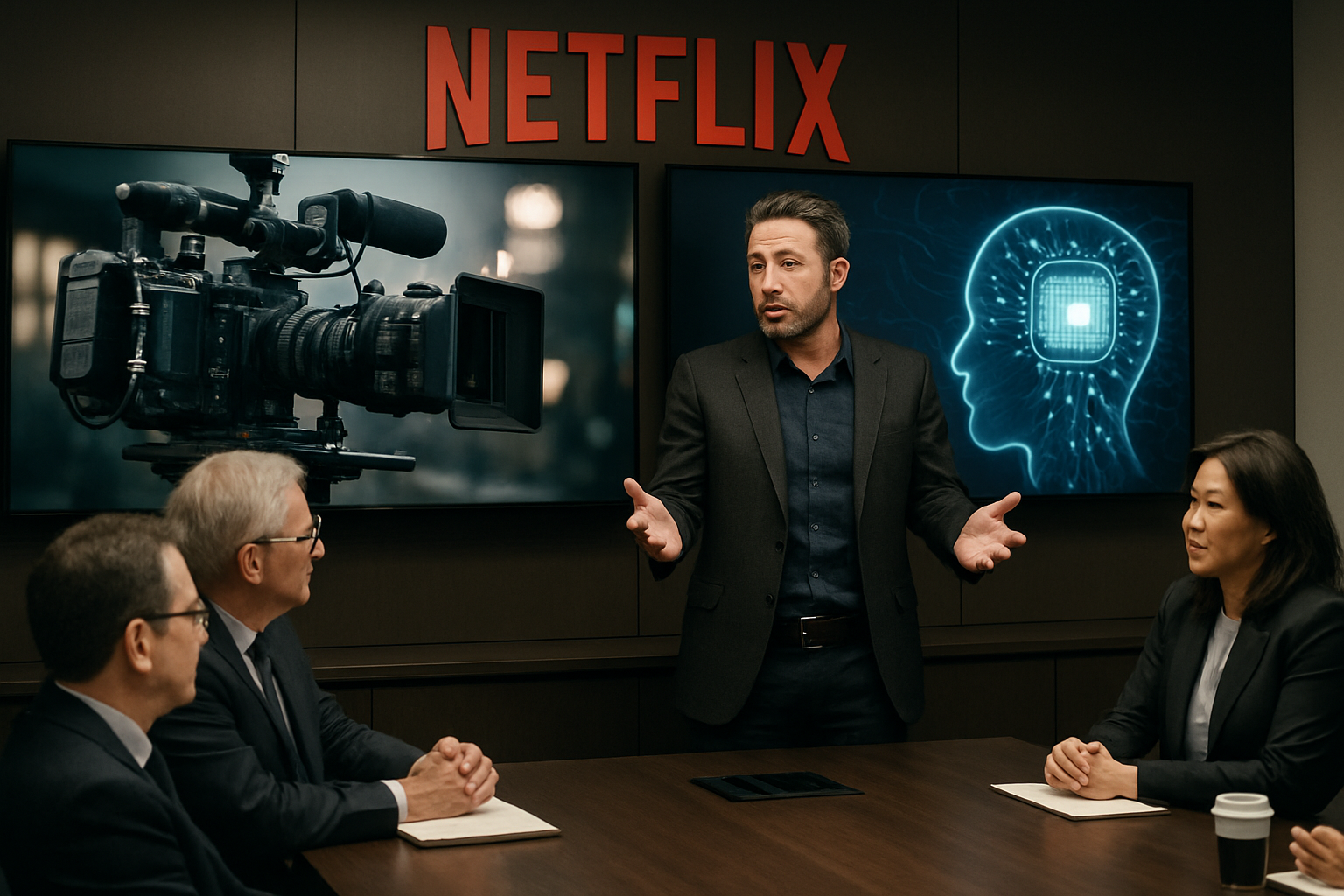
Netflix is pivoting toward strategic acquisitions and content expansion following its February withdrawal from the Warner Bros Discovery bidding war, with the streaming giant acquiring Ben Affleck's AI film technology company while simultaneously adding diverse action content to its global platform.
The moves represent a significant strategic shift for the world's leading streaming platform, which abandoned its $83 billion pursuit of Warner Bros Discovery after Paramount Skydance raised its competing bid to an "irrational" $111 billion in late February 2026. Co-CEOs Ted Sarandos and Greg Peters described the enhanced Warner Bros offer as "no longer financially attractive," forcing Netflix to pivot toward alternative growth strategies.
Ben Affleck AI Acquisition Signals Tech Focus
Netflix's acquisition of Ben Affleck's artificial intelligence film technology firm, first reported by Channel News Asia on March 6, 2026, demonstrates the platform's renewed emphasis on technological innovation following its strategic withdrawal from traditional content library consolidation. The deal positions Netflix at the forefront of AI-enhanced film production during what industry analysts describe as the "2026 AI Revolution in Cinema."
The timing proves particularly strategic as Hollywood faces unprecedented disruption from AI-generated content. ByteDance's Seedance 2.0 system has created cinema-quality videos from text prompts, while Disney and Paramount have issued copyright warnings about AI-generated content using unauthorized intellectual property. Netflix's acquisition of Affleck's technology positions the platform to compete with emerging AI capabilities while maintaining control over the creative process.
Content Diversification Through Action Programming
Simultaneously, Netflix is expanding its action content portfolio with Spanish-language productions targeting Latin American and global audiences. "Máquina de guerra" (War Machine), starring Alan Ritchson, premiered March 6, 2026, featuring a combat engineer leading his unit against an unstoppable "war machine" during U.S. Army selection trials.
The film represents Netflix's continued investment in high-production-value action content designed to compete with traditional Hollywood studios. Set during military training scenarios, the production combines practical effects with sophisticated storytelling, appealing to international audiences seeking authentic military action narratives.
Additionally, Netflix is positioning for anime content expansion with the anticipated streaming release of "Demon Slayer: Infinity Castle." The anime film, which won significant recognition from Japan's Academy Awards, is transitioning from theatrical release to streaming platforms, with Netflix positioned as a potential distributor for global audiences.
Strategic Response to Industry Consolidation
Netflix's current strategy emerges from the broader entertainment industry consolidation that culminated in Paramount's successful $111 billion acquisition of Warner Bros Discovery. The historic merger created one of the largest entertainment conglomerates in history, combining Paramount film studios with Warner Bros' extensive content library including HBO Max, CNN, and Discovery Channel assets.
"The deal no longer made financial sense at the levels required to compete with Paramount's enhanced offer. We're focusing on strategies that provide better long-term value for shareholders and subscribers."
— Netflix Co-CEO Ted Sarandos, February 2026
The Warner Bros withdrawal forced Netflix to rely more heavily on original programming strategy versus content library acquisition, a shift that industry analysts suggest may prove beneficial given the platform's established strengths in content creation and global distribution.
Technology Integration and AI Innovation
The Affleck acquisition arrives during a critical period for AI integration in entertainment. Netflix has witnessed firsthand the challenges posed by AI-generated content, including ongoing legal disputes with TikTok over unauthorized AI-created videos using Netflix properties like "Stranger Things."
Industry experts suggest Netflix's acquisition strategy focuses on controlling AI tools rather than being disrupted by them. The Affleck technology could provide Netflix with proprietary capabilities for enhanced pre-production, filming efficiency, and post-production workflows while maintaining creative control over the final product.
The move aligns with Netflix's broader technology investments, including algorithmic content recommendations and international content localization. By acquiring AI film technology, Netflix positions itself to compete with emerging platforms while preserving the human creativity that defines compelling storytelling.
Global Content Strategy Evolution
Netflix's content additions reflect its sophisticated understanding of global audience preferences. "Máquina de guerra" targets Spanish-speaking markets while appealing to international action audiences, demonstrating the platform's ability to create culturally specific content with universal appeal.
The strategy builds on Netflix's successful international content expansion, including Korean productions like those from BLACKPINK members and Latin American series that have achieved global success. By combining local authenticity with high production values, Netflix differentiates itself from competitors focusing purely on content aggregation.
The anticipated "Demon Slayer" acquisition would further strengthen Netflix's anime portfolio, capitalizing on the growing global appetite for Japanese animation content. The film's transition from theatrical to streaming represents the evolving distribution landscape where streaming platforms increasingly serve as primary content destinations.
Market Position and Future Outlook
Despite the Warner Bros setback, Netflix maintains its position as the world's dominant streaming platform with over 260 million global subscribers. The company's pivot toward technology acquisition and diversified content creation may prove more sustainable than pursuing expensive media consolidation deals.
Industry analysts note that Netflix's approach contrasts sharply with traditional media companies pursuing scale through merger activity. Instead, Netflix is betting on technological innovation and creative excellence to maintain competitive advantages in the increasingly crowded streaming marketplace.
The strategy faces challenges from the global semiconductor crisis, which has increased technology costs by 20-30% and may affect Netflix's ability to implement advanced AI capabilities across its platform. However, the company's focus on memory-efficient algorithms and strategic partnerships positions it well to navigate infrastructure constraints.
Netflix's dual approach—acquiring cutting-edge film technology while expanding diverse content offerings—signals the platform's evolution beyond simple content aggregation toward becoming an integrated technology and entertainment company. This transformation may prove more valuable than acquiring traditional media assets, particularly as the entertainment industry navigates the ongoing digital revolution.
The success of this strategy will largely depend on Netflix's ability to integrate Affleck's AI technology effectively while maintaining the creative quality that has driven its global success. As the streaming wars intensify, Netflix's focus on innovation rather than consolidation may ultimately prove the more sustainable path to long-term growth and market leadership.