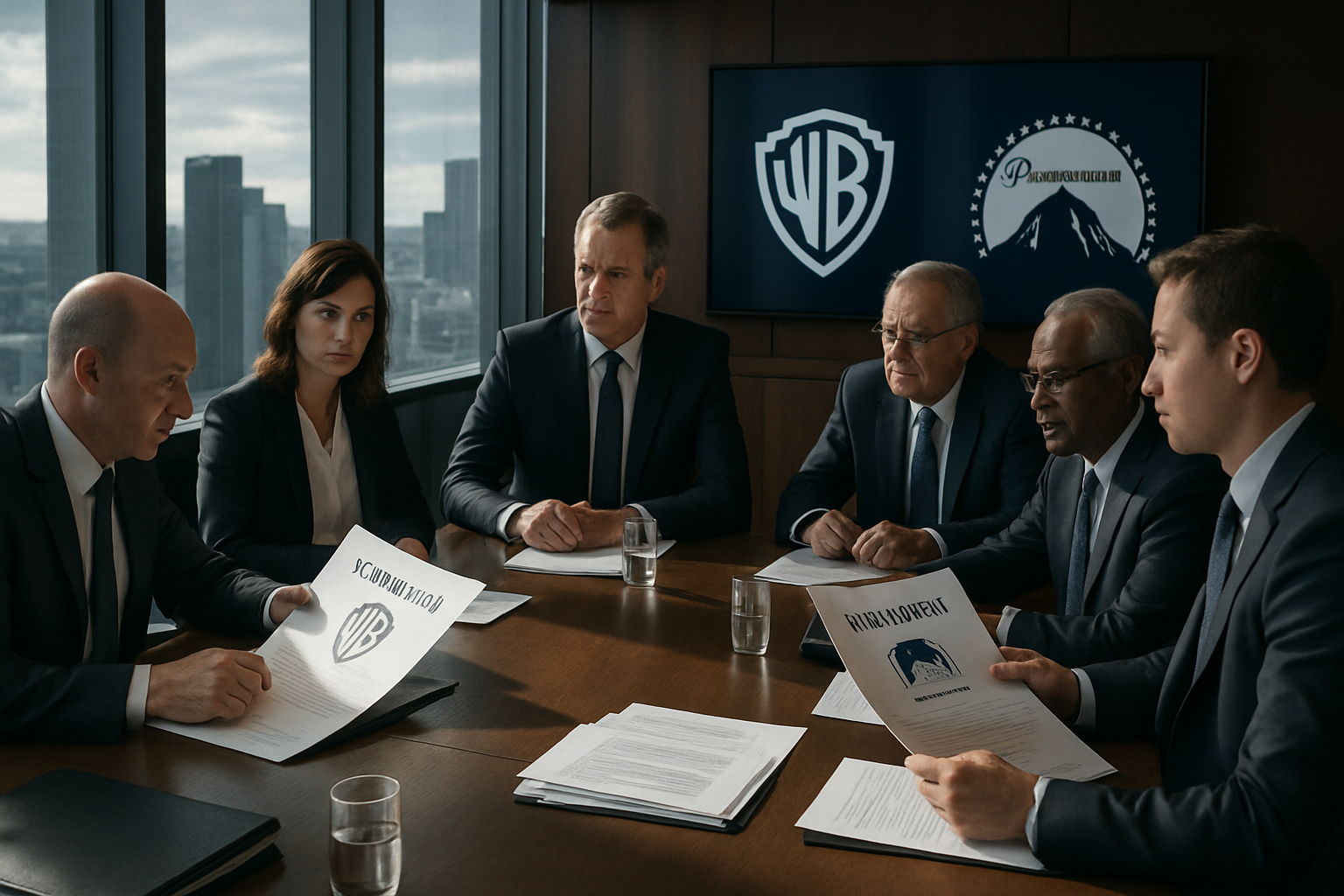
Netflix has officially withdrawn from the months-long bidding war for Warner Bros Discovery, clearing the path for Paramount to complete what will become one of the largest media acquisitions in entertainment history at $110 billion.
The streaming giant's decision, announced Thursday February 26, 2026, came after Paramount raised its offer to $110 billion—an increase that Netflix deemed financially unviable. The withdrawal marks a dramatic conclusion to a corporate battle that has captivated Hollywood and global financial markets since December 2025.
The Final Bid That Changed Everything
According to multiple international sources, Paramount's enhanced offer represented a significant escalation from previous negotiations. Austrian media reported that "Paramount had recently raised its offer to $110 billion" and that "Netflix no longer wants to participate in the bidding battle with this increase."
The French financial press characterized Netflix's decision as the streaming leader's refusal to "raise its takeover offer" in response to what Warner Bros board members described as Paramount's "superior proposal." This represents a strategic retreat for Netflix, which had been positioned as the preferred bidder since their initial agreement in December 2025.
Strategic Implications for the Streaming Wars
Netflix's withdrawal signals a fundamental shift in the company's acquisition strategy. Industry analysts note that the decision reflects careful financial discipline rather than inability to compete. As reported across European markets, Netflix determined that "at the price necessary to match Paramount's latest offer, the deal was no longer financially attractive."
The decision leaves Paramount Skydance, led by David Ellison's entertainment empire, positioned to create what European analysts describe as a "cinema and television empire" that could reshape Hollywood's power dynamics. The acquisition would combine Paramount's production capabilities with Warner Bros Discovery's extensive content library, including HBO Max, CNN, Discovery Channel, and the iconic Warner Bros film studio.
International Market Response
Global financial markets have closely monitored this unprecedented media consolidation battle. German sources emphasized that "the takeover battle for the Hollywood veteran Warner Bros is apparently over," while Greek media highlighted the "significant reshuffling of power in Hollywood" that this acquisition represents.
The international scope of coverage—spanning from Finland to Romania, Greece to Norway—underscores the global significance of this entertainment industry power shift. Romanian coverage noted that Paramount emerged "victorious in the months-long battle for Warner Bros Discovery after Netflix withdrew," positioning Paramount to acquire "the vast media empire of Warner, including CNN."
The Ellison Family Victory
French media analysis highlighted the "surprise victory of the Ellison family, close to Donald Trump, over Netflix" in what represents a significant win for traditional media consolidation over pure streaming platform expansion. The acquisition positions David Ellison's Skydance Media to leverage both traditional studio production and modern distribution networks.
This victory demonstrates that established entertainment conglomerates can still compete effectively against technology-driven streaming platforms, potentially encouraging similar consolidation strategies across the industry.
Regulatory Scrutiny Ahead
The massive scale of this acquisition will inevitably face extensive regulatory review. The transaction requires approval from the Federal Trade Commission in the United States and likely scrutiny from European competition authorities, given the global reach of both companies' operations.
Industry experts anticipate that the combined entity will need to demonstrate that the merger serves consumer interests and won't create anti-competitive market conditions in either content production or distribution.
What This Means for Consumers
For entertainment consumers worldwide, this consolidation creates both opportunities and concerns. The combined Paramount-Warner Bros Discovery entity will control an unprecedented library of content spanning decades of film and television production, potentially offering more comprehensive streaming services.
However, industry consolidation also raises questions about content diversity, pricing power, and competition in the streaming marketplace. The outcome may accelerate similar mergers as remaining players seek scale to compete with the new entertainment giant.
Netflix's Strategic Pivot
Netflix's decision to withdraw rather than escalate the bidding war demonstrates strategic maturity and financial discipline. The company appears to be prioritizing sustainable growth over empire-building, focusing resources on original content production and global expansion rather than expensive acquisitions.
This approach aligns with Netflix's historical strategy of building rather than buying content capabilities, though it does represent a significant strategic setback in the company's efforts to secure established content libraries and traditional media assets.
Industry Transformation Accelerates
The successful Paramount acquisition of Warner Bros Discovery represents a watershed moment in entertainment industry evolution. It demonstrates that traditional media consolidation remains viable against technology-driven competitors and may encourage other legacy entertainment companies to pursue similar combination strategies.
The outcome also confirms that scale and content library depth continue to matter in the streaming era, even as Netflix has proven that original programming and global distribution can create substantial competitive advantages.
As the entertainment landscape continues its rapid transformation, this acquisition will likely be remembered as a defining moment when traditional media successfully adapted to compete in the streaming age, creating a formidable rival to the technology platforms that have dominated recent industry discourse.