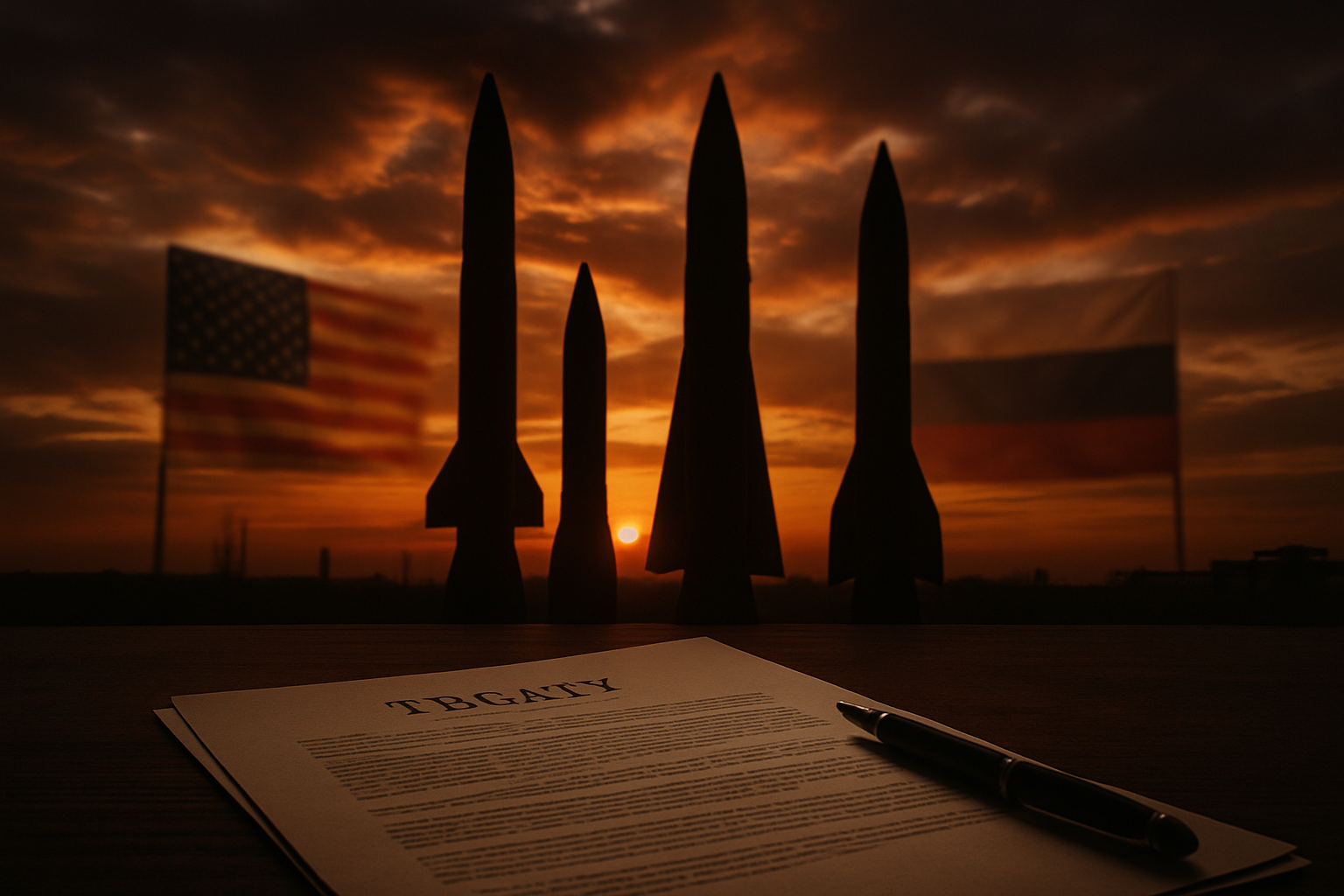
The New Strategic Arms Reduction Treaty (New START) between the United States and Russia officially expired on February 5, 2026, creating an unprecedented nuclear arms control vacuum that marks the first time in over five decades without binding limits on strategic nuclear arsenals between the world's two largest nuclear powers.
The treaty's expiration at midnight GMT eliminates all provisions that had limited each nation to 1,550 deployed strategic warheads and 800 strategic delivery systems, while ending crucial verification mechanisms including biannual data exchanges, on-site inspections, and advance notification for ICBM launches that had prevented nuclear miscalculation since the Cold War era.
Diplomatic Breakdown and Final Hours
Despite last-minute negotiations in Abu Dhabi between US and Russian officials, no agreement was reached to preserve key treaty provisions during future negotiations. Russia had proposed a 12-month extension of main provisions, but the Trump administration never formally responded to Putin's offer, according to Russian Foreign Ministry statements.
President Trump rejected the extension via Truth Social, stating "we should have our Nuclear Experts work on a new, improved and modernized Treaty that can last long into the future." The administration insists any future framework must include China's expanding nuclear arsenal, which has grown from approximately 350 warheads in 2020 to over 500 currently.
"The parties to the New START treaty are no longer bound by any obligations."
— Russian Foreign Ministry Statement
Current Nuclear Arsenal Status
With the treaty's expiration, both nations are now technically free to expand their nuclear arsenals without bilateral constraints. Russia currently possesses approximately 4,380 nuclear warheads with 1,710 deployed, while the United States maintains roughly 3,708 warheads with 1,670 deployed. Together, these nations control over 80% of the world's nuclear weapons.
The loss of verification mechanisms creates what experts describe as an "information void," potentially leading to worst-case planning scenarios and increased miscalculation risks. Economic costs for unrestricted nuclear modernization could exceed $100 billion annually for both nations combined.
International Alarm and Global Response
UN Secretary-General António Guterres called the expiration a "grave turning point" for global security, stating that nuclear weapon use risks are "higher than at any time in decades." NATO Secretary-General Mark Rutte described the timing as "worst possible" given current global tensions.
Pope Leo XIV warned of a potential "new arms race," while Japanese atomic bomb survivors expressed fears about escalation. The expiration coincides with ongoing Ukraine-Russia-US peace talks in Abu Dhabi and upcoming Iran-US nuclear negotiations scheduled for February 7 in Oman.
The China Factor
A critical obstacle to future agreements is China's role in nuclear arms control. The Trump administration demands any new framework include China's expanding nuclear capabilities, arguing that bilateral US-Russia limits are insufficient given Chinese nuclear modernization. However, Beijing continues to reject trilateral participation, demanding US-Russia arsenal reductions first before considering joining any nuclear limitation framework.
This creates a diplomatic impasse: the United States wants trilateral talks, Russia is willing to engage bilaterally, but China refuses participation entirely in current nuclear arms control discussions.
Strategic Implications and Future Challenges
The treaty expiration eliminates Cold War-era confidence-building measures that had provided transparency and reduced tensions for decades. The loss of these mechanisms affects not only US-Russia relations but potentially undermines the broader Nuclear Non-Proliferation Treaty (NPT) regime and regional security arrangements.
Any future agreement must address modern challenges not covered in Cold War treaties, including hypersonic weapons, missile defense systems, and emerging military technologies. A trilateral framework would require entirely new verification mechanisms and unprecedented diplomatic innovation.
Broader Geopolitical Context
The treaty expiration occurs amid a complex global diplomatic landscape. Recent developments include the restoration of US-Russia military communications after a four-year suspension, achieved during the Abu Dhabi peace talks. However, this progress is overshadowed by continued military tensions, including massive Russian energy infrastructure attacks on Ukraine that broke an informal Trump-Putin energy truce.
The timing also coincides with historic Iran-US nuclear negotiations in Oman, creating a period of intense nuclear diplomacy across multiple theaters. Regional security implications extend beyond the superpowers, as the absence of nuclear limits may encourage other nations to develop nuclear capabilities.
Economic and Security Ramifications
Without treaty constraints, both nations face potentially massive expenditures for nuclear modernization programs. The elimination of verification protocols also creates challenges for intelligence assessments and strategic planning, as both militaries must now operate under increased uncertainty about the other's capabilities and intentions.
Regional allies are reviewing their security arrangements, with NATO members monitoring impacts on alliance coordination and collective defense planning. The end of bilateral nuclear constraints represents a fundamental shift from Cold War architecture to an era of complex multilateral nuclear competition.
Path Forward
Diplomatic channels remain open between Washington and Moscow, but significant obstacles persist. Rebuilding verification and trust mechanisms would require years of negotiations, while fundamental disagreements over China's inclusion complicate any near-term breakthrough.
The international community faces the challenge of preventing an unrestricted nuclear arms race that could define global security for decades. Success in future negotiations requires unprecedented compromise and innovation to address modern nuclear challenges while maintaining strategic stability.
"This represents a fundamental shift in global nuclear security architecture from the Cold War bilateral framework to an era of complex multilateral nuclear competition."
— International Arms Control Experts
The expiration of New START marks more than the end of a treaty—it signals the conclusion of an era of nuclear arms control that had provided stability since the height of the Cold War. The world now enters uncharted territory in nuclear governance, with the potential for both devastating arms races and innovative multilateral solutions that could redefine global security for the 21st century.