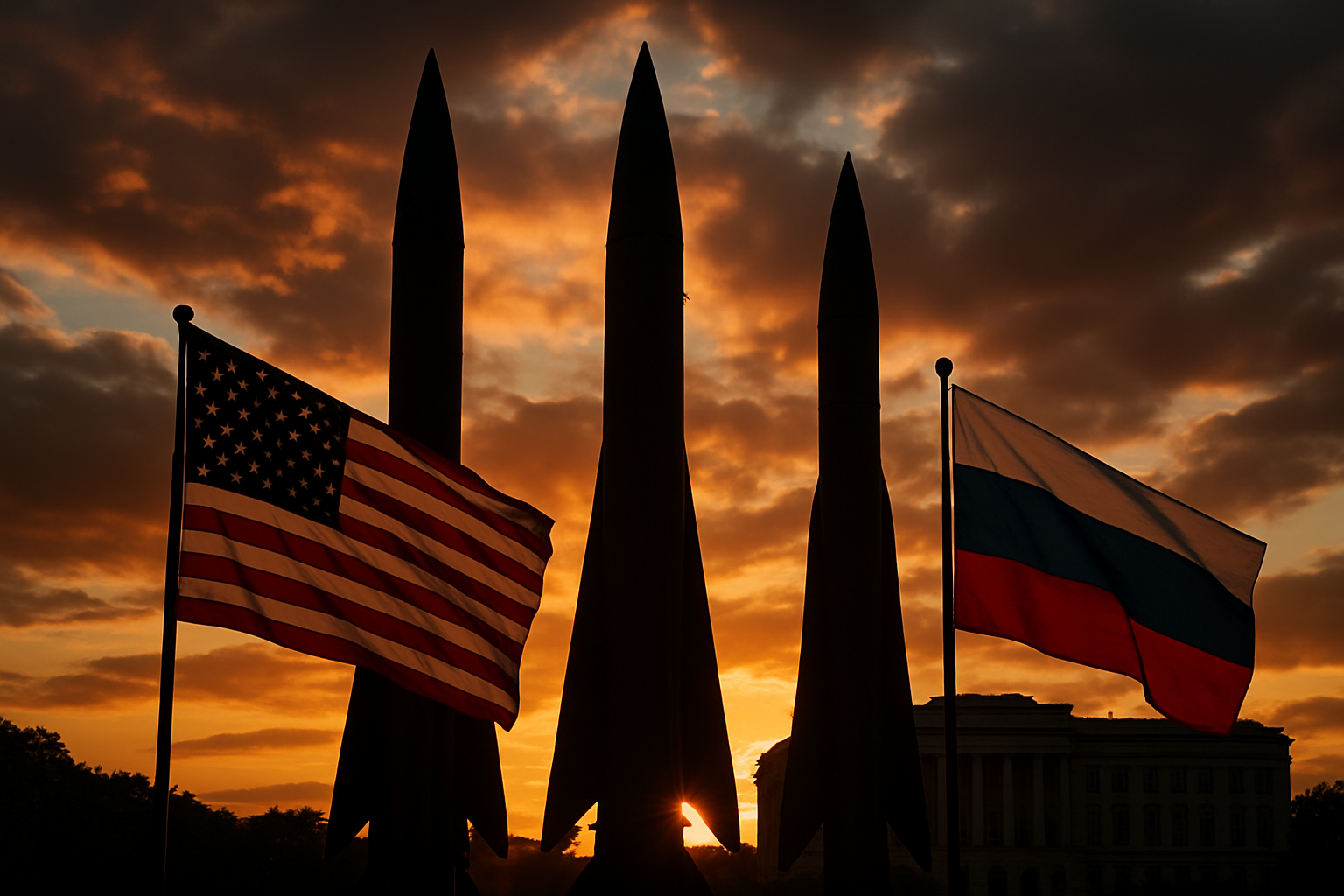
For the first time in more than half a century, the world faces no binding limits on the strategic nuclear arsenals of the United States and Russia after the New START Treaty expired on February 5, 2026, marking what UN Secretary-General António Guterres called a "grave moment" for international peace and security.
The treaty's expiration at midnight Wednesday formally released both Moscow and Washington from restrictions that had limited each nation to 1,550 deployed strategic nuclear warheads and 800 strategic delivery systems. The agreement, signed in 2010 by then-President Barack Obama and then-Russian President Dmitry Medvedev, was the last remaining bilateral nuclear arms control framework between the world's two largest nuclear powers.
Diplomatic Efforts Fall Short
Russia announced on February 4 that Washington had not responded to President Vladimir Putin's proposal to extend the treaty's main provisions for another 12 months. Moscow's Foreign Ministry declared that "parties to the New START treaty are no longer bound by any obligations or symmetrical declarations," effectively ending nearly five decades of nuclear arms control agreements between the superpowers.
The treaty's collapse comes despite Putin's last-minute overture to the Trump administration, which was reportedly made amid broader geopolitical tensions including the ongoing Ukraine conflict and concerns about China's nuclear modernization program.
"For the first time in more than half a century, we face a world without any binding limits on the strategic nuclear arsenals of the Russian Federation and the United States of America — the two States that possess 90% of the world's nuclear weapons."
— António Guterres, UN Secretary-General
International Community Sounds Alarm
UN Secretary-General Guterres called on both nations to "negotiate a new nuclear arms control framework without delay," emphasizing that the expiration removes not only warhead limits but also crucial verification mechanisms and confidence-building measures that have prevented nuclear miscalculation since the Cold War era.
International observers have warned that the treaty's abandonment could signal the beginning of a new era of nuclear proliferation, particularly concerning as other nuclear powers such as China continue to expand their own arsenals. The International Campaign to Abolish Nuclear Weapons (ICAN) criticized the U.S. administration's silence on the matter, stating it makes "every crisis more dangerous."
Multiple international sources confirm that both Russia and the United States are now technically free to expand their nuclear arsenals without bilateral constraints, a situation unprecedented since the early Cold War period.
Complex Geopolitical Backdrop
The treaty's expiration occurs against a backdrop of deteriorating U.S.-Russia relations, exacerbated by the ongoing conflict in Ukraine and broader strategic competition. Russia has consistently stated it will act "responsibly and in a balanced manner" in developing its strategic arms policy, basing decisions on "thorough analysis of U.S. military policy."
The timing is particularly significant as it coincides with major diplomatic initiatives, including ongoing Ukraine-Russia-U.S. trilateral peace talks in Abu Dhabi and upcoming Iran-U.S. nuclear negotiations. These parallel diplomatic tracks highlight the complex web of nuclear-related issues facing the international community.
The China Factor
One of the key factors cited by the U.S. for declining Russia's extension proposal was China's nuclear expansion. American officials have expressed concerns that bilateral U.S.-Russia limits are increasingly inadequate when China, the world's third-largest nuclear power, remains outside the framework entirely.
China's nuclear modernization program has accelerated significantly in recent years, leading some analysts to argue that future arms control agreements must be multilateral to remain effective. However, Beijing has consistently rejected participation in arms control talks as long as U.S. and Russian arsenals remain significantly larger than its own.
Technical and Strategic Implications
The treaty's expiration eliminates several critical elements beyond warhead limits. Key provisions that are now void include:
- Caps on deployed strategic nuclear warheads (1,550 each)
- Limits on strategic delivery vehicles (800 deployed and non-deployed)
- Biannual data exchanges on nuclear forces
- Regular on-site inspections of nuclear facilities
- Advance notification requirements for intercontinental ballistic missile launches
These verification and transparency measures had served as crucial confidence-building mechanisms, helping prevent misunderstandings that could escalate into nuclear crises.
Looking Forward
Despite the treaty's expiration, both nations have indicated they intend to act responsibly in their nuclear policies. However, without binding agreements and verification mechanisms, the international community will have limited insight into the actual nuclear capabilities and intentions of either power.
Arms control experts emphasize that rebuilding nuclear constraints will require addressing not only bilateral U.S.-Russia issues but also the broader challenge of incorporating other nuclear powers into future frameworks. The path forward remains uncertain, but the stakes could not be higher for global security.
As the world enters this new era without bilateral nuclear limits between its two largest nuclear powers, the international community faces the urgent challenge of preventing an unrestricted arms race while working toward new frameworks for nuclear restraint in an increasingly complex multipolar world.