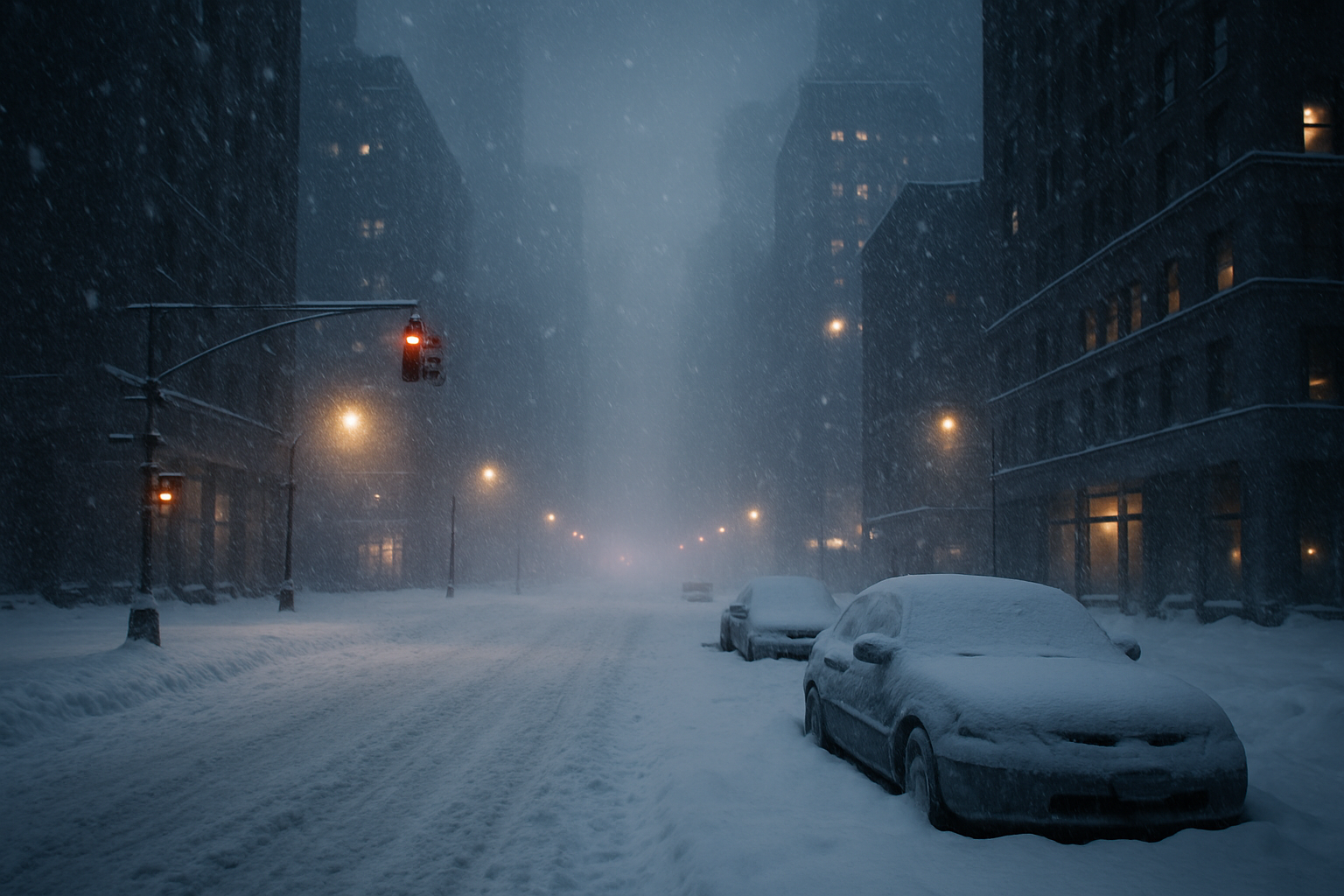
New York City Mayor Zohran Mamdani declared a state of emergency Sunday evening and implemented a comprehensive travel ban across America's most populous city as a devastating winter storm approaches the Northeast, threatening to dump up to two feet of snow on the metropolitan area.
The unprecedented measure affects over eight million residents in New York City and tens of millions more across the Northeast corridor from Washington D.C. to Maine. Mayor Mamdani announced the emergency protocols during a press conference, warning that "New York City has not experienced a storm of this magnitude in the last decade."
Comprehensive Travel Restrictions Implemented
The citywide curfew will remain in effect from 9:00 PM Sunday until noon Monday, resulting in the complete closure of streets, roads, and bridges to general traffic. The restrictions apply to all vehicles including cars, trucks, scooters, and electric bicycles, with exceptions only for essential and urgent travel.
"We are urging residents to avoid all non-essential travel," Mamdani emphasized during the emergency briefing. The National Weather Service has issued blizzard warnings predicting that dangerous conditions will "quickly materialize" from Maryland through southeastern New England.
The storm system is expected to bring snowfall accumulations of up to 60 centimeters (nearly two feet) in some areas, accompanied by powerful winds that could create life-threatening whiteout conditions. Weather forecasters describe the approaching system as one of the most significant winter storms to impact the region in years.
Regional Impact Spans Multiple States
The storm's impact extends far beyond New York City's borders, with blizzard conditions forecast to affect Boston, Philadelphia, and Washington D.C. The National Weather Service projects Boston could receive 30-60 centimeters of snow accumulation, while other major metropolitan areas prepare for similar totals.
Transportation networks across the Northeast are bracing for severe disruptions. Major airports including JFK, LaGuardia, and Newark Liberty International are implementing flight restrictions and encouraging passengers to check with airlines before traveling. The storm's timing threatens to ground thousands of flights, creating cascading effects on international travel networks.
"This represents one of the most comprehensive emergency responses we've implemented for a winter weather event,"
— Emergency Management Official
Historical Context and Climate Patterns
The storm arrives during what meteorologists describe as an exceptionally volatile winter weather pattern. January 2026 was confirmed as the hottest month on record globally, marking the 18th consecutive month of temperatures exceeding 1.5°C above pre-industrial levels. This climate paradox demonstrates how global warming can enable both extreme heat and severe regional cold events simultaneously.
The phenomenon occurs through polar vortex disruption, where Arctic warming affects traditional weather patterns, allowing frigid air masses to penetrate further south while other regions experience record warmth. This creates the conditions for extreme weather events like the current nor'easter threatening the Northeast.
Emergency Preparedness and Public Safety
City officials have mobilized extensive emergency resources to manage the crisis. The measures represent the most comprehensive winter storm response since the historic blizzards of the previous decade. Essential services including hospitals, emergency responders, and utility crews will continue operations, with enhanced protocols to ensure public safety.
The mayor's office has opened additional warming centers and emergency shelters across the five boroughs to protect vulnerable populations. Public health officials are particularly concerned about hypothermia risks as temperatures are expected to plummet during and after the storm passes.
Power companies have pre-positioned repair crews and equipment to respond quickly to outages caused by heavy snow accumulation on power lines and potential ice formation. The combination of wet snow and strong winds creates ideal conditions for widespread electrical disruptions.
International Perspective on Extreme Weather
The New York emergency occurs within a broader context of extreme weather events affecting multiple continents. European nations are simultaneously dealing with severe winter storms, including Portugal's deployment of 26,500 rescue personnel in their largest peacetime operation, and widespread transportation disruptions across Scandinavia and Eastern Europe.
This pattern of simultaneous extreme weather events worldwide highlights the increasing frequency and intensity of climate-related disasters. Emergency management experts emphasize that traditional mutual aid mechanisms become strained when multiple regions face crises simultaneously.
Economic and Social Implications
The economic impact of the storm is expected to be substantial, affecting everything from retail operations to financial markets. The timing during a critical winter period for tourism and commerce compounds the potential losses. Many businesses are closing early and advising employees to work from home where possible.
Educational institutions across the region have announced closures, with decisions about Tuesday classes pending weather conditions. The storm threatens to disrupt the resumption of normal activities following the weekend, potentially affecting millions of students and workers.
Supply chains are also preparing for disruptions, with retailers and distribution centers implementing contingency plans to minimize shortages of essential goods. The storm's path through major transportation corridors raises concerns about delays in food and fuel deliveries.
Looking Ahead: Recovery and Adaptation
Weather forecasters indicate that additional storm systems may develop in the Atlantic, potentially extending the period of severe weather conditions. This raises concerns about the region's ability to recover between successive storms, a pattern that has become increasingly common in recent years.
Climate scientists warn that such extreme weather events are becoming more frequent and intense, requiring enhanced infrastructure resilience and emergency preparedness. The current storm serves as a critical test of New York City's adaptive capacity and coordination mechanisms.
Mayor Mamdani concluded his emergency briefing by emphasizing the importance of community cooperation: "The safety of our residents is our top priority. We ask everyone to take these warnings seriously, stay indoors, and support their neighbors during this challenging time."
As the storm approaches, millions across the Northeast are hunkering down for what meteorologists describe as a potentially historic weather event. The next 24-48 hours will determine whether the extensive preparations prove sufficient for what could be one of the most significant winter storms in recent memory.