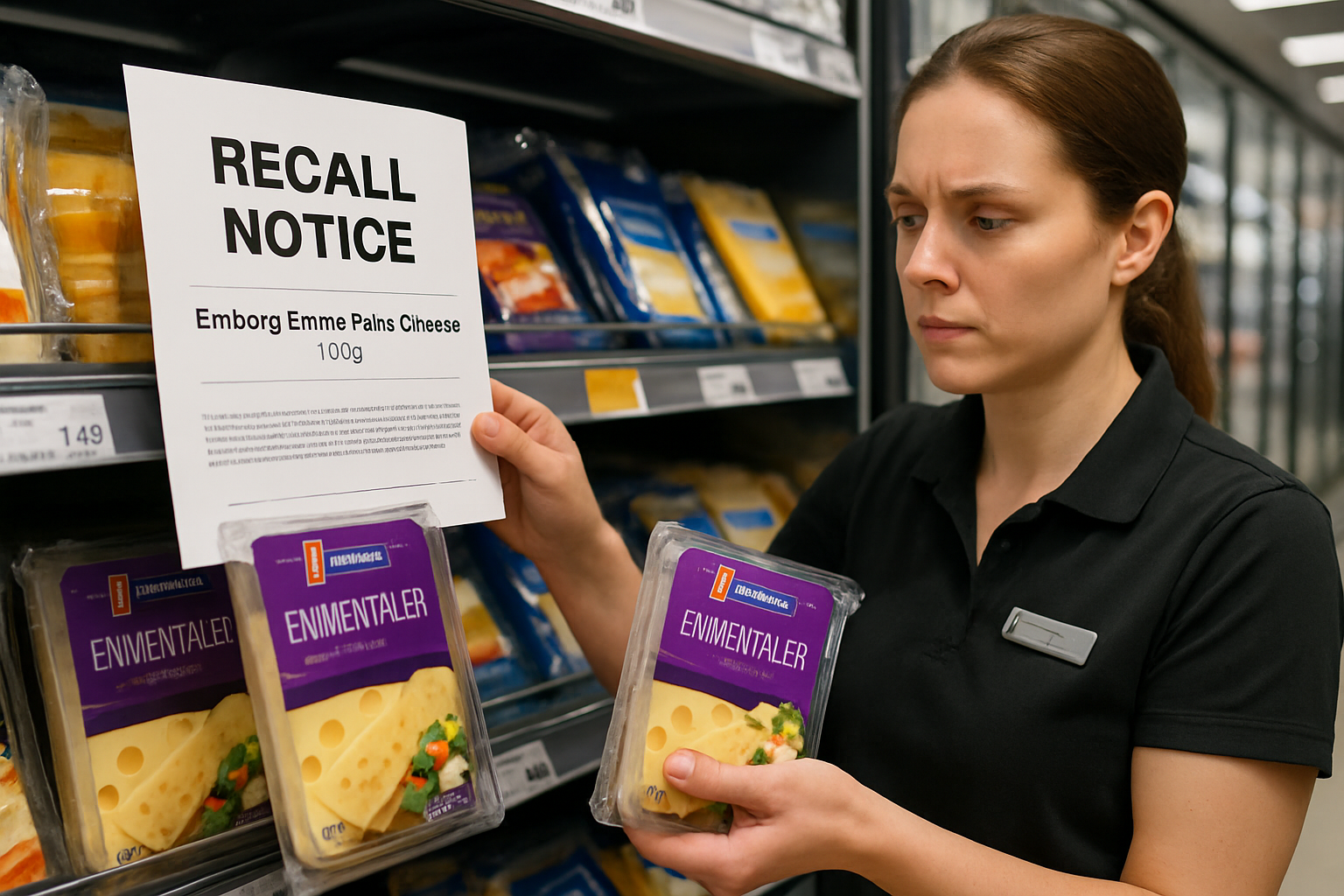
New Zealand health authorities have issued an urgent recall of imported German cheese products due to potential Listeria contamination concerns, marking the latest development in an ongoing global food safety crisis that has affected multiple countries throughout 2026.
The recall specifically targets Emborg Emmentaler 200g packages with a best before date of 05.11.26, which were imported from Germany and distributed across supermarkets throughout New Zealand. The affected cheese products pose potential health risks to consumers, particularly vulnerable populations including pregnant women, elderly individuals, and those with compromised immune systems.
Contamination Details and Health Risks
Listeria monocytogenes, the bacteria of concern in this recall, can cause serious illness known as listeriosis. While healthy adults may experience only mild symptoms such as fever, headache, and gastrointestinal discomfort, the infection can be life-threatening for high-risk groups. Pregnant women face particular danger as listeriosis can lead to miscarriage, stillbirth, or severe illness in newborns.
The recall notice comes as part of heightened food safety vigilance following a series of contamination incidents that have affected food products worldwide throughout 2026. This pattern has included significant outbreaks across Europe, particularly involving infant formula products that affected dozens of children.
"Consumer safety is our absolute priority, and we are working closely with retailers to ensure all affected products are removed from shelves immediately,"
— New Zealand Food Safety Authority Spokesperson
Global Food Safety Context
The New Zealand cheese recall occurs against the backdrop of an unprecedented global food safety crisis that has characterized 2026. Earlier incidents included a devastating European infant formula contamination that affected more than 36 infants across the United Kingdom, France, Luxembourg, and Greece with cereulide toxin from Bacillus cereus bacteria in major brand products.
Climate change has emerged as a significant amplifying factor in these food safety challenges. January 2026 marked the hottest month on record, representing the 19th consecutive month of global temperatures exceeding 1.5°C above pre-industrial levels. These sustained elevated temperatures create optimal conditions for pathogen growth while disrupting traditional food preservation methods.
Supply Chain Vulnerabilities Exposed
The German-imported cheese incident highlights the complex vulnerabilities inherent in global food supply chains. Modern food distribution networks, while providing consumers with diverse product options, create multiple points where contamination can occur and spread across vast geographic areas before detection.
International food safety experts have identified 2026 as a critical transformation turning point requiring enhanced coordination between countries, climate-adaptive processing technologies, and prevention-focused approaches that integrate traditional food safety wisdom with modern scientific understanding.

Consumer Response and Economic Impact
The recall has prompted immediate action from New Zealand retailers, with major supermarket chains moving quickly to remove affected products from shelves. The incident reflects broader trends in consumer behavior, with confidence in multinational food corporations declining as consumers increasingly seek local sourcing and simplified supply chains that offer greater transparency and traceability.
Economic implications extend beyond immediate recall costs to include rising insurance expenses for food manufacturers, mandatory investments in enhanced molecular testing infrastructure, and potential long-term market share losses, particularly in trust-dependent product categories.
Enhanced Detection and Prevention
The swift identification of this contamination risk demonstrates improvements in food safety surveillance systems. Enhanced molecular testing protocols now being implemented can detect heat-stable toxins and other contaminants that survive traditional food processing methods, representing a significant advancement over conventional bacterial screening methods.
Social media platforms have emerged as unexpected but powerful enforcement tools, with viral exposure of food safety violations accelerating regulatory responses. This democratization of food safety oversight has forced companies and regulators to respond more quickly to potential threats.
International Cooperation Imperative
Food safety experts emphasize that contamination incidents crossing national borders through multinational supply chains require unprecedented international cooperation. The European Food Safety Authority (EFSA) is developing standardized international protocols and coordinated early warning systems to prevent cross-border contamination.
The African Continental Free Trade Agreement has begun establishing agricultural standards that enable coordinated responses to food safety threats that individual nations cannot address independently. Similar cooperation frameworks are being explored across other regions as the global nature of food safety challenges becomes increasingly apparent.
"The window for building resilient, equitable food systems is narrowing as climate pressures accelerate and population growth increases agricultural resource demands."
— International Food Safety Expert
Prevention-First Transformation
Industry experts and public health officials are advocating for a fundamental shift from reactive crisis management to proactive prevention-first strategies. Countries implementing comprehensive prevention programs consistently report superior cost-effectiveness compared to traditional reactive approaches, achieving better public health outcomes while reducing the need for expensive crisis interventions.
This transformation requires sustained political commitment, adequate funding, and effective oversight mechanisms that can adapt to rapidly changing environmental and social conditions. The integration of traditional dietary wisdom with modern safety science is becoming increasingly crucial for developing scientifically sound, culturally appropriate approaches that balance food security with environmental sustainability.
Looking Forward
The New Zealand cheese recall, while concerning, represents part of a broader global awakening to the realities of 21st-century food safety challenges. Success in addressing these challenges will depend on unprecedented international cooperation, enhanced coordination across multiple sectors and scales, and increased financial commitments that recognize food security as essential infrastructure for human prosperity and planetary sustainability.
Consumers are advised to check their refrigerators for any Emborg Emmentaler cheese products with the specified best before date and dispose of them immediately. Anyone who has consumed the affected products and experiences symptoms of illness should seek medical attention promptly.
As the global food safety community continues to respond to these mounting challenges, the choices made in 2026 regarding safety protocols, international cooperation frameworks, and prevention strategies may prove decisive for global food security trajectories in the decades ahead.