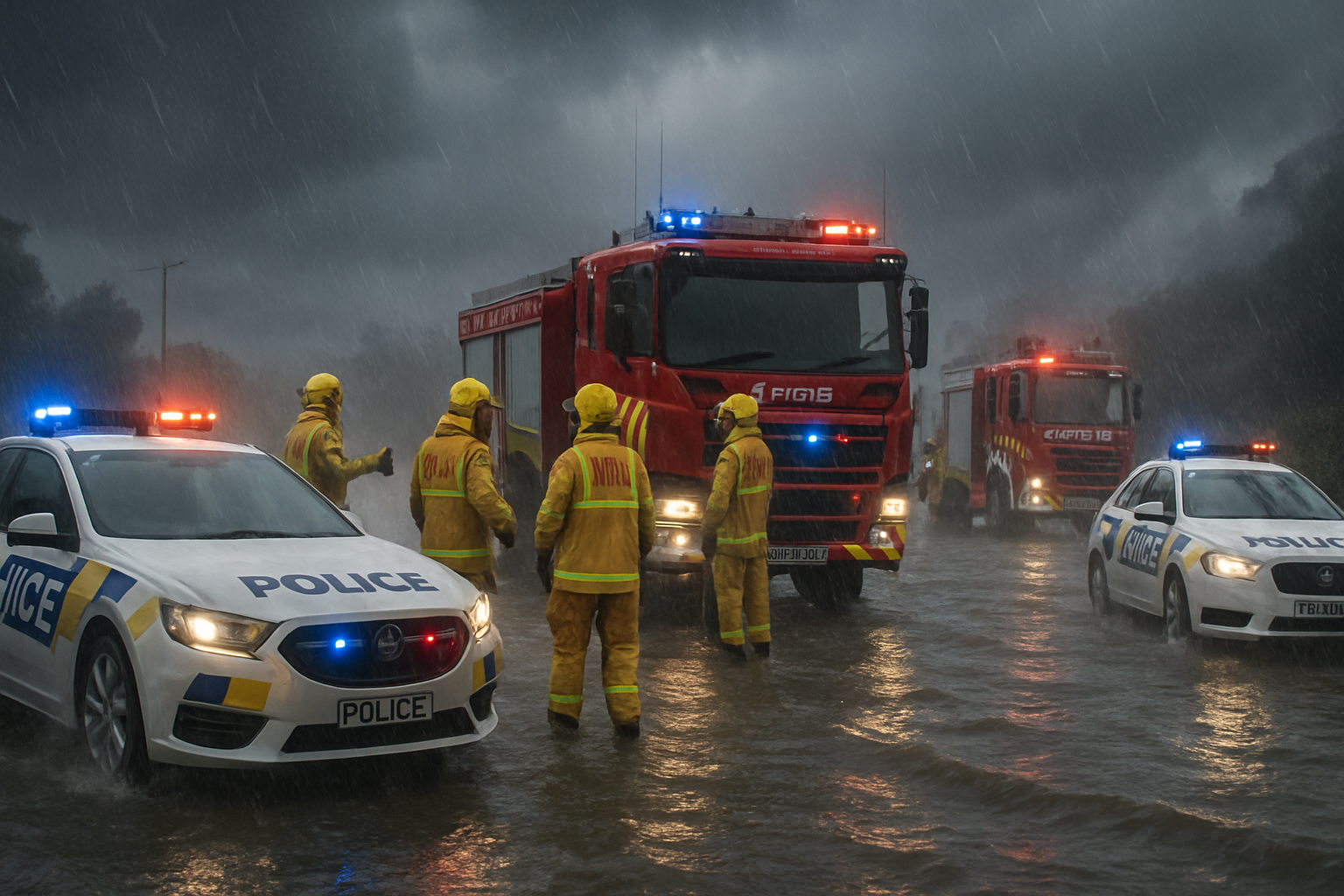
Emergency authorities have declared states of emergency for New Zealand's Far North and Whangārei districts as a powerful subtropical storm system approaches the North Island, bringing threats of life-threatening flooding, severe winds, and dangerous conditions across the region.
The emergency declarations, which will remain in effect for seven days, come as MetService issued red heavy rain warnings for Northland, describing the approaching weather system as a "significant event" that poses a "threat to life." The deep subtropical low pressure system is expected to deliver up to 320mm of rainfall across vulnerable areas, with strong northeast winds accompanying the deluge.
Critical Weather Warnings Issued
MetService meteorologists have described the incoming storm as a "big deep subtropical low" that is currently battering the upper North Island and is forecast to bring significant rainfall to affected regions. The weather service has issued multi-hazard warnings covering Northland, Auckland, Coromandel Peninsula, and Bay of Plenty, marking one of the most comprehensive severe weather alerts of 2026.
The subtropical low pressure system, tracking southward, represents a complex meteorological challenge that combines multiple weather threats simultaneously. Residents in the affected areas have been urged to evacuate if they feel unsafe, with authorities emphasizing the serious nature of the developing conditions.
Regional Impact and Infrastructure Concerns
Auckland continues to face severe weather impacts, with heavy rain and strong winds affecting New Zealand's largest metropolitan area. The storm's broad reach demonstrates the significant scale of this weather event, which is expected to disrupt transportation networks, power grids, and communication systems across multiple regions.
Emergency services have activated enhanced preparedness protocols across the affected districts, positioning resources strategically to respond to anticipated flooding, wind damage, and potential rescue operations. The seven-day duration of the emergency declarations reflects authorities' assessment that this weather system will have prolonged impacts requiring sustained emergency response capabilities.
Historical Context of Recent Weather Emergencies
This emergency declaration continues a challenging period for New Zealand's emergency services, who have managed multiple severe weather events throughout 2026. The current crisis builds upon previous incidents including the devastating Ōtorohanga flooding in February 2026, which claimed at least one life and left communities dealing with waist-deep floodwaters.
During the February emergency, farmer Murray Orr, with 70 years of local experience, described conditions as unlike anything he had witnessed, stating he had "never seen rain like yesterday's deluge." The Ōtorohanga incident highlighted the vulnerability of New Zealand's infrastructure to extreme weather events and demonstrated the importance of early warning systems and emergency preparedness.
Climate Context and Increasing Volatility
The current emergency occurs during what climate scientists have identified as the 22nd consecutive month of global temperatures exceeding 1.5°C above pre-industrial levels—the longest sustained warming streak in recorded history. This unprecedented climate milestone provides crucial context for understanding the increasing frequency and intensity of extreme weather events affecting New Zealand.
The convergence of sustained global warming with natural climate patterns like El Niño has created what meteorologists describe as a "climate volatility paradox," where sustained warming enables both heat records and devastating regional extreme weather events through disrupted atmospheric circulation patterns. New Zealand's position in the South Pacific makes it particularly vulnerable to these compound climate effects.
Emergency Response and Community Preparedness
New Zealand's Civil Defence Emergency Management system has coordinated closely with local authorities to ensure comprehensive response capabilities are in place. The multi-district nature of this emergency requires coordination across traditional administrative boundaries, testing the resilience of regional cooperation frameworks during crisis conditions.
Business owners across the affected regions are "hunkering down for wet and wild few days," according to local reports, as the combination of heavy rainfall and strong northeast winds creates challenging conditions for both commercial and residential properties. The sustained nature of the weather threat requires extended preparedness measures rather than short-term emergency responses.
Infrastructure Vulnerabilities Exposed
The current emergency highlights ongoing concerns about New Zealand's infrastructure resilience in the face of increasing climate volatility. Transportation networks, power grids, and communication systems built to historical climate standards are repeatedly facing conditions that exceed their design parameters.
Previous weather emergencies have exposed critical vulnerabilities in New Zealand's infrastructure, including highway washouts, bridge failures, and transportation network paralysis during extreme weather events. The current emergency provides another test of the nation's ability to maintain essential services during severe weather conditions that are becoming more frequent and intense.
Long-term Adaptation Challenges
Climate scientists and emergency management experts emphasize that current conditions represent a preview of what may become routine weather patterns in the 2030s without significant climate adaptation investment. The traditional approach of "building back better" after disasters has evolved from an optional enhancement to an essential survival strategy for communities facing permanent climate volatility.
The increasing frequency of emergency declarations across New Zealand reflects a fundamental shift in how the nation must approach emergency preparedness and infrastructure planning. Traditional seasonal weather patterns that guided infrastructure design and emergency planning for centuries are becoming unreliable frameworks for future planning.
International Context and Regional Impacts
New Zealand's weather emergency occurs within a broader context of extreme weather events affecting multiple regions globally. Recent months have seen unprecedented coordination between emergency services across different countries dealing with simultaneous weather crises, stretching traditional mutual aid mechanisms beyond their designed capacity.
The South Pacific region has experienced particular challenges, with climate change effects combining with natural weather patterns to create compound disasters that require enhanced international cooperation and resource sharing. New Zealand's experience with managing these emergencies provides valuable insights for other Pacific nations facing similar challenges.
Economic and Social Impacts
The economic implications of repeated emergency declarations extend far beyond immediate response costs. Tourism sectors, agricultural production, and business continuity face mounting pressures from increasing weather volatility. Recovery timelines have shifted from traditional periods of weeks to months or years for some infrastructure and community impacts.
Mental health services report increased demand related to climate anxiety and repeated exposure to extreme weather events. Community resilience has been demonstrated through neighbor assistance, volunteer mobilization, and integration of traditional knowledge with modern emergency response capabilities, providing templates for future preparedness initiatives.
Looking Forward: Adaptation and Resilience
The Far North and Whangārei emergency declarations mark another critical juncture in New Zealand's adaptation to permanent climate volatility. The choice between reactive crisis management and transformative infrastructure adaptation becomes increasingly urgent as the window for effective climate action continues to narrow.
Success in managing current and future weather emergencies will depend on unprecedented coordination between government levels, enhanced early warning systems, climate-resilient infrastructure development, and sustained international cooperation. The tools, knowledge, and cooperation frameworks exist for comprehensive protection, but they require implementation at sufficient speed and scale to maintain community safety and economic stability.
As New Zealand faces these ongoing challenges, the current emergency serves as both a test of existing preparedness measures and an opportunity to strengthen resilience for future extreme weather events that climate science suggests will become more frequent and severe in the coming decades.