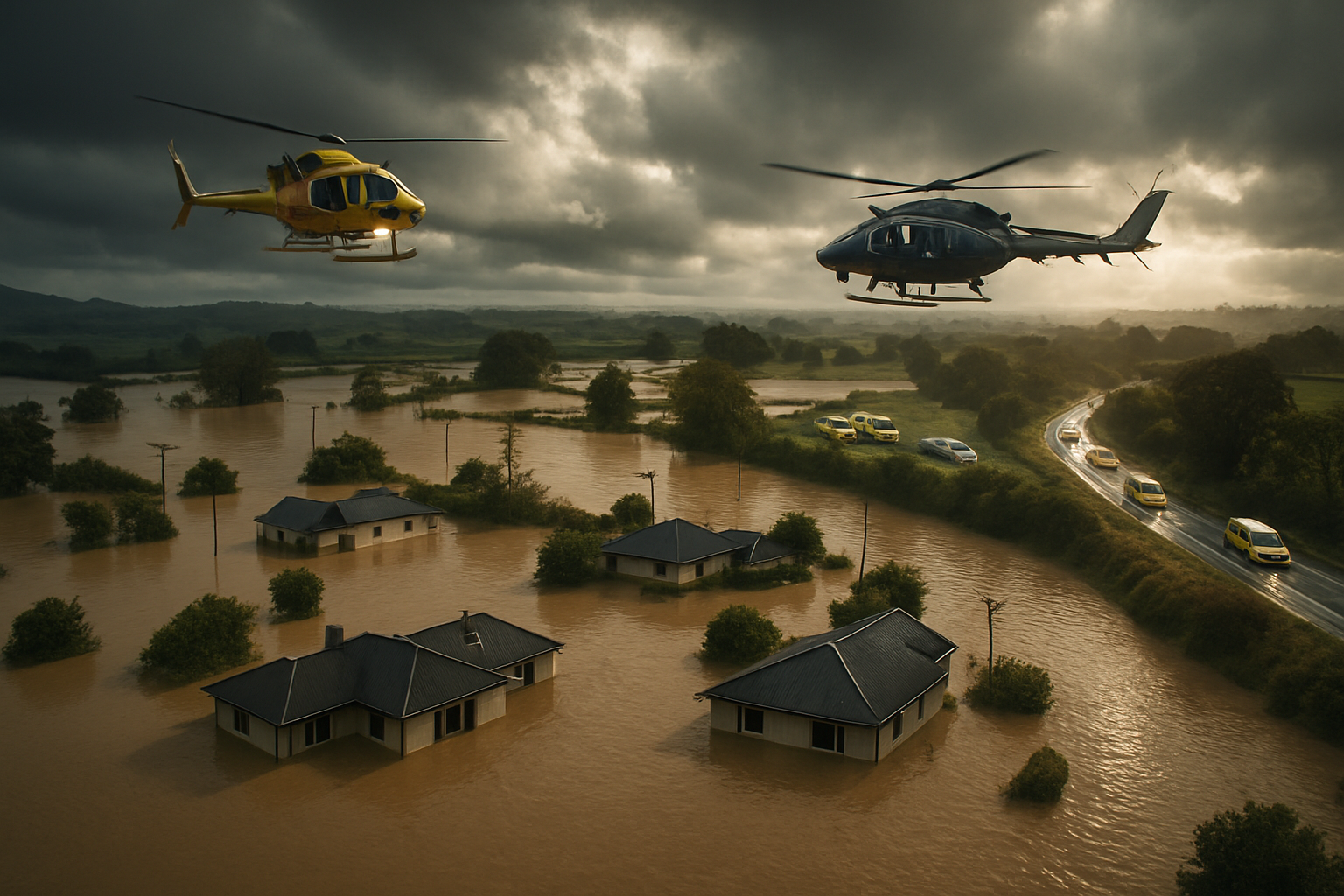
Catastrophic flooding across New Zealand's Waikato region has claimed at least one life and prompted dramatic rescue operations, as the Ōtorohanga District declared a state of emergency following overnight storms that brought unprecedented water levels and widespread destruction.
A man was confirmed dead after his vehicle became completely submerged in floodwaters on State Highway 39, marking the first fatality from the severe weather system that has devastated parts of the North Island. The tragic incident underscores the life-threatening conditions that emergency services are battling across the region.
Dramatic Rescues Amid Rising Waters
Local resident Colin Payne experienced one of the most harrowing rescues of the crisis, describing how waters "close to three metres high" surged through his property overnight. In a desperate situation, Payne was forced to flee his home with nothing but his medication as floodwaters reached dangerous levels.
"The only thing Colin Payne managed to take with him was his medication - everything else in his home is likely a write-off."
— Emergency Services Report
Payne later described feeling "totally and utterly devastated" as he watched household appliances floating in his home while making his escape. The dramatic rescue highlighted the speed and ferocity with which the floodwaters engulfed properties across the region.
State of Emergency Declared
The Ōtorohanga District Council officially declared a state of emergency as widespread flooding, heavy rainfall, and landslips continued to hammer the area. The declaration enables emergency services to coordinate more effectively and provides access to additional resources for the rescue and recovery operations.
The severe weather has affected critical infrastructure across the district, with roads cut off, power outages reported, and communication systems strained. Emergency services are working around the clock to reach stranded residents and assess the full extent of the damage.
Cultural Heritage at Risk
Among the casualties of the flooding crisis is significant damage to the local museum's collection of precious taonga (cultural treasures). The loss of these irreplaceable cultural artifacts adds another dimension to the disaster, highlighting how extreme weather events threaten not just lives and property, but also New Zealand's cultural heritage.
Museum officials are working to salvage what they can from the collection, but early assessments suggest that some items may be permanently damaged by the floodwaters.
Emergency Response Overwhelmed
The scale and intensity of the flooding has stretched emergency services to their limits. Rescue helicopters have been deployed to reach residents trapped in elevated areas, while ground crews work to clear blocked roads and restore essential services.
The New Zealand Defence Force has been placed on standby to assist with rescue operations if conditions worsen or if additional resources are needed. Weather forecasters continue to monitor the situation closely, with warnings that more rain could exacerbate the already critical conditions.
Climate Context and Future Concerns
This flooding disaster occurs against the backdrop of increasingly volatile weather patterns affecting New Zealand and the broader Pacific region. The incident follows a series of extreme weather events that have tested the country's emergency response capabilities and highlighted the growing challenge of climate adaptation.
The Waikato region has experienced several significant flooding events in recent years, raising questions about infrastructure resilience and long-term planning for extreme weather scenarios. Climate scientists have warned that such events may become more frequent and severe as global weather patterns continue to shift.
Community Impact and Recovery
The human cost of the disaster extends far beyond the immediate physical damage. Families like Colin Payne's face the prospect of losing everything they own, while entire communities grapple with disrupted lives and uncertain futures.
Local authorities are establishing temporary accommodation for displaced residents and coordinating with welfare agencies to provide support for those affected. The psychological impact of such traumatic experiences often requires long-term support services that extend well beyond the immediate emergency response.
Recovery efforts are expected to take months, with the full economic impact still being assessed. Insurance companies are preparing for significant claims related to property damage, while local businesses face disruption from damaged infrastructure and reduced community spending power.
Looking Ahead
As emergency services continue their rescue and recovery operations, attention is already turning to lessons learned and future preparedness. The Ōtorohanga flooding serves as a stark reminder of New Zealand's vulnerability to extreme weather events and the need for robust emergency planning.
Government officials have indicated that a comprehensive review of the emergency response will be conducted once the immediate crisis has passed. This review will likely examine everything from early warning systems to evacuation procedures and community preparedness programs.
The tragedy also highlights the importance of climate adaptation measures, including improved flood defenses, resilient infrastructure design, and community education about extreme weather risks. As New Zealand continues to experience more frequent and severe weather events, the lessons from Ōtorohanga may prove crucial for protecting lives and property in future disasters.