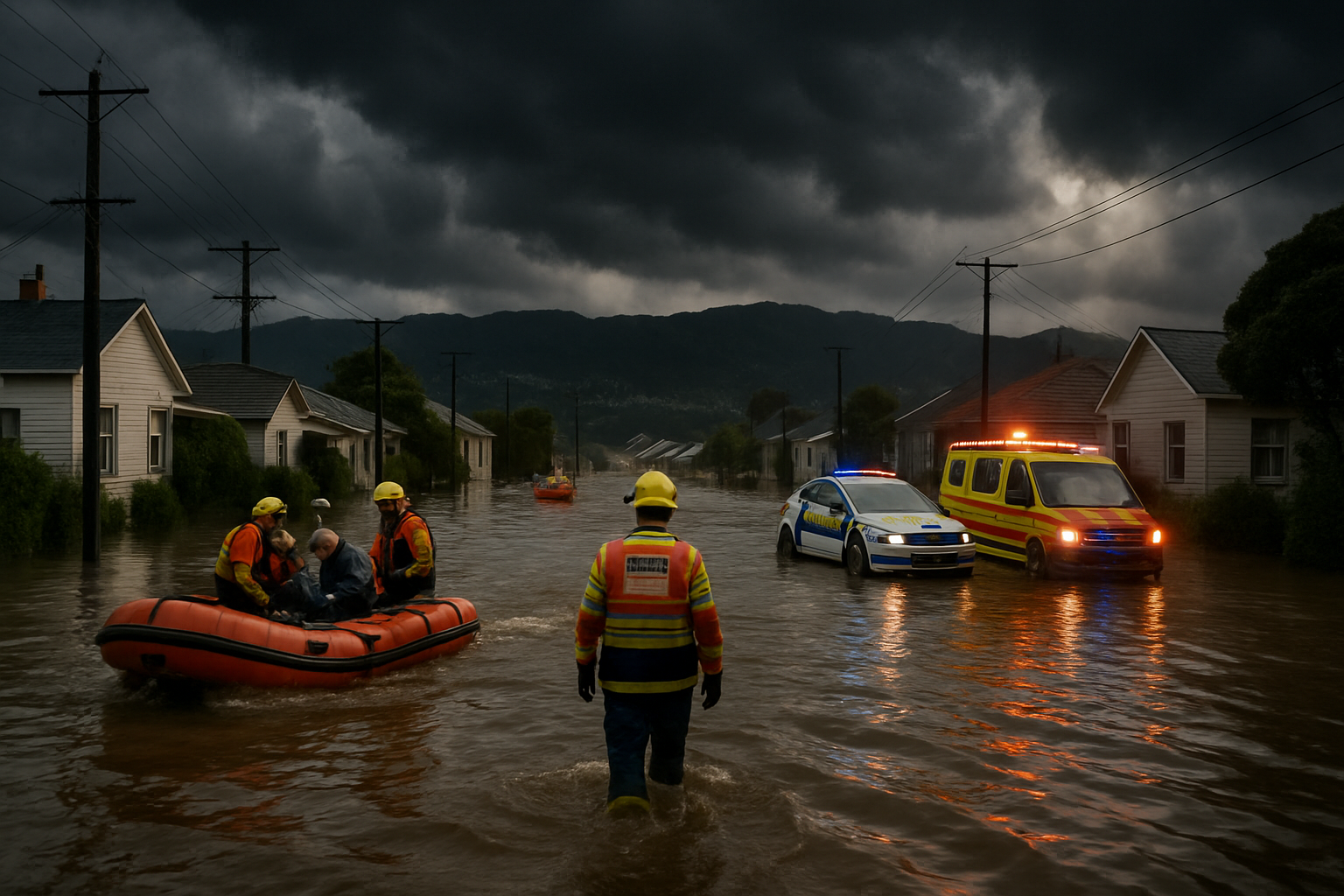
Emergency services across New Zealand's lower North Island are responding to multiple life-threatening flooding incidents as severe weather continues to batter the region, with at least one person missing and widespread evacuations underway following catastrophic rainfall that overwhelmed urban drainage systems.
The crisis began in the early hours of Wednesday morning when Wellington experienced a record-breaking 77mm of rainfall in just one hour, creating flash flooding conditions that forced residents to evacuate their homes carrying children across rail bridges to safety. The unprecedented downpour transformed streets into rivers and triggered dangerous landslides across the capital region.
Wellington Crisis Deepens
Philip Sutton, a New Zealand Post employee, remains missing following the Wellington storm, prompting extensive search operations by police and emergency services. The 58-year-old postal worker disappeared during the height of the flooding, adding urgency to rescue efforts across the affected region.
In Brooklyn, floodwaters reached depths of 170cm, forcing families to flee their homes. Mount Cook area witnessed vehicles being swept away by torrential rain, with residents describing scenes of "water everywhere" as half a dozen cars floated down Wright Street.
"We've never seen anything like this in Wellington. The intensity of the rainfall was beyond what our drainage systems could handle."
— Emergency Response Coordinator
Regional Impact Extends Beyond Wellington
The emergency extends far beyond the capital, with the Moutoa floodgates between Foxton and Shannon opened after 2am as the Manawatū River reached critical levels. MetService has issued ongoing warnings for complex weather systems threatening the North Island, creating cascading emergency management challenges that stretch response capabilities beyond their designed limits.
In Ōwhiro Bay, families experienced terrifying escapes from rising floodwaters. Barnaby Bocock and his family had mere minutes to flee as water surged through their home during the night hours, describing themselves as "lucky not to die" in the flooding event.
Infrastructure Under Extreme Pressure
The severe weather has exposed critical vulnerabilities in New Zealand's infrastructure, designed for historical rather than current climate patterns. Drainage systems across Wellington were completely overwhelmed, while transportation networks faced severe disruptions with multiple road closures affecting hundreds of thousands of residents.
According to weather experts, the current flooding crisis represents part of a broader pattern of extreme weather events that have repeatedly tested New Zealand's emergency response capabilities throughout 2026. The frequency and intensity of these events have fundamentally shifted recovery timelines from weeks to months or years.
Emergency Response Evolution
Emergency Minister Mark Mitchell acknowledged that New Zealand's emergency response capabilities are stretched as services manage recovery from previous disasters while simultaneously preparing for new threats. The concept of "compound disasters" - multiple emergency types occurring concurrently across vast geographic areas - has emerged as a defining challenge for traditional emergency response frameworks.
MetService meteorologists have warned that complex weather patterns threaten to bring additional severe conditions to the North Island, with "front followed by several active troughs" continuing to challenge the region's emergency management systems.
Climate Context and Long-term Implications
The current crisis occurs during what climatologists describe as the 24th consecutive month of global temperatures exceeding 1.5°C above pre-industrial levels - the longest sustained extreme warming period in recorded history. This unprecedented warming trend has created what scientists term the "climate volatility paradox," enabling both global heat records and devastating regional extremes through disrupted atmospheric circulation patterns.
The World Meteorological Organization reports a 50-60% probability of El Niño conditions developing between July and September 2026, potentially driving temperatures to unprecedented levels by combining baseline warming with natural cycle amplification.
"We're witnessing a fundamental shift from treating extreme weather as exceptional events to adapting to what's becoming the new normal of climate volatility."
— Climate Adaptation Expert
Community Resilience and Adaptation
Despite the severity of the current crisis, communities have demonstrated enhanced preparedness compared to previous extreme weather events. Households equipped with backup communications systems, emergency generators, and strengthened community networks have proved more resilient to the impacts of severe weather.
However, mental health services report increasing demand related to climate anxiety as families face the prospect of losing their homes multiple times within a single decade. The psychological toll of repeated extreme weather events has become a significant consideration in emergency planning and community support services.
Economic and Agricultural Impact
The flooding has caused extensive damage to agricultural operations, with crop and livestock losses occurring during critical growing seasons. The tourism sector faces continued disruptions, while infrastructure damage requires substantial investment in recovery and adaptation measures.
Recovery efforts are increasingly focused on "building back better" with climate-resilient infrastructure, recognizing that traditional rebuilding approaches are inadequate for the permanent climate volatility era that New Zealand now faces.
International Context and Cooperation
New Zealand's current weather emergency forms part of a global pattern of simultaneous extreme weather disasters affecting multiple continents. Traditional mutual aid mechanisms, designed for sequential regional emergencies, have proven inadequate when multiple countries face concurrent crises.
The European Union's Civil Protection Mechanism has been repeatedly activated throughout 2026, with the largest coordinated response involving €246 million in assistance to Sweden and Denmark. However, experts note that even these unprecedented coordination efforts remain insufficient for the scale and simultaneity of current global weather challenges.
Looking Forward: Adaptation Imperatives
Climate experts describe April 2026 as a watershed moment requiring New Zealand and other nations to choose between reactive crisis management and transformative infrastructure adaptation. Current weather conditions provide a preview of what may become routine in the 2030s without comprehensive climate adaptation investment.
The window for effective climate action continues to narrow as ecological systems approach critical thresholds that could trigger irreversible changes affecting global food security, climate stability, and human settlements. Environmental challenges transcend national boundaries, requiring unprecedented international cooperation and coordination.
As MetService continues to monitor developing weather systems and emergency services maintain heightened alert status, the current crisis underscores the urgent need for transformative approaches to infrastructure, emergency response, and community resilience in an era of permanent climate volatility.