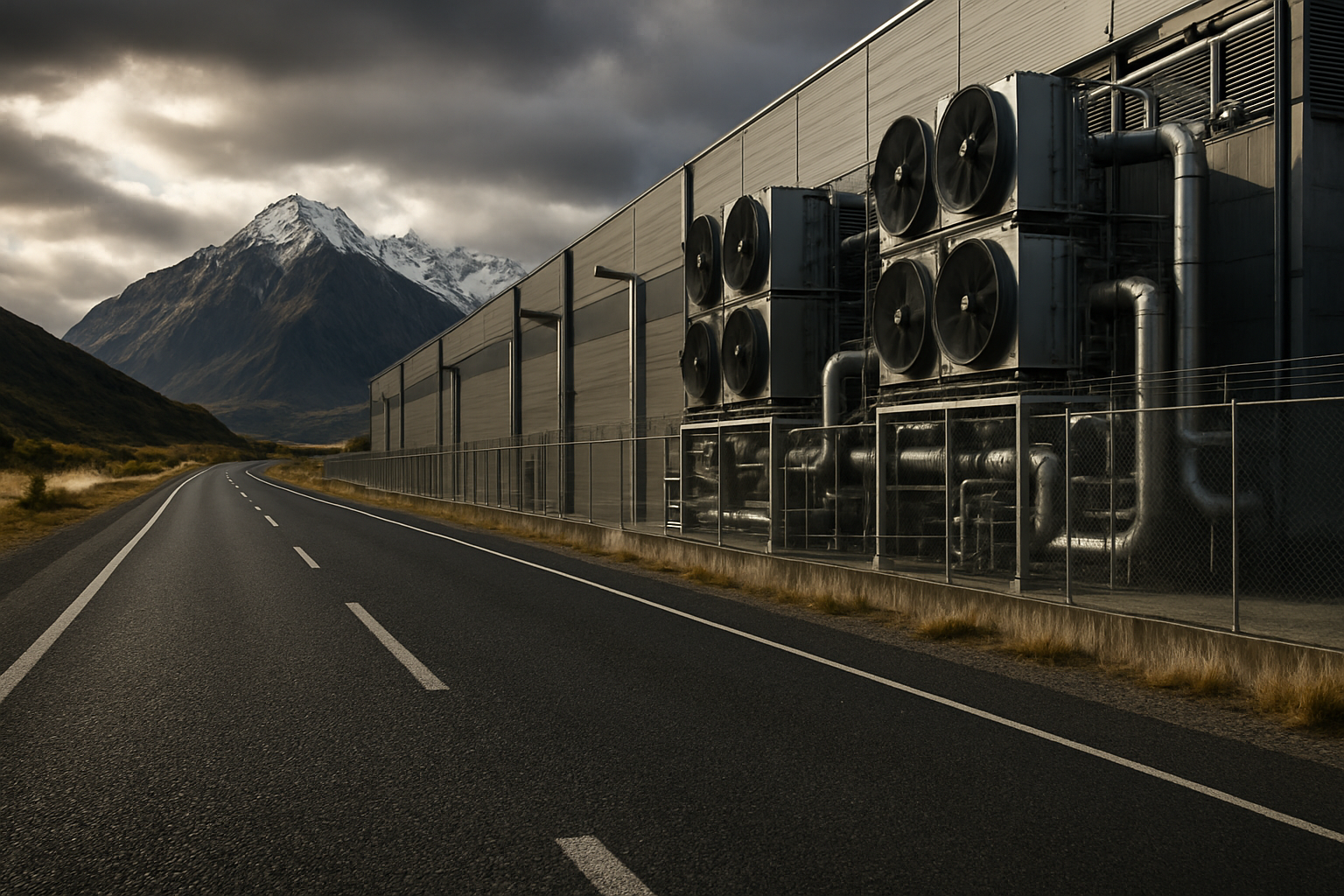
New Zealand has embarked on an ambitious dual innovation strategy, unveiling the country's first rubber road constructed from recycled tires while simultaneously approving a massive artificial intelligence factory near Invercargill that will become the nation's second-largest electricity consumer.
The groundbreaking infrastructure projects represent New Zealand's commitment to both environmental sustainability and technological advancement, positioning the Pacific nation as a leader in innovative solutions that balance economic growth with environmental responsibility.
Revolutionary Rubber Road Technology
The country's first rubber road has been successfully laid using recycled tire technology, incorporating nearly 1,800 used tires to create a revolutionary road surface that promises to be "safer, smoother, and quieter" than traditional asphalt. The innovative construction method represents a significant breakthrough in sustainable infrastructure development.
The rubber road implementation comes as New Zealand continues to demonstrate its commitment to circular economy principles and waste reduction. The project transforms what would otherwise be environmental waste into functional infrastructure, creating a model that could be replicated across the country and internationally.
According to officials, cars, trucks, bikes, and other road users will put the surfaces to the test over the winter months, providing crucial data on the durability and performance of this innovative road construction technique. The testing period will be critical in determining the viability of expanding rubber road technology across New Zealand's transportation network.
AI Factory Receives Resource Consent
Simultaneously, New Zealand has approved resource consent for a massive AI data center near Invercargill, which is set to become the country's second-highest electricity user. The facility, described as an "AI factory," represents a significant investment in New Zealand's digital infrastructure and positions the country as a major player in the global artificial intelligence industry.
The approval comes at a time when AI infrastructure demands are rapidly increasing worldwide, with data centers requiring enormous amounts of electricity for both processing power and cooling systems. The World Bank projects AI water demand could reach 4.2-6.6 billion cubic meters by 2027 for data center cooling alone, equivalent to four to six times Denmark's annual consumption.
However, the massive AI factory project has raised concerns about its potential impact on sea life and cultural values in the region. Environmental groups and local communities are closely monitoring the development to ensure proper safeguards are in place to protect the sensitive coastal ecosystem near Invercargill.
Global Context of Innovation
These developments occur within the broader context of New Zealand's ongoing infrastructure modernization efforts. The country has been actively pursuing innovative solutions to address climate change challenges while maintaining economic competitiveness in the global marketplace.
The dual projects reflect a sophisticated approach to balancing environmental stewardship with technological advancement. The rubber road project addresses waste management and sustainable construction, while the AI facility positions New Zealand to participate in the global digital economy transformation.
New Zealand's innovation strategy aligns with global trends toward sustainable infrastructure development and digital transformation. The country has consistently demonstrated leadership in environmental protection while seeking economic opportunities in emerging technology sectors.
Technical Implementation Challenges
The implementation of both projects faces significant technical and environmental challenges. The rubber road technology must prove its durability under New Zealand's varied weather conditions, from heavy winter rains to intense summer heat. The testing period over the coming winter months will provide crucial data on how the recycled tire surface performs under real-world conditions.
For the AI data center, the primary challenges involve managing the enormous electricity consumption while minimizing environmental impact. The facility's designation as the second-largest electricity user in New Zealand raises questions about energy grid stability and the potential need for additional renewable energy sources.
The project developers will need to address concerns about the facility's impact on local marine ecosystems and respect for Māori cultural values in the region. This includes ensuring that traditional relationships between indigenous communities and their ancestral lands are properly considered in the development process.
Economic and Environmental Implications
The economic implications of both projects are substantial. The rubber road technology could create new markets for tire recycling and sustainable construction materials, potentially generating significant employment opportunities in the environmental technology sector.
The AI data center represents a major investment in New Zealand's digital infrastructure, potentially attracting additional technology companies and creating high-skilled employment opportunities. However, the facility's massive electricity consumption also raises questions about energy costs and the need for additional renewable energy infrastructure.
From an environmental perspective, the rubber road project demonstrates clear benefits through waste reduction and resource recycling. However, the AI factory's energy demands present environmental challenges that will need to be carefully managed through renewable energy integration and efficient cooling systems.
International Significance
New Zealand's dual innovation approach has garnered international attention as countries worldwide seek to balance technological advancement with environmental sustainability. The rubber road technology could provide a model for other nations dealing with tire waste and infrastructure maintenance challenges.
The AI factory development positions New Zealand within the global artificial intelligence infrastructure network, joining countries like Singapore, Estonia, and various European nations in investing heavily in data center capabilities. This positioning could attract international technology partnerships and investment opportunities.
These projects occur during a period of unprecedented global infrastructure investment, with over $570 billion committed to various infrastructure projects worldwide. New Zealand's approach of combining environmental innovation with technological advancement could influence how other nations approach similar development challenges.
Future Outlook and Monitoring
The success of both projects will be closely monitored over the coming months and years. The rubber road's performance during the winter testing period will determine whether the technology can be expanded to other parts of New Zealand's transportation network.
For the AI data center, ongoing monitoring will focus on energy consumption patterns, environmental impact assessments, and the facility's contribution to New Zealand's digital economy development. The project's success could attract additional technology investments and position New Zealand as a regional hub for artificial intelligence development.
The integration of environmental sustainability with technological advancement represents a potential template for future infrastructure development not only in New Zealand but globally. As nations worldwide grapple with the challenge of maintaining economic competitiveness while addressing climate change, New Zealand's dual innovation approach offers valuable insights into how these seemingly competing priorities can be successfully balanced.
Both projects demonstrate New Zealand's commitment to innovative solutions that address multiple challenges simultaneously - from waste management and sustainable construction to digital infrastructure development and economic diversification. The outcomes of these initiatives will likely influence the country's approach to future infrastructure investments and could establish New Zealand as a global leader in sustainable innovation.