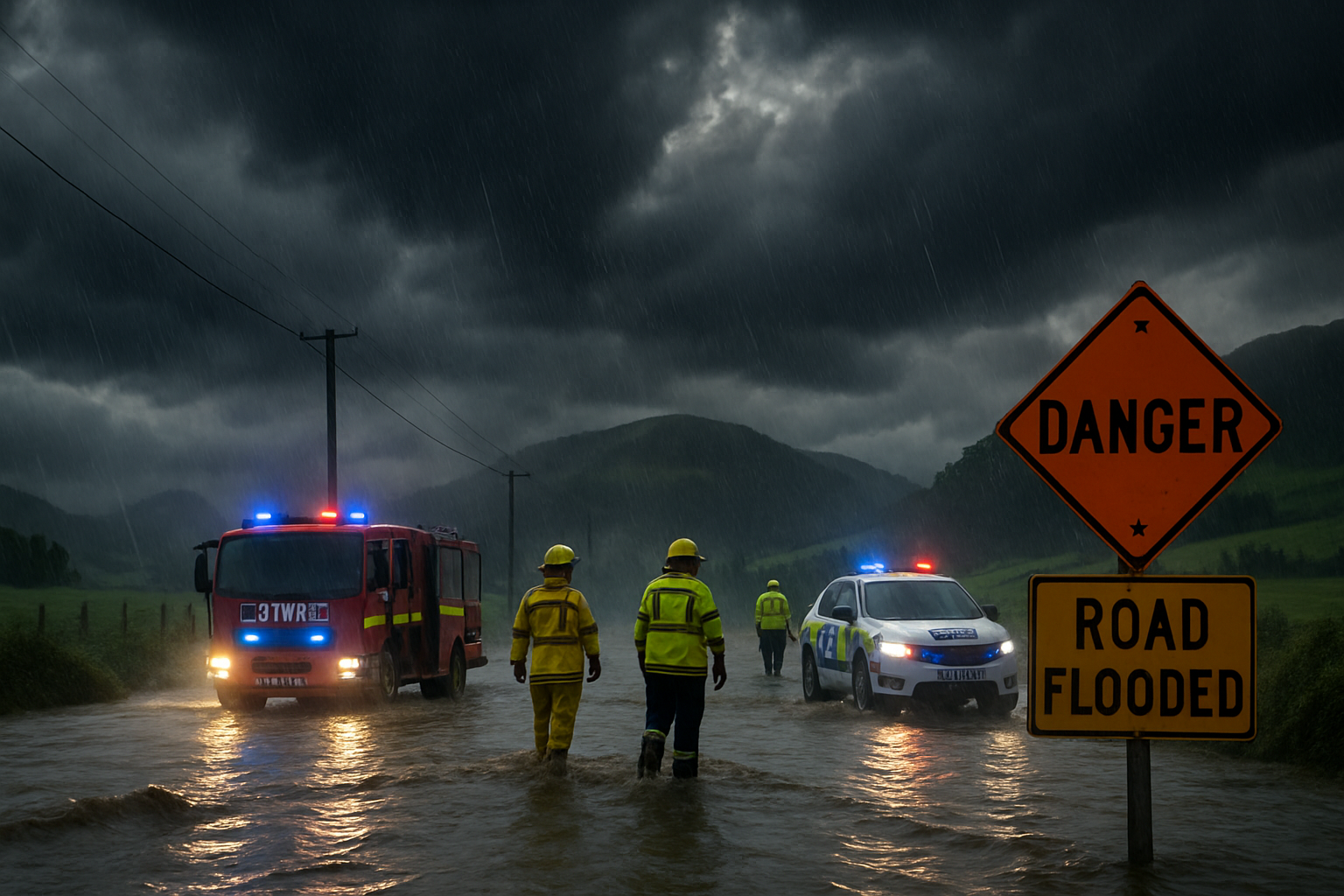
New Zealand is grappling with a multi-district weather emergency as three regions have declared states of emergency amid warnings of life-threatening conditions from dangerous river levels, significant flooding, and massive coastal swells threatening the nation's infrastructure and public safety.
MetService forecasters have issued their most severe warnings, cautioning that dangerous river conditions, significant flooding, and slips pose a direct threat to life across multiple regions. The weather service's stark assessment underscores the unprecedented nature of this weather event, which comes during what should be New Zealand's relatively stable summer season.
Wellington Under Siege from Seven-Meter Swells
The capital region faces particularly severe conditions as Wellington residents have been urgently warned to avoid south coast beaches due to extreme southerly winds and torrential rainfall striking the area. Weather models predict swells reaching up to seven meters, creating deadly conditions along the usually popular coastal areas.
The combination of severe winds and heavy precipitation has created a perfect storm scenario for the Wellington region, with authorities emphasizing that the south coast beaches, typically busy with residents and tourists, now pose extreme danger to anyone venturing near the shoreline.
Industrial Infrastructure at Risk
Adding to Wellington's woes, officials are closely monitoring the Moa Point wastewater treatment plant as the convergence of strong winds, massive swells, and heavy rainfall has significantly increased contamination concerns. The facility, crucial to Wellington's sanitation infrastructure, faces unprecedented pressure from the severe weather conditions.
Environmental authorities warn that the combination of extreme weather conditions could potentially lead to untreated wastewater reaching Wellington's south coast, creating both environmental and public health hazards. The situation represents a critical test of the capital's infrastructure resilience under extreme weather conditions.
Historical Context of New Zealand Weather Emergencies
This latest crisis builds upon New Zealand's recent history of severe weather events, including the devastating Ōtorohanga District flooding that occurred just days earlier. That emergency, which lasted a full week, demonstrated the country's vulnerability to extreme weather patterns that are becoming increasingly frequent and intense.
The Ōtorohanga flooding claimed at least one life when a man died after his car became submerged on State Highway 39. The tragedy highlighted the deadly potential of New Zealand's changing weather patterns, with local farmer Murray Orr, who has 70 years of local experience, stating he had "never seen rain like yesterday's deluge" while helping stranded motorists on Te Kawa Road.
During the Ōtorohanga emergency, museum collections containing precious taonga (cultural treasures) suffered damage, representing not just infrastructure loss but cultural heritage destruction. The human impact was devastating, with resident Colin Payne rescued from 3-meter high floodwaters, losing everything except his medication and describing himself as "totally and utterly devastated."
Global Weather Context
New Zealand's current weather emergency occurs within a broader pattern of extreme global weather events that have characterized early 2026. The crisis coincides with January 2026 being confirmed as the hottest month on record globally, marking the 18th consecutive month of temperatures exceeding 1.5°C above pre-industrial levels.
This global warming trend, paradoxically, enables more extreme regional weather events by disrupting traditional weather patterns and creating conditions for unprecedented storms, floods, and other severe weather phenomena. Climate scientists have warned that such simultaneous extreme events across different regions represent a preview of conditions expected to become routine by the 2030s without significant climate action.
Emergency Response and Infrastructure Challenges
The three-district state of emergency declaration demonstrates the scale and severity of the current weather crisis. Emergency services across the affected regions are operating at capacity limits, coordinating rescue operations, evacuation procedures, and infrastructure protection measures.
New Zealand's emergency management systems face the challenge of responding to multiple simultaneous crises across different regions, stretching resources and testing coordination capabilities. The situation mirrors global trends where traditional emergency response frameworks, designed for isolated regional events, struggle with the increasing frequency and scope of extreme weather emergencies.
Infrastructure Vulnerability and Adaptation Needs
The current crisis exposes significant vulnerabilities in New Zealand's infrastructure, from transportation networks to wastewater treatment facilities. The threat to the Moa Point plant exemplifies how extreme weather can cascade into multiple systems failures, creating compound emergencies that extend far beyond the immediate weather event.
Transportation infrastructure faces particular stress, with dangerous road conditions, potential bridge damage, and disrupted public transport networks. The lesson from State Highway 39, where the fatality occurred during the Ōtorohanga flooding, underscores how quickly familiar routes can become deadly during extreme weather events.
Community Resilience and Preparedness
Communities across the affected regions are demonstrating both vulnerability and resilience in the face of these extreme conditions. The experience of residents like Colin Payne, who lost almost everything in the Ōtorohanga floods, illustrates the personal devastation these events can cause.
However, stories of community support, such as Trish Osterman's efforts to sound neighborhood flooding alarms and Murray Orr's assistance to stranded motorists, highlight the crucial role of community preparedness and mutual aid in weather emergencies.
Economic and Cultural Impacts
Beyond immediate safety concerns, the ongoing weather emergencies carry significant economic and cultural costs. The damage to museum collections in Ōtorohanga represents irreplaceable cultural losses, while the broader economic impact includes disrupted business operations, tourism losses, and substantial infrastructure repair costs.
Agricultural sectors face particular vulnerability, with extreme weather threatening both current operations and long-term productivity. The tourism industry, crucial to New Zealand's economy, must contend with both immediate safety concerns and longer-term infrastructure damage that could affect future operations.
Climate Adaptation Imperative
The current crisis reinforces the urgent need for comprehensive climate adaptation strategies across New Zealand. As extreme weather events become more frequent and severe, the country must invest in resilient infrastructure, enhanced early warning systems, and improved emergency response capabilities.
The vulnerability of critical facilities like the Moa Point wastewater treatment plant demonstrates the need for infrastructure hardening and backup systems designed to withstand increasingly severe weather conditions. Similarly, transportation networks require redesign to maintain functionality during extreme weather events.
Looking Forward: Building Resilience
As New Zealand confronts this immediate weather emergency, the crisis provides crucial lessons for future preparedness. The experience of managing simultaneous emergencies across multiple districts offers insights into resource allocation, coordination mechanisms, and community engagement strategies.
The recovery phase will be critical for implementing "build back better" principles that enhance resilience rather than simply restoring previous conditions. This includes upgrading infrastructure to withstand future extreme weather, improving early warning systems, and strengthening community preparedness programs.
International cooperation and knowledge sharing will be essential as countries worldwide face similar challenges from increasingly volatile climate conditions. New Zealand's experience managing these compound weather emergencies contributes to global understanding of climate adaptation requirements and emergency response evolution.
The current three-district emergency represents more than an immediate crisis—it's a preview of New Zealand's climate future and a test of the nation's capacity to adapt, respond, and build resilience in an era of unprecedented weather volatility.