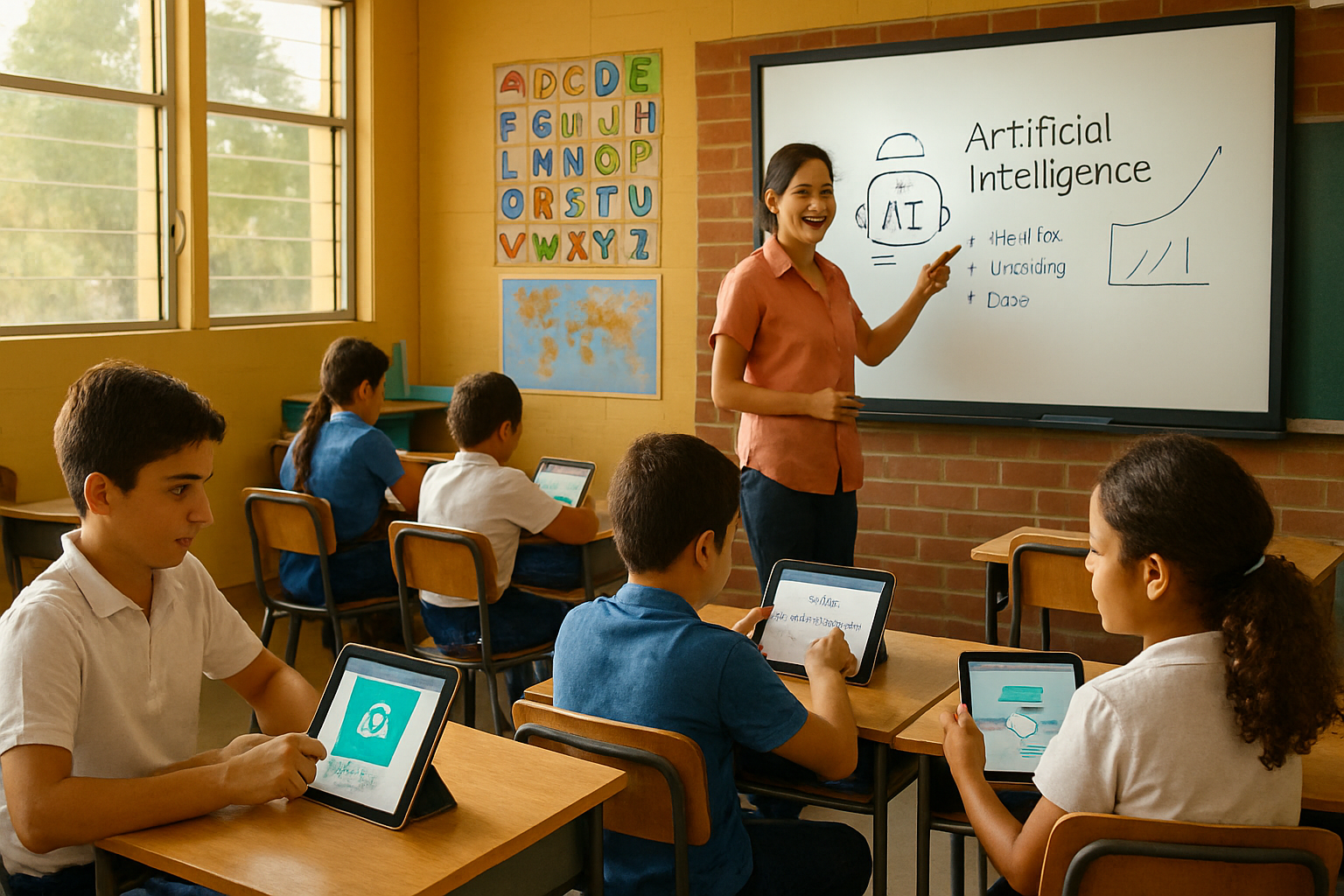
Nicaragua's National Education System has announced the introduction of the country's first artificial intelligence catalog, marking a significant milestone in the nation's educational modernization efforts and positioning it among the growing number of countries leveraging AI to enhance teaching methodologies.
The groundbreaking initiative, unveiled by Nicaragua's Ministry of Education (MINED), represents a comprehensive approach to integrating artificial intelligence tools into the country's educational infrastructure. This development comes as part of a broader global trend toward educational technology adoption, with Nicaragua joining nations like Malaysia, Singapore, and Canada in implementing AI-enhanced learning systems.
Revolutionary Educational Technology Integration
The AI catalog is designed to strengthen pedagogical practices and modernize teacher training across Nicaragua's educational institutions. According to official announcements, the system will provide educators with advanced tools for curriculum development, student assessment, and personalized learning approaches.
This initiative builds upon Nicaragua's recent digital education campaigns, including the Ministry's comprehensive digital safety program that reached over 30,000 students focusing on "internet seguro y uso responsable de la tecnología" (safe internet and responsible technology use). The ministry has also launched the "Festivales de Sincronía Digital 2026" program, promoting AI training for young people across the country.
Global Context of Educational AI Revolution
Nicaragua's AI catalog launch occurs during what researchers have termed the "2026 Educational Technology Renaissance," a global phenomenon characterized by thoughtful integration of digital tools with traditional educational values. Countries worldwide are implementing similar initiatives, demonstrating diverse approaches to AI-enhanced education.
Malaysia has established the world's first AI-integrated Islamic school, combining artificial intelligence with both naqli (religious) and aqli (academic) learning. Singapore's WonderBot 2.0 has proven successful in heritage education through conversational AI systems. Canada has pioneered responsible AI integration in universities, with institutions implementing AI teaching assistants while maintaining critical thinking standards.
"Educational transformation requires technology as an enhancement tool serving educational goals rather than replacement of fundamental relationships."
— Educational Technology Analysis, February 2026
Strategic Implementation Challenges and Opportunities
The implementation of Nicaragua's AI catalog faces several global challenges currently affecting educational technology deployment worldwide. The ongoing global memory crisis, with semiconductor prices having surged sixfold affecting major manufacturers like Samsung, SK Hynix, and Micron, has created infrastructure bottlenecks expected to persist until 2027 when new fabrication facilities come online.
Despite these constraints, Nicaragua's approach demonstrates strategic thinking in educational technology adoption. The country's comprehensive teacher training initiatives, involving over 5,000 educators nationwide, provide a solid foundation for AI integration. This massive pedagogical development program represents one of the most comprehensive documented in recent years, emphasizing the strengthening of teaching practices and promotion of educational innovation.
Addressing Digital Safety and Responsible AI Use
A critical component of Nicaragua's AI education strategy involves digital safety education. The ministry's extensive work in this area, including safe navigation conferences that attracted over 4,000 participants, demonstrates a responsible approach to technology integration that prioritizes student welfare and ethical AI use.
This focus on digital citizenship aligns with global best practices observed in successful AI education implementations. Research indicates that 96% of children aged 10-15 use social media, with 70% experiencing harmful content exposure and 50% encountering cyberbullying. Nicaragua's proactive approach to digital safety education positions the country as a regional leader in responsible educational technology adoption.
International Cooperation and Regional Impact
Nicaragua's AI catalog development reflects broader patterns of international cooperation in educational technology. The global shift toward AI-enhanced education has been facilitated by knowledge sharing between countries, technical assistance programs, and coordinated development efforts that enhance individual national program effectiveness.
Regional implications of Nicaragua's initiative extend beyond national borders. As one of the first Central American countries to implement a comprehensive AI education catalog, Nicaragua could serve as a model for neighboring nations seeking to modernize their educational systems while maintaining cultural integrity and addressing local needs.
Success Factors and Implementation Strategy
Analysis of successful AI education implementations globally reveals several critical success factors that Nicaragua appears to be addressing:
- Sustained political commitment with long-term vision surviving electoral cycles
- Comprehensive teacher training and professional development programs
- Balance between technological innovation and traditional educational values
- Cultural sensitivity and local adaptation of AI tools
- Strong emphasis on digital safety and ethical AI use
- Community engagement involving students, families, and educators
Economic and Social Implications
The implementation of Nicaragua's AI education catalog represents a significant investment in human capital development. Educational technology investments have demonstrated measurable benefits including improved community resilience, reduced long-term social service demands, and enhanced international competitiveness through skilled workforce development.
Prevention-first approaches in education generate substantial returns including reduced crisis intervention costs, decreased unemployment, and improved workforce productivity. For Nicaragua, this positions the nation advantageously in the global knowledge economy while maintaining its cultural authenticity and addressing specific local educational challenges.
Future Trajectory and Global Significance
Nicaragua's AI catalog initiative occurs at a critical juncture in global educational policy development. The success of this program could influence international educational policy discussions and provide practical templates adaptable across cultural and economic contexts in Latin America and beyond.
The timing is particularly significant as the world experiences what experts describe as the most critical period for AI implementation since the technology boom began. February 2026 represents a watershed moment where AI transitions from experimental to essential infrastructure across sectors, with educational applications leading the way in demonstrating responsible and effective integration.
As Nicaragua moves forward with implementing its AI catalog, the international community will be watching closely to assess outcomes and learn from both successes and challenges. The initiative represents not just technological advancement but a commitment to preparing Nicaraguan students for an increasingly interconnected global economy while preserving the nation's educational values and cultural heritage.
The success of Nicaragua's AI education catalog will depend on continued investment in teacher training, infrastructure development, and international cooperation, but early indicators suggest the country is well-positioned to become a regional leader in AI-enhanced education that serves human flourishing rather than replacing fundamental educational relationships.