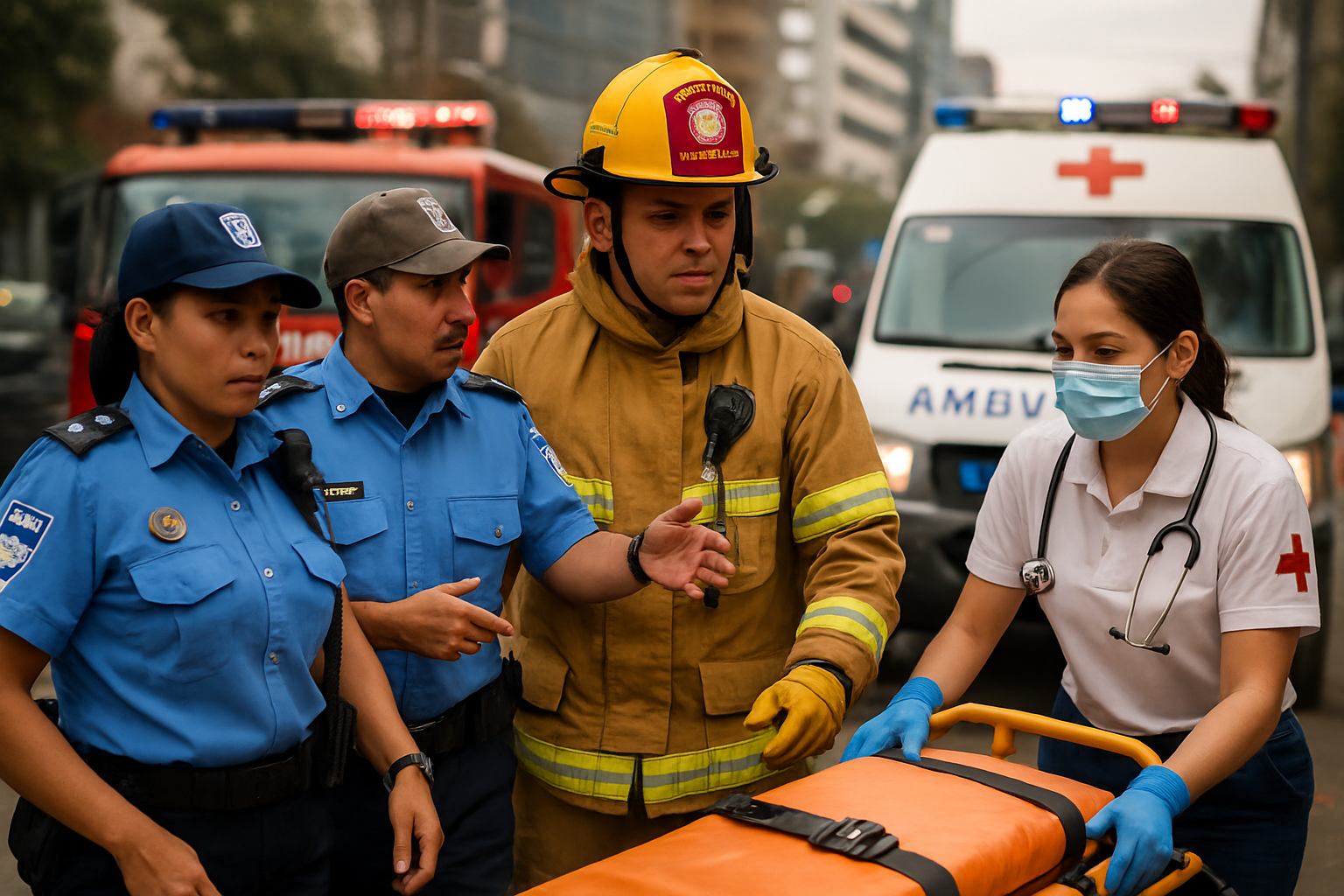
Nicaragua is implementing a comprehensive public safety strategy combining targeted police operations, preventive firefighter inspections, and expanded emergency health services, demonstrating coordinated multi-agency responses to diverse community safety challenges during the critical Holy Week period.
The country's National Police has significantly intensified efforts to combat gender-based violence, successfully capturing three individuals involved in crimes against women while simultaneously deploying over 3,000 security visits to rural areas. These operations represent a systematic approach to addressing both urban violence and rural security concerns, reflecting Nicaragua's commitment to comprehensive public safety coverage across diverse geographic regions.
Police Operations Target Gender Violence and Rural Security
According to the National Police's latest weekly report, law enforcement agencies have achieved notable success in apprehending perpetrators of gender-based violence, a priority area requiring specialized investigative techniques and victim support protocols. The capture of three aggressors demonstrates enhanced coordination between investigative units and community reporting systems.
Simultaneously, the deployment of over 3,000 security visits to rural areas represents one of the most extensive community policing initiatives in recent years. These visits encompass crime prevention consultations, security assessments, and community engagement activities designed to strengthen relationships between law enforcement and rural populations often facing unique challenges in accessing emergency services.
Rural security visits address specific vulnerabilities including agricultural equipment theft, domestic violence in isolated areas, drug trafficking through remote routes, and emergency response coordination where traditional infrastructure may be limited. The scale of deployment indicates significant resource commitment to ensuring equitable public safety coverage regardless of geographic location.
Firefighter Prevention Program Enhances Market Safety
Bomberos Unidos has initiated comprehensive preventive inspections at the Israel Lewites Market, one of Nicaragua's major commercial centers, focusing on electrical systems, gas installations, and fire suppression equipment. These inspections represent proactive risk management approaches that prevent emergencies rather than merely responding to incidents after they occur.
Market environments present unique fire safety challenges due to dense vendor concentrations, diverse electrical configurations, cooking facilities using various fuel sources, and high foot traffic creating complex evacuation scenarios. The systematic inspection program addresses these vulnerabilities through technical assessments, safety equipment verification, and emergency protocol training.
Fire prevention initiatives have proven particularly effective in commercial settings where small preventive investments significantly reduce potential catastrophic losses affecting multiple vendors, their families, and broader community economic stability. The Israel Lewites Market inspection program serves as a model for similar commercial risk reduction initiatives throughout Nicaragua.
Health Emergency Services Expansion for Holy Week
Nicaragua's Ministry of Health has implemented an ambitious emergency medical response system for Holy Week celebrations, installing 348 medical posts and 57 mobile clinics across recreational centers throughout the country. This represents one of the largest temporary health infrastructure deployments in Nicaragua's recent history.
The expanded medical presence addresses predictable increased demand during religious celebrations when families travel extensively, participate in outdoor activities, and gather in large numbers at recreational and religious sites. Mobile clinics provide immediate medical attention for common holiday-related issues including dehydration, minor injuries, medication needs, and emergency interventions.
Strategic placement of medical facilities considers population movement patterns, historical incident data, and geographic accessibility to ensure comprehensive coverage. The 348 medical posts represent permanent staffing at fixed locations, while 57 mobile clinics provide flexible response capabilities reaching areas with temporary population increases during celebrations.
Coordinated Multi-Agency Public Safety Approach
The simultaneous implementation of police operations, firefighter inspections, and health service expansion demonstrates sophisticated inter-agency coordination addressing multiple dimensions of public safety. This integrated approach recognizes that community security depends on preventing various types of emergencies while maintaining rapid response capabilities when incidents occur.
Multi-agency coordination requires extensive planning, resource allocation, communication protocols, and performance monitoring across different organizational cultures and operational approaches. Success depends on clear command structures, shared information systems, and unified objectives despite diverse specialized functions.
Nicaragua's approach reflects international best practices emphasizing prevention-first strategies that reduce emergency response demands while improving community outcomes. Countries implementing comprehensive prevention programs consistently demonstrate superior cost-effectiveness compared to reactive response models, achieving better population safety with enhanced resource efficiency.
Rural-Urban Public Safety Balance
The distribution of security initiatives across urban centers like markets and rural areas requiring extensive travel demonstrates commitment to equitable public safety coverage. Rural communities often face unique challenges including longer emergency response times, limited infrastructure, and different crime patterns requiring specialized approaches.
Urban commercial centers like the Israel Lewites Market present concentrated risks affecting large numbers of people and significant economic activity, justifying intensive prevention programs. Rural security visits address dispersed populations facing isolation-related vulnerabilities that may not receive adequate attention through traditional urban-focused policing models.
Balancing urban and rural security needs requires sophisticated resource allocation considering population density, risk assessment, available infrastructure, and community-specific vulnerabilities. Nicaragua's approach indicates systematic analysis of diverse public safety requirements across its geographic and demographic spectrum.
International Context and Best Practices
Nicaragua's public safety initiatives align with global trends toward prevention-first emergency management systems. International research consistently demonstrates that proactive risk reduction investments deliver superior results compared to reactive emergency response approaches, both in human safety outcomes and economic efficiency.
The integration of health emergency services with security operations reflects comprehensive understanding of public safety extending beyond traditional law enforcement to encompass medical preparedness, fire prevention, and community resilience. This holistic approach addresses interconnected risks that can compound during emergencies if not properly coordinated.
Similar multi-agency coordination models have proven successful in other Latin American countries facing comparable challenges including rural-urban security disparities, seasonal population movements, and resource optimization requirements. Nicaragua's experience provides valuable lessons for regional cooperation and best practice sharing.
Community Engagement and Prevention Focus
The emphasis on prevention through firefighter inspections, rural security visits, and proactive health service deployment indicates sophisticated understanding that community safety depends more on preventing emergencies than responding to them after occurrence. Prevention-first approaches consistently demonstrate superior outcomes while requiring less resource-intensive interventions.
Community engagement through security visits and safety inspections builds relationships between emergency services and populations they serve, creating trust networks essential for effective emergency response when needed. These relationships facilitate information sharing, voluntary compliance with safety measures, and community cooperation during crisis situations.
Public safety effectiveness ultimately depends on community participation in risk reduction activities, reporting suspicious activities, maintaining safety equipment, and supporting emergency response operations. Nicaragua's approach recognizes that sustainable security emerges from partnership between professional emergency services and engaged communities.
Economic and Social Implications
Investment in comprehensive public safety infrastructure generates significant economic multiplier effects extending beyond immediate security benefits. Market fire prevention protects vendor livelihoods and community economic stability. Rural security enhancement supports agricultural productivity and rural community development. Expanded health services reduce medical emergency costs while supporting tourism and recreational activities.
The Holy Week health service expansion specifically supports Nicaragua's important religious tourism sector, ensuring visitor safety while protecting the country's reputation as a secure destination. Medical preparedness during major events demonstrates institutional capacity and professional emergency management attracting international confidence in Nicaragua's tourism and business sectors.
Social cohesion benefits from visible public safety investments include increased community confidence, reduced fear of victimization, enhanced quality of life, and stronger civic engagement. Communities experiencing effective public safety services report higher levels of social trust and civic participation, creating positive feedback loops reinforcing democratic governance and social stability.