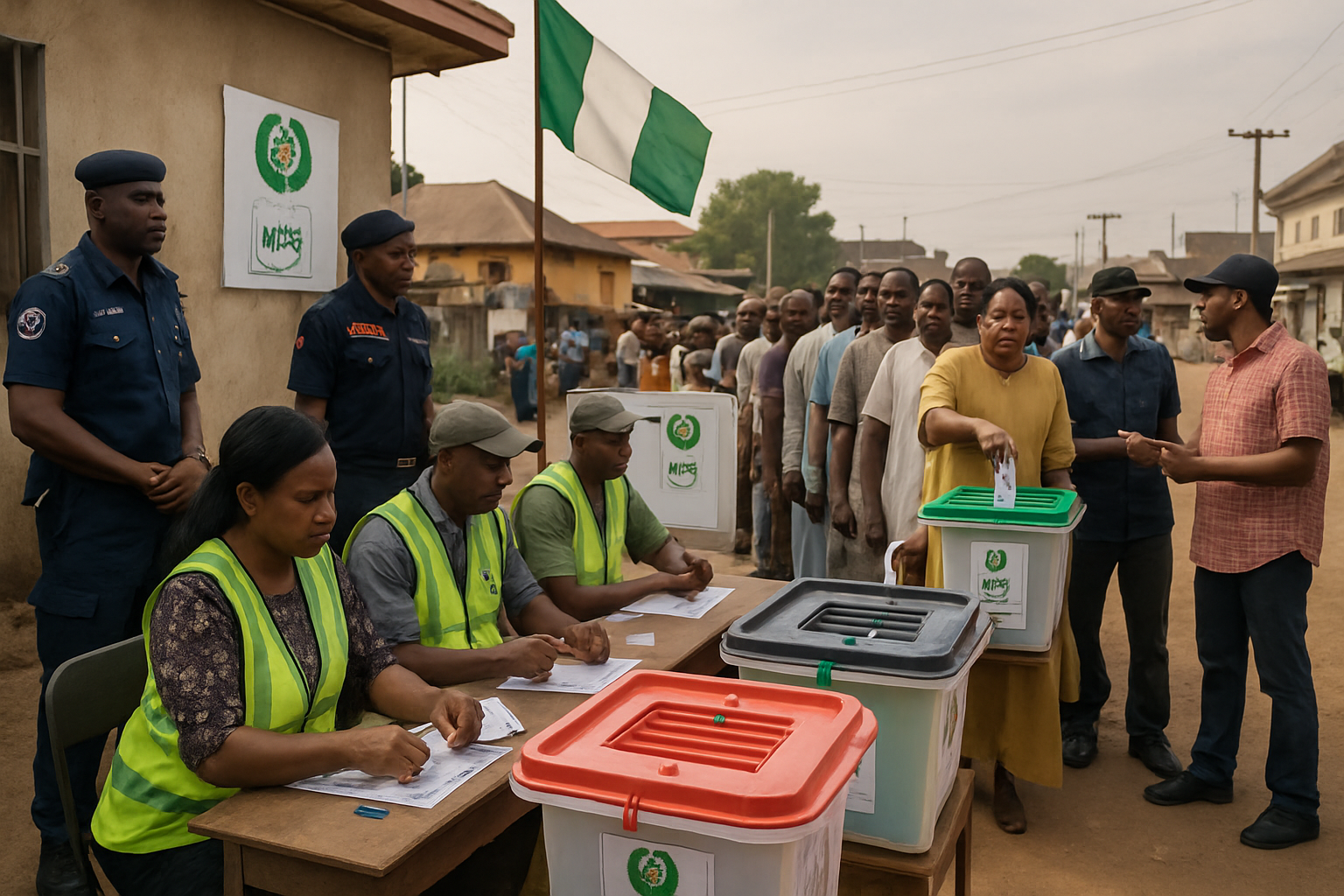
Nigeria's Federal Capital Territory council elections have been overshadowed by alarming reports of systematic vote-buying and violent confrontations between political party agents, raising serious questions about the integrity of Nigeria's electoral processes.
The elections, held across the FCT on February 21, 2026, witnessed unprecedented levels of monetary inducement, with voters openly admitting to receiving cash payments in exchange for their support. Multiple incidents of violence erupted at polling units as party agents clashed over allegations of electoral manipulation.
Systematic Vote-Buying Operations
The Nigeria Civil Society Situation Room, a coalition of over 70 civil society organizations, reported widespread vote-buying across multiple polling units in the FCT. In their interim report on the election, the organization documented systematic attempts to financially influence voters.
"In a few places, it was done openly in polling units," the Situation Room stated, highlighting the brazen nature of the violations. The organization noted that vote-buying was observed in many of the polling units visited by their network of observers.
The scale of monetary inducement reached shocking levels, with reports of individual payments ranging from ₦2,000 to as high as ₦10,000 per voter. In Gwagwalada, one polling unit became the center of controversy when a voter openly claimed that individuals linked to the People's Democratic Party (PDP) were distributing ₦2,000 to voters in exchange for their support.
"I received ₦5,000 from them to vote for their candidate,"
— Anonymous voter, Gwagwalada polling unit
Party Agent Confrontations and Security Response
Tensions escalated dramatically at Polling Unit 035 in Nyanya, Abuja Municipal Area Council, where agents of the Peoples Democratic Party and the African Democratic Congress accused the ruling All Progressives Congress of attempting to financially induce voters.
The confrontation led to a brief disruption of the electoral process as opposition party agents protested what they termed systematic vote-buying by APC operatives. The situation became so volatile that operatives of the Nigeria Police Force and the Nigeria Security and Civil Defence Corps were forced to reinforce security at the polling unit.
These incidents reflect a broader pattern of mistrust and allegations of electoral manipulation that have characterized Nigeria's democratic processes in recent years. The fact that such confrontations occurred in the nation's capital territory, under heightened security and observer presence, underscores the depth of the challenges facing Nigeria's electoral system.
Polling Disruptions and Administrative Challenges
Beyond the vote-buying allegations, the elections were also plagued by significant administrative challenges that further compromised their credibility. The Civil Society Situation Room reported a relatively late opening of polls across the FCT, with an average opening time of 9:15 AM in many observed polling units.
This delayed start to voting operations created additional opportunities for electoral malpractices and raised questions about the Independent National Electoral Commission's (INEC) preparedness to conduct credible elections. Late opening of polls has historically been associated with reduced voter turnout and increased opportunities for manipulation.
The combination of late poll openings, widespread vote-buying, and violent confrontations between party agents painted a disturbing picture of Nigeria's electoral landscape. These issues collectively undermined public confidence in the democratic process and raised concerns about the country's commitment to free and fair elections.
Civil Society Response and Calls for Reform
The Nigeria Civil Society Situation Room's findings represent just the latest in a series of reports documenting systematic failures in Nigeria's electoral processes. The organization's network of observers has consistently highlighted similar patterns of vote-buying, violence, and administrative incompetence across multiple election cycles.
The coalition's report on the FCT council elections emphasized the urgent need for comprehensive electoral reforms. Their documentation of vote-buying reaching ₦10,000 per voter represents a significant escalation from previous elections, suggesting that monetary inducement has become increasingly institutionalized within Nigeria's political system.
Civil society organizations have repeatedly called for stronger enforcement mechanisms to combat vote-buying, including more severe penalties for offenders and better training for electoral officials. However, the persistence of these practices suggests that current deterrent measures are insufficient.
Security Context and Broader Implications
The electoral violence in the FCT occurred against the backdrop of broader security challenges facing Nigeria. While the capital territory witnessed party agent clashes and vote-buying, other parts of the country continued to grapple with more severe security threats.
In Zamfara State, armed men killed at least 38 people in the village of Dutse Dan Ajiya, highlighting the persistent security challenges that plague Nigeria's democratic governance. Such incidents underscore the complex relationship between security, governance, and democratic participation in Nigeria.
The contrast between electoral violence in Abuja and armed attacks in states like Zamfara illustrates the multi-faceted nature of Nigeria's security challenges. While the FCT elections were marred by vote-buying and party agent clashes, other regions face existential threats from armed groups that make meaningful democratic participation nearly impossible.
International Implications and Democratic Credibility
Nigeria's role as Africa's most populous democracy and largest economy means that its electoral challenges have implications far beyond its borders. The systematic vote-buying and violence documented during the FCT council elections contribute to declining international confidence in Nigeria's democratic institutions.
The fact that such widespread electoral malpractices occurred in the nation's capital, under the direct oversight of federal authorities and in the presence of civil society observers, raises serious questions about Nigeria's commitment to democratic governance. International partners and regional bodies have consistently emphasized the importance of credible elections for Nigeria's democratic development and regional stability.
The persistence of vote-buying and electoral violence also undermines Nigeria's leadership role within regional organizations such as ECOWAS, where the country has often advocated for democratic governance and electoral integrity in neighboring states.
Looking Forward: Challenges and Opportunities
The FCT council elections have exposed fundamental weaknesses in Nigeria's electoral system that require urgent attention. The combination of vote-buying, violence, and administrative failures represents a systemic crisis that threatens the legitimacy of democratic governance in Africa's most important democracy.
Reform efforts must address multiple dimensions of electoral failure, including strengthening law enforcement capabilities to combat vote-buying, improving INEC's operational capacity to ensure timely and efficient elections, and building stronger institutional safeguards against electoral violence.
Civil society organizations like the Nigeria Civil Society Situation Room continue to play a crucial role in documenting electoral failures and advocating for reforms. Their work provides essential transparency and accountability in a system where institutional oversight mechanisms have proven inadequate.
The international community also has a role to play in supporting Nigeria's democratic development through technical assistance, capacity building, and diplomatic pressure for meaningful reforms. However, lasting change must ultimately come from within Nigeria itself, through the collective commitment of political leaders, civil society, and citizens to democratic governance.
As Nigeria approaches future electoral cycles, including potential state and federal elections, the lessons from the FCT council elections must inform comprehensive reform efforts. The stakes could not be higher for a country whose democratic stability has profound implications for regional peace and prosperity.