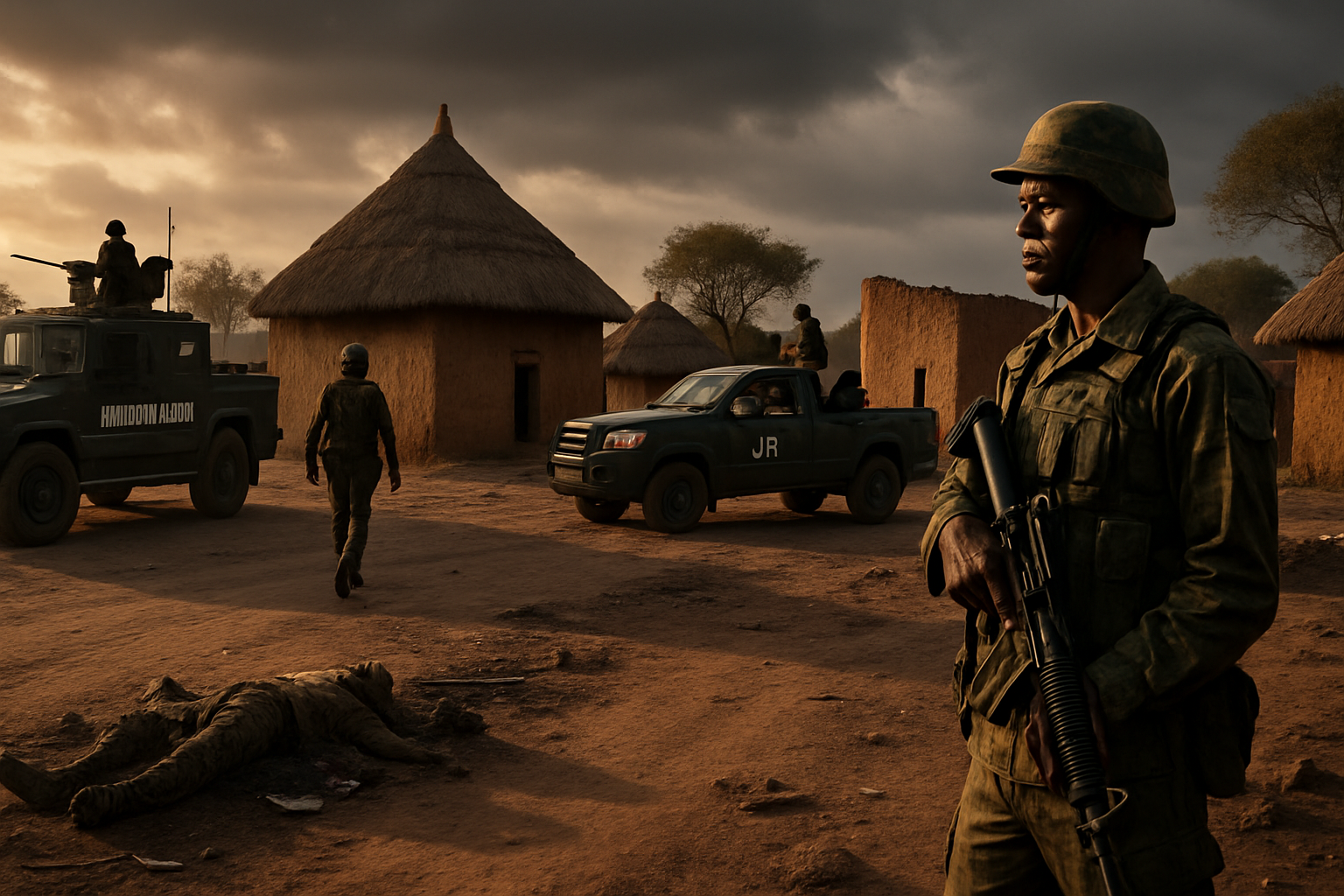
At least 15 people have been killed in coordinated jihadist attacks targeting villages in northwest Nigeria, according to local sources, marking the latest escalation in a security crisis that continues to spread beyond the country's traditional northeastern strongholds.
The attacks, which targeted rural communities in Nigeria's northwest region, represent a concerning geographic expansion of terrorist activities that have plagued the nation for over a decade. Local sources confirmed to AFP that the casualties resulted from systematic assaults on civilian populations, following the established pattern of violence that has characterized Nigeria's ongoing security challenges.
Pattern of Escalating Violence
The latest incidents occur against the backdrop of a dramatic escalation in terrorist activities across Nigeria throughout 2026. The attacks echo the devastating pattern seen in February's Kwara State massacre, where the Lakurawa group—affiliated with the Islamic State—killed over 170 people in coordinated village raids. That attack shocked the nation as it represented the first major terrorist incident in what had previously been considered a stable region.
Intelligence reports consistently document that communities have repeatedly warned authorities about armed groups establishing camps in surrounding areas, only to see these warnings ignored until attacks occur. This systematic failure of early warning systems has become a hallmark of Nigeria's security challenges, with tragic consequences for rural populations.
Geographic Expansion of Terror Networks
The northwest attacks demonstrate the sophisticated territorial expansion capabilities of terrorist networks operating across Nigeria. What began as isolated incidents in the northeastern states of Borno, Adamawa, and Yobe has now spread to encompass virtually every region of Africa's most populous nation.
Recent months have witnessed attacks extending far beyond traditional Boko Haram and ISWAP strongholds. March's devastating Maiduguri suicide bombings during Ramadan killed 23 people and wounded over 146 others, shattering years of relative calm in the northeastern city that serves as a major counter-terrorism hub. The coordinated nature of these attacks, targeting civilians during religious observances, highlights the evolving tactical sophistication of terrorist groups.

Government Response and Military Operations
President Bola Ahmed Tinubu's administration has deployed army battalions and forest guards across affected regions, but the reactive nature of these responses has allowed militant groups to maintain operational initiative. Military sources report eliminating over 400 militants in February operations across Balochistan alone, yet attacks continue to occur with devastating regularity.
The loss of senior military leadership has further complicated counter-terrorism efforts. The March killing of Lieutenant Colonel Umar Farouq during coordinated attacks on military bases in Borno State represented a significant blow to operational capabilities. These attacks demonstrated that terrorist groups have evolved beyond targeting civilian populations to directly confronting military installations with sophisticated coordination and intelligence gathering.
"The security situation requires comprehensive approaches beyond military responses to address poverty, unemployment, climate-induced resource competition, and governance deficits that enable extremist recruitment."
— Security Analysis Expert
International and Regional Implications
Nigeria's security deterioration affects West African stability given the country's status as the region's largest economy and most populous nation. International partners have expressed concern about trade routes, humanitarian access, and regional development impacts as terrorist activities expand geographically.
The expansion shows Islamic State affiliations connecting local grievances to global extremist networks. Enhanced ECOWAS cooperation and international intelligence sharing have become critical for addressing transnational criminal networks operating across borders in the Sahel region.
Humanitarian Crisis Deepens
The latest attacks contribute to a growing humanitarian emergency across Nigeria. Thousands have been displaced seeking shelter in neighboring communities, while commercial establishments and infrastructure continue to face systematic destruction. Educational and healthcare facilities have become particular targets, representing a long-term threat to development and social stability.
Medical facilities are overwhelmed treating wounded civilians, while aid organizations face increasing access challenges in affected areas. The Red Cross and other humanitarian groups report being stretched beyond capacity as multiple displacement crises occur simultaneously across different states.
Intelligence Failures and Early Warning Systems
A disturbing pattern has emerged of communities providing advance warnings about armed groups establishing camps in local areas, only to have these alerts ignored by authorities. This represents a critical vulnerability that terrorist groups continue to exploit for operational base establishment and major attack planning.
The systematic nature of these intelligence failures suggests fundamental coordination problems between federal, state, and local security agencies. Communities are forced to bear the burden of early detection while lacking the capacity to respond effectively to confirmed threats.
Economic and Social Impact
The expanding security crisis has severe economic implications beyond the immediate human cost. Agricultural production faces disruption as farming communities are forced to abandon their lands. Commercial activities suffer as traders and business owners flee affected areas, contributing to unemployment and economic stagnation that can fuel further extremist recruitment.
Educational systems face particular pressure as schools become targets for kidnapping and destruction. The long-term development implications of this educational disruption will affect Nigeria's future stability and prosperity for generations.
Path Forward: Comprehensive Solutions Needed
Security experts emphasize that military responses alone are insufficient to address the complex factors enabling terrorist expansion. Effective solutions require enhanced security combined with addressing underlying factors including economic opportunity, education access, governance improvements, and community engagement initiatives.
The success of military operations depends not only on tactical effectiveness but on the government's ability to establish sustainable security and development in liberated areas. This requires coordinated approaches involving security forces, development agencies, and local communities working together to prevent terrorist groups from reestablishing operations.
International support continues through various channels, but the ultimate responsibility for addressing Nigeria's security challenges rests with domestic institutions and their ability to provide effective governance and security for all citizens regardless of their geographic location or religious affiliation.
Conclusion
The latest jihadist attacks killing 15 people in northwest Nigeria underscore the persistent and expanding nature of the country's security challenges. As terrorist networks demonstrate increasing geographical reach and operational sophistication, Nigeria faces a critical test of its security institutions and democratic governance.
The pattern of attacks spreading from northeastern strongholds to previously stable regions requires urgent attention to both immediate security responses and long-term conflict prevention strategies. Success in addressing these challenges will determine not only Nigeria's future stability but also the broader security architecture across West Africa's most important nation.