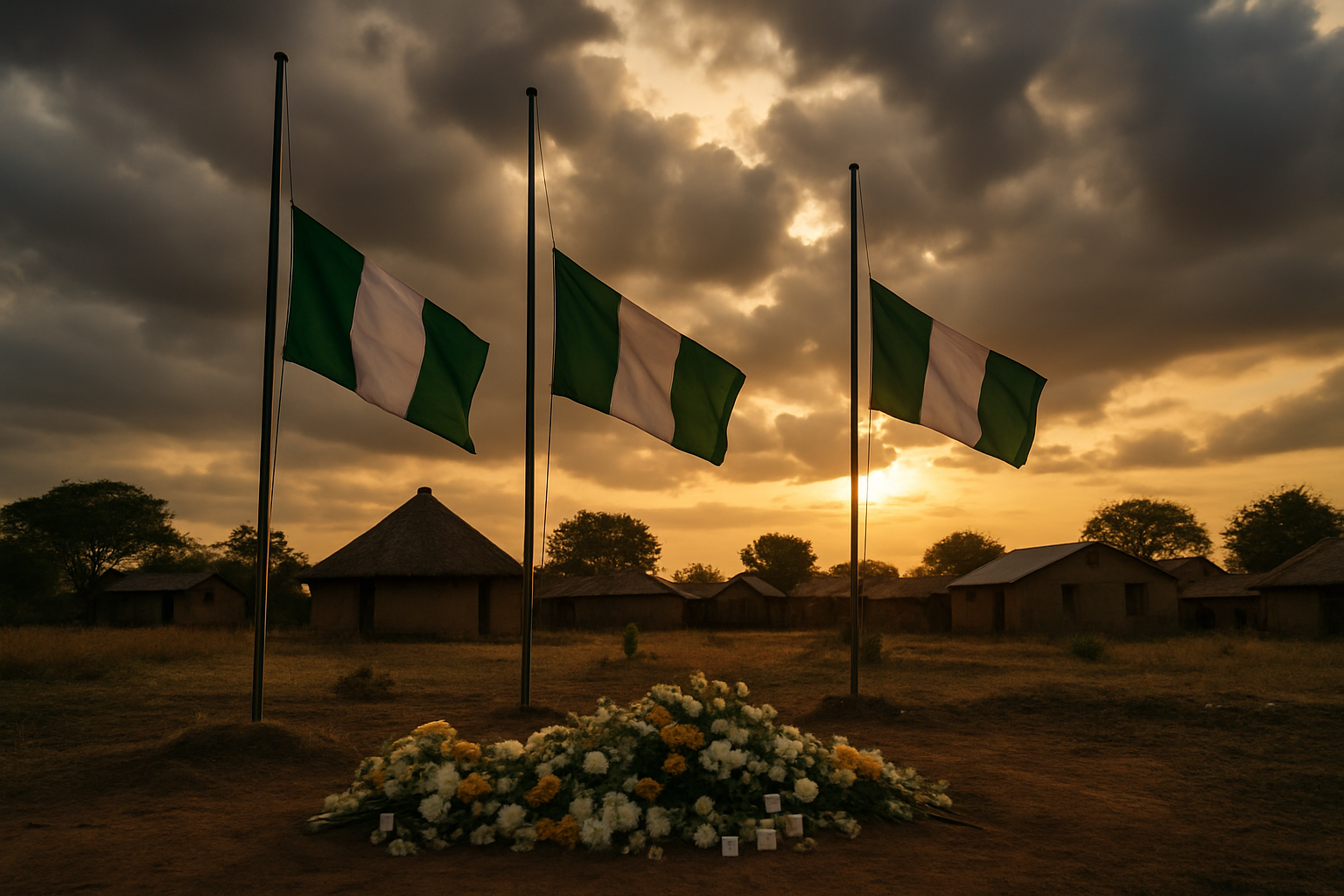
At least 170 people were killed by gunmen in coordinated attacks on villages in Nigeria's Kwara state on Tuesday, February 4, 2026, in what survivors describe as a preventable massacre that authorities could have averted by heeding months of warnings about armed terrorists.
The devastating assault on the communities of Woro and Nuku in the Kaiama Local Government Area represents one of the deadliest attacks in Nigeria this year, with conflicting reports placing the death toll between 162 and 170 victims. Residents who escaped the carnage say they repeatedly alerted government officials about suspicious armed men camping in bushes surrounding their communities for months before the attack.
Warnings Fell on Deaf Ears
According to two residents who spoke separately to SaharaReporters, youths in Kaiama had raised the alarm on several occasions after noticing unfamiliar armed men camping in bushes surrounding their communities. These early warnings, residents claim, were systematically ignored by Kwara state government officials.
"We saw terrorists in bushes months before 170 killed but Kwara government ignored our warnings," survivors told reporters in exclusive interviews following the massacre. The failure to act on these intelligence reports has sparked outrage among local communities and political opposition parties.
Scale of the Carnage
The attacks, which occurred on Tuesday evening, targeted the villages of Woro and Nuku with devastating precision. Mohammed Omar Bio, a member of parliament representing the area, confirmed that at least 162 people were killed, though other sources place the figure higher.
Babaomo Ayodeji, a Red Cross official in Kwara state, told AFP that "reports said that the death toll now stands at 162, as the search for more bodies continues." However, Amnesty International stated that over 170 people had died, noting that many were shot at close range and some burnt alive.
"Several people were abducted in the attack that was undertaken in a 'stunning absence of any form of security for the protection of lives'"
— Amnesty International Statement
Systematic Terror Campaign
The assault was attributed to the Lakurawa, an armed group affiliated with the Islamic State group, according to parliamentary sources. The attackers carried out their operation with military-style coordination, systematically targeting civilians and burning down infrastructure.
This represents a concerning expansion of Nigeria's security crisis beyond the traditional northeastern strongholds to previously stable regions like Kwara state. The attack highlights the evolving nature of the terrorism threat facing Africa's most populous nation.
Political Condemnation and Calls for Action
The massacre has triggered sharp criticism from across Nigeria's political spectrum. The People's Democratic Party (PDP) condemned the killings and demanded an independent probe and security summit, citing government inaction as a contributing factor.
Former presidential candidate Peter Obi described the incident as tragic and a reflection of the nation's deepening security crisis. In a statement shared on social media Thursday, Obi said he was "deeply saddened" by reports that gunmen had attacked the communities, allegedly killing about 150 people.
Senator Rabiu Musa Kwankwaso, the 2023 presidential candidate of the New Nigeria People's Party (NNPP), warned that terrorists must not be treated lightly or allowed to fester in any part of the country. "The 2023 presidential candidate condemned the killing of no fewer than 162 persons in Woro and Nuku communities," according to official statements.
Regional Security Context
The Kwara massacre occurs within a broader context of escalating violence across West Africa. The attack represents part of a concerning pattern of extremist activities spreading across the Sahel region, with Nigeria facing multiple security challenges across different fronts.
Recent months have seen increased terrorist activities in various parts of Nigeria, including the northern states where Boko Haram and other extremist groups continue to operate. The expansion of such violence into previously peaceful states like Kwara signals a worrying trend in the country's security landscape.
International Response
The international community has expressed concern about the massacre, with various global news outlets highlighting the severity of the attacks. The incident has drawn attention from international media across multiple continents, confirming the global significance of Nigeria's security challenges.
The attack underscores the need for enhanced international cooperation in addressing terrorism and violent extremism in West Africa, particularly given the transnational nature of many of the groups operating in the region.
Humanitarian Crisis
Beyond the immediate loss of life, the attacks have created a significant humanitarian emergency. Many residents fled their communities and are now seeking shelter in neighboring areas, adding to the displaced population in a region already struggling with various challenges.
The Red Cross and other humanitarian organizations are working to provide assistance to survivors and families of victims, but the scale of the tragedy has overwhelmed local resources. The search for bodies continues, with officials warning that the final death toll may be higher than currently reported.
Government Response and Security Failures
The Kwara state government's alleged failure to respond to advance warnings about the presence of armed terrorists has become a central issue in the aftermath of the massacre. Critics argue that proper intelligence gathering and proactive security measures could have prevented the tragedy.
Despite the severity of the attacks, there has been limited information about the government's response or plans to prevent similar incidents. The absence of adequate security presence in the affected areas has been cited as a critical factor that enabled the attackers to carry out their operation with apparent impunity.
Call for Systemic Reform
The massacre has renewed calls for comprehensive security sector reform in Nigeria. Opposition politicians and civil society organizations are demanding not just reactive measures but fundamental changes to how the country approaches security challenges.
The incident highlights the need for better intelligence sharing, community engagement in security planning, and more proactive approaches to preventing terrorist activities. The failure to act on community warnings represents a breakdown in the basic relationship between citizens and security institutions.
As Nigeria continues to grapple with multiple security challenges across different regions, the Kwara massacre serves as a stark reminder of the human cost of institutional failures and the urgent need for effective solutions to protect vulnerable communities from extremist violence.