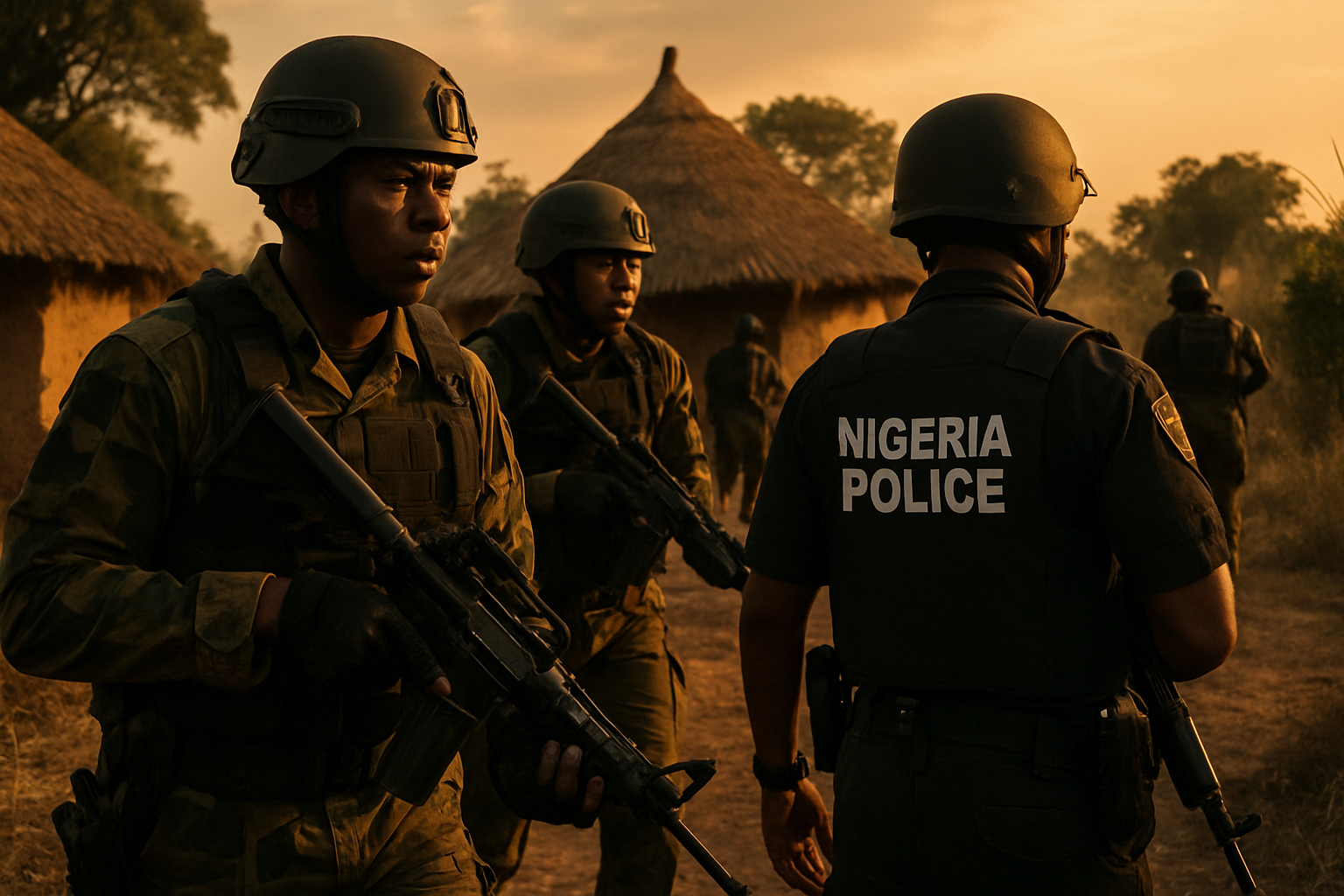
Nigeria faces a deepening security crisis after terrorist attacks in Kwara State killed at least 162 people in the villages of Woro and Nuku, with President Bola Ahmed Tinubu condemning the violence and promising swift justice while deploying military forces to secure the affected communities.
The coordinated attacks occurred on February 3, 2026, in Kaiama Local Government Area of Kwara State, representing one of the deadliest terrorist incidents in Nigeria's recent history. According to Defence Headquarters (DHQ) sources, the assailants had earlier approached Woro village requesting permission to "conduct preaching and indoctrination sessions," a demand that villagers reportedly rejected outright.
Scale of the Attack
The African Union Commission confirmed that "at least 162 innocent civilians tragically lost their lives" in the violent attacks that began Tuesday night and continued into early Wednesday morning. AU Chairperson Mahmoud Ali Youssouf described the assault as "heinous and barbaric," condemning the attacks "in the strongest terms."
Red Cross Secretary Babaomo Ayodeji confirmed the rising death toll as search operations continue, with many residents still unaccounted for in the aftermath of the systematic assault. Parliamentary sources indicated both Woro and Nuku villages bore the brunt of the coordinated attacks, which destroyed shops, commercial establishments, and the royal palace before forcing residents to flee into surrounding bushland.
Presidential Response
President Tinubu issued a strong condemnation of the killings, vowing that "Nigeria will never surrender citizens to terrorism masquerading as faith." The President's response came as he authorized the deployment of military personnel, including soldiers and forest guards, to secure the affected communities and conduct search operations.
"Nigeria won't surrender citizens to terrorism masquerading as faith. We will pursue these perpetrators and ensure they face the full weight of justice."
— President Bola Ahmed Tinubu
The attack has prompted immediate action from the federal government, with Governor AbdulRahman AbdulRazaq of Kwara State meeting with President Tinubu at Aso Rock following the massacre to discuss security responses and humanitarian support for survivors.
International Condemnation
The attacks have drawn widespread international condemnation, with the African Union leading continental responses to what officials describe as an expansion of Nigeria's security crisis beyond traditional northeastern strongholds to previously stable regions. The systematic nature of the assault has raised concerns about the organizational capabilities of terrorist groups operating in the region.
Meanwhile, separate incidents have highlighted the broader security challenges facing Nigeria. In a related development, 89 Christians who were kidnapped from three churches in northern Nigeria in mid-January were finally released on Thursday, according to local officials. The 183 worshippers were initially abducted from churches during Sunday services on January 18 in what authorities described as the latest in a wave of kidnapping incidents.
Regional Security Implications
The Kwara State attack represents a concerning geographic expansion of terrorist activities in Nigeria, moving beyond the traditional northeastern hotspots to areas previously considered relatively stable. Security analysts note this expansion demonstrates the adaptability and reach of extremist networks, challenging Nigeria's security architecture across multiple fronts.
The attacks are part of a broader West African security deterioration that has affected multiple countries in the region. Recent incidents include airport attacks in Niger and systematic killings of fuel convoy drivers in Mali, indicating coordinated extremist activities that require enhanced regional cooperation.
Humanitarian Crisis
The assault has created a significant humanitarian emergency, with survivors terrorized and many having fled to bushland seeking safety. Emergency assistance is being coordinated for displaced residents who lost their homes and possessions in the systematic destruction that accompanied the killings.
The Red Cross and other humanitarian organizations are overwhelmed by the scale of the crisis, working to provide shelter, medical care, and basic necessities to survivors while search operations continue for missing persons. The destruction of commercial establishments and community infrastructure has compounded the humanitarian challenge.
Security Analysis
Intelligence sources suggest the attacks were carried out by terrorist cells with potential connections to larger extremist networks. The systematic nature of the assault, combined with the preliminary request for "indoctrination sessions," indicates a level of planning and ideological motivation that security experts find particularly concerning.
The timing of the attacks, occurring in a region not traditionally associated with high-level terrorist activity, suggests an expansion strategy by extremist groups seeking to establish new operational territories and demonstrate their capability to strike across Nigeria's diverse geographic landscape.
Government Response Strategy
The federal government's attribution of the attacks to "terrorist cells" signals a recognition of the organized nature of the threat, requiring specialized counter-terrorism responses rather than conventional security measures. The deployment of both regular army units and forest guards indicates an understanding of the diverse terrain and tactical challenges involved in securing rural communities.
This coordinated government response reflects lessons learned from previous security operations in northeastern Nigeria, where forest-based operations have proven essential for disrupting terrorist networks that exploit remote locations for training, planning, and launching attacks.
Broader Context
The Kwara State massacre occurs within a context of escalating security challenges across West Africa, where the Alliance of Sahel States (Niger, Mali, Burkina Faso) has created new regional dynamics affecting traditional security cooperation frameworks. These broader regional changes have implications for Nigeria's ability to coordinate cross-border counter-terrorism efforts.
The attacks highlight the need for enhanced intelligence sharing, community engagement, and sustainable security solutions that address both immediate threats and underlying factors that enable terrorist recruitment and operations in previously peaceful areas.
Looking Forward
As search operations continue and the full scope of the tragedy becomes clear, Nigeria faces fundamental questions about expanding its security approach to protect vulnerable communities across its diverse territory. The international community's concern about regional implications reflects recognition that Nigeria's security challenges have broader consequences for West Africa's largest economy and most populous country.
The government's promise of justice for victims, combined with immediate military deployment and humanitarian support, represents a comprehensive response to what may mark a significant escalation in Nigeria's ongoing battle against extremist violence. However, the expansion of terrorist activities into new regions suggests that sustainable solutions will require both enhanced security measures and addressing underlying factors that enable such networks to operate and recruit.