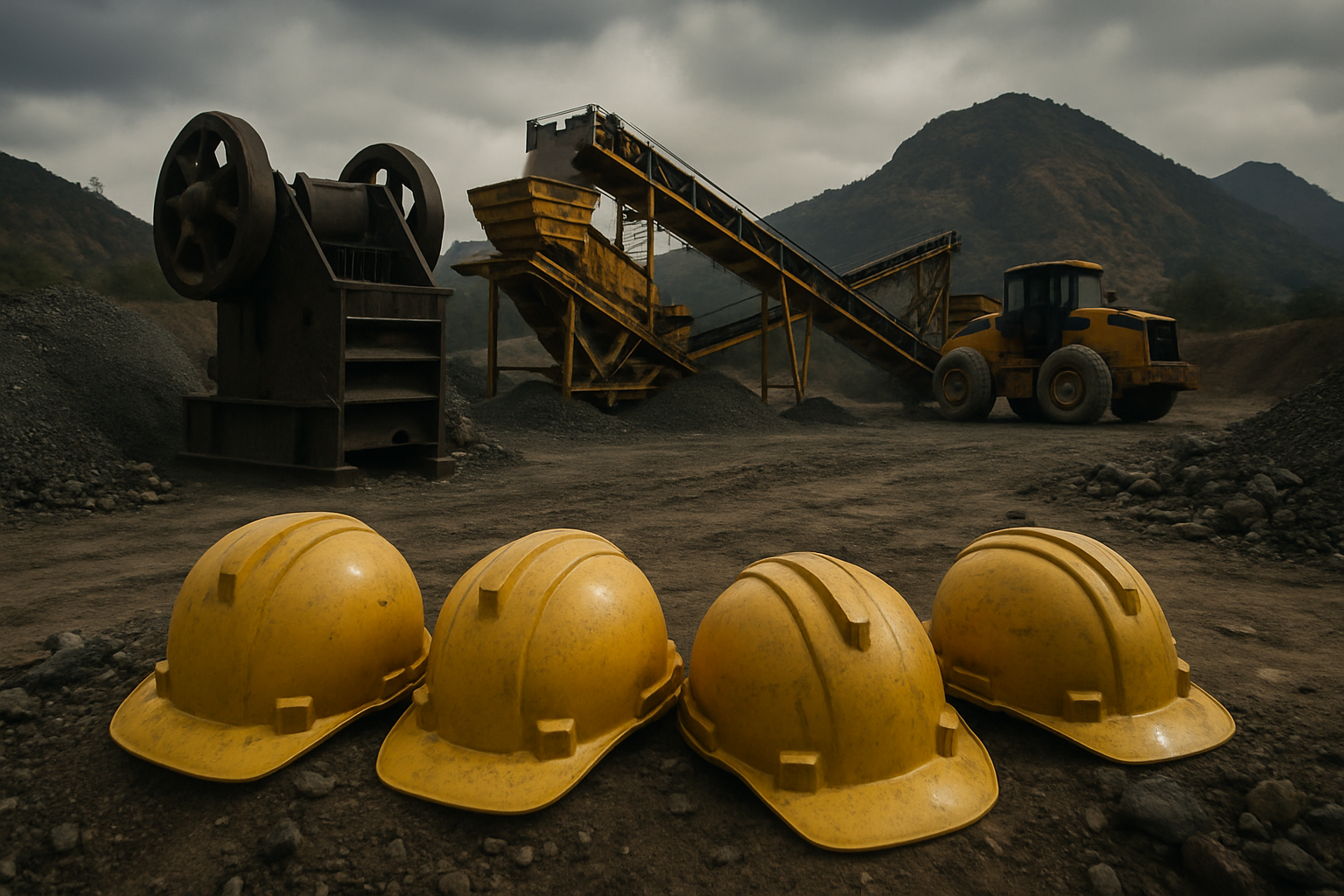
A devastating gas explosion at a lead mine in Nigeria's Plateau State has killed at least 37 miners, with authorities immediately ordering the closure of the facility as emergency responders continue rescue operations and treat surviving victims in nearby hospitals.
The tragic incident, which occurred at a mining operation in the region, represents one of the deadliest mining accidents to strike Nigeria in recent months, highlighting persistent safety challenges plaguing the country's extractive industries despite growing international partnerships in the critical minerals sector.
According to Al Jazeera reports, carbon monoxide poisoning was identified as the primary cause of the fatalities, with the toxic gas accumulating in the mining facility before the deadly explosion occurred. The Plateau State government confirmed that survivors who sustained injuries are currently receiving treatment at nearby medical facilities.
Immediate Emergency Response
Nigerian authorities moved swiftly to contain the aftermath of the disaster, with the Ministry of Mines and Steel Development ordering the immediate shutdown of the mining operation pending a comprehensive investigation into the causes of the explosion.
"Others who sustained injuries are currently receiving treatment in nearby hospitals," the Plateau government said in an official statement, though the exact number of survivors and the extent of their injuries remain unclear as rescue operations continue.
Emergency medical teams have been deployed to the area to assist with ongoing treatment of the injured, while investigators work to determine the precise circumstances that led to the catastrophic gas buildup and subsequent explosion.
Systemic Safety Concerns in Nigerian Mining
The tragedy underscores the widespread safety challenges facing Nigeria's mining sector, particularly in operations that lack proper government oversight and essential safety protocols. Illegal mining remains a persistent issue across the country, with many sites operating without adequate ventilation systems or gas monitoring equipment necessary to prevent such deadly incidents.
This latest disaster echoes a similar tragedy that occurred just days earlier in the same region, when a gas explosion at the Kampanin Zurak lead mine in Bashar district killed 38 miners and injured 27 others during morning operations on February 18, 2026. That incident also involved carbon monoxide poisoning from accumulated toxic gases in underground mining areas.
The recurring nature of these accidents has exposed significant gaps between Nigeria's international mining ambitions and the ground-level safety realities facing workers in artisanal and small-scale operations across the country.
Nigeria's Position in Global Mining
The mining disasters come at a time when Nigeria is actively participating in major international initiatives to diversify global critical minerals supply chains. The country is among seven African nations involved in the US-EU-Japan Critical Minerals Partnership, which aims to challenge China's dominance in the sector, where China currently controls 60% of global production and 90% of refining capacity.
Nigeria's participation in these high-level international partnerships contrasts sharply with the dangerous conditions faced by miners in local operations, many of which lack the sophisticated safety infrastructure and monitoring systems employed by major international mining companies.
The African Finance Corporation reports that Africa holds $29.5 trillion in mineral reserves, representing 20% of the global total, with $8.6 trillion remaining untapped. However, realizing this potential safely requires substantial investment in safety infrastructure and regulatory oversight.
Regulatory Enforcement Challenges
The repeated mining tragedies highlight the urgent need for stronger regulatory enforcement across Nigeria's extractive industries. While the government has moved to shut down the affected facility, experts note that many mining operations continue to function with minimal safety oversight, particularly in remote areas where regulatory presence is limited.
"Illegal mining is a widespread issue in Nigeria, where operations lack both government oversight and safety protocols."
— International Mining Industry Analysis
The challenge is compounded by the fact that many miners work in small-scale artisanal operations that provide crucial livelihoods for rural communities but operate outside formal regulatory frameworks. These operations often lack the resources to implement comprehensive safety measures, creating inherently dangerous working conditions.
International Context and Safety Standards
The Nigerian mining disasters occur against a backdrop of increasing global attention to mining safety and environmental standards. Modern international mining projects increasingly incorporate advanced waste management systems, real-time gas monitoring, renewable energy sources, and comprehensive emergency response protocols.
Recent developments in other African mining jurisdictions demonstrate evolving approaches to safety enforcement. The Democratic Republic of Congo recently suspended Congo Dongfang Mining operations following environmental violations, while other countries are implementing stricter ESG compliance requirements for mining operations.
However, the gap between international standards and local implementation remains significant, particularly for smaller operations that lack access to advanced safety technologies and training programs.
Economic Impact and Community Consequences
Beyond the immediate human tragedy, the mining disasters have broader economic implications for affected communities. Mining operations provide essential employment in regions with limited alternative economic opportunities, making safe operations crucial for sustainable development.
The closure of mining facilities following safety incidents, while necessary for worker protection, can have significant economic impacts on local communities dependent on mining for their livelihoods. This creates pressure for rapid reopening of operations, potentially before adequate safety measures are fully implemented.
The recurring nature of these tragedies also threatens Nigeria's efforts to attract international mining investment and participate effectively in global critical minerals partnerships, as safety concerns may discourage major international companies from engaging with Nigerian operations.
Path Forward: Safety Reform Requirements
Mining safety experts emphasize that preventing future tragedies requires comprehensive reform across multiple dimensions. Essential improvements include mandatory gas monitoring systems in all underground operations, regular safety inspections with meaningful enforcement powers, emergency response training for all mining workers, and accessible safety equipment for all operations regardless of size.
Successful reform also requires adequate funding for regulatory agencies to conduct regular inspections, technical assistance programs to help smaller operations implement safety measures, community education about mining safety risks and rights, and coordinated emergency response capabilities in mining areas.
The integration of technology solutions, including automated gas monitoring systems, emergency communication networks, and predictive safety analytics, could significantly improve safety outcomes, but requires substantial investment and technical capacity building.
Regional Security and Mining Challenges
The mining disasters occur within a broader context of security challenges facing Nigeria's extractive industries. Recent incidents include violence between illegal miners and security forces, with armed groups targeting law enforcement personnel conducting mining oversight operations.
These security concerns complicate efforts to improve mining safety, as regulatory agencies face challenges accessing remote mining areas for inspections and oversight activities. The intersection of security and safety challenges requires coordinated responses involving both law enforcement and regulatory agencies.
International observers note that sustainable solutions must address both immediate safety concerns and underlying governance challenges that enable unsafe mining practices to continue without adequate oversight or enforcement.
Looking Ahead: Balancing Development and Safety
As Nigeria works to develop its mining sector and participate in international critical minerals partnerships, the recent tragedies underscore the urgent need to prioritize worker safety alongside economic development objectives.
The challenge lies in creating systems that can support both small-scale artisanal operations crucial for local livelihoods and large-scale international partnerships essential for economic development, while ensuring comprehensive safety standards across all operations.
Success will require sustained political commitment to safety enforcement, adequate resources for regulatory oversight, international cooperation on safety technology and training, and community engagement to ensure that safety improvements serve local needs while meeting international standards.
The coming months will test whether Nigeria can transform these tragic incidents into catalysts for comprehensive mining sector reform that protects workers while enabling the country to realize its significant mineral resource potential safely and sustainably.