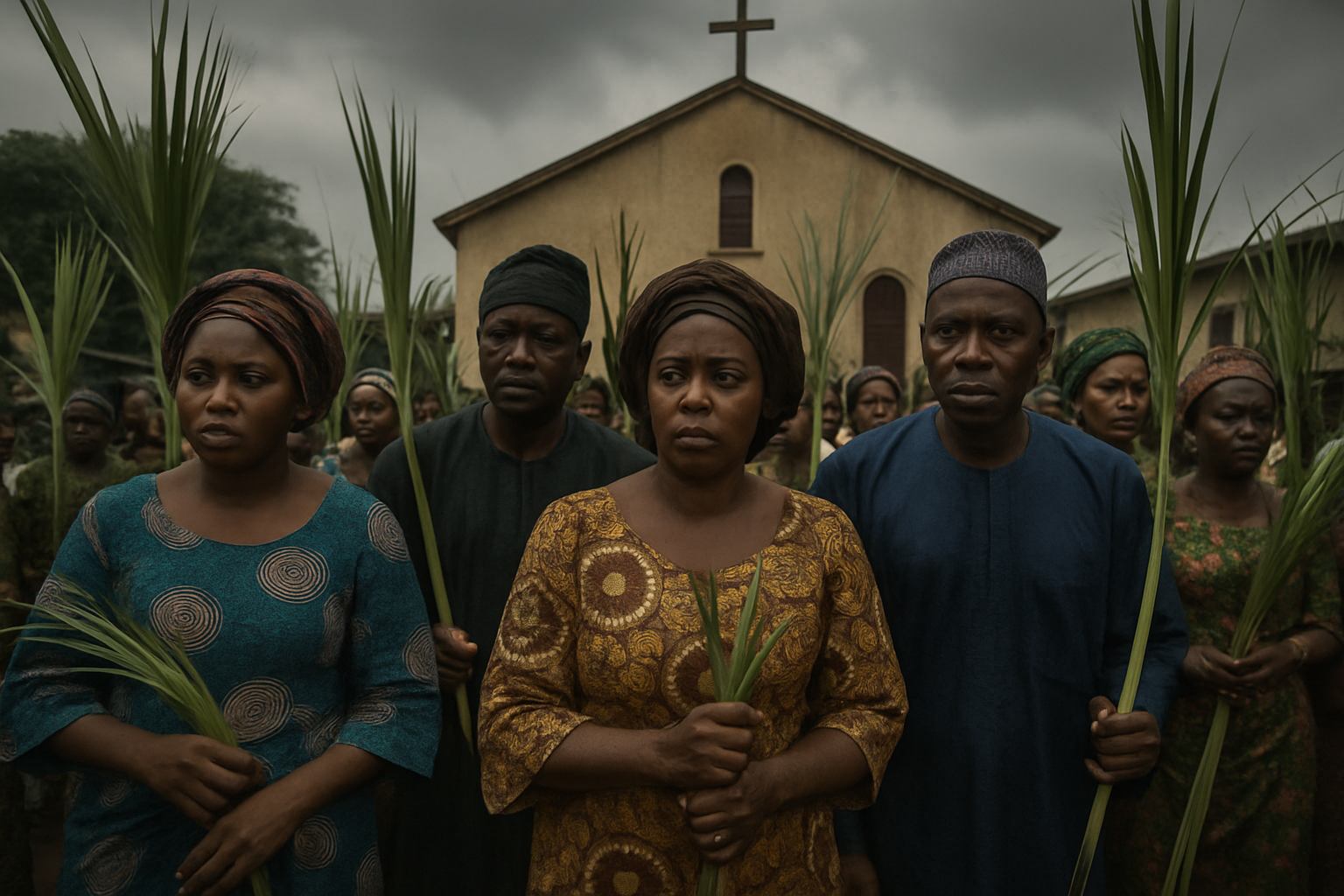
Residents of Plateau State, Nigeria defied a government-imposed curfew to stage angry protests following a deadly Palm Sunday massacre that left an unknown number of people dead in Anguwan Rukuba, highlighting the country's escalating security crisis during one of Christianity's most sacred periods.
The violent attack occurred during Palm Sunday celebrations, marking the beginning of Holy Week for Nigeria's large Christian population. Government authorities quickly imposed a strict curfew across affected areas, but residents took to the streets in defiance, demanding accountability for the systematic security failures that allowed the massacre to unfold.
Attack Details and Immediate Response
According to reports from Premium Times, "an unconfirmed number of residents were killed in the attack, triggering panic and a heavy security presence in the area." The assault on Christian worshippers during Palm Sunday celebrations represents a calculated strike against Nigeria's religious communities during their holiest season.
The protest in Anguwan Rukuba was captured in a live TikTok stream monitored by SaharaReporters, showing the raw anger and frustration of residents who have repeatedly faced such attacks. The demonstration occurred at the very scene of the massacre, transforming the site of tragedy into a symbol of resistance against both the attackers and government failures.
Broader Pattern of Religious Violence
This Palm Sunday attack fits within Nigeria's expanding security crisis that has moved beyond traditional northeastern strongholds to affect previously stable regions. The incident comes amid a wave of violence targeting religious communities across the country, particularly during sacred periods when congregations are most vulnerable.
Historical context reveals a troubling pattern of intelligence failures where communities have repeatedly warned authorities about armed groups camping in surrounding areas, only to have these warnings ignored until tragedy strikes. This systematic breakdown in security coordination has become a hallmark of Nigeria's ongoing crisis.
The timing of the attack during Palm Sunday is particularly significant, as it mirrors broader global concerns about religious freedom during warfare and conflict. Recent international incidents, including restrictions on Christian worship in Jerusalem's Holy Sepulchre during the same Palm Sunday period, underscore how sacred seasons have become flashpoints for religious persecution worldwide.
Government Curfew and Public Defiance
The government's immediate response was to impose a curfew across the affected region, citing security concerns and the need to prevent further violence. However, this heavy-handed approach has backfired, as residents view the restrictions as punishing victims rather than addressing the root causes of insecurity.
The defiant protests represent a significant challenge to government authority, with citizens choosing to risk arrest rather than remain silent about their security grievances. This civil disobedience reflects deep frustration with President Tinubu's administration, which has struggled to contain Nigeria's expanding security challenges despite deploying military forces across multiple states.
Regional Security Context
Nigeria's security crisis extends far beyond isolated incidents. Recent months have witnessed devastating attacks including the February 2026 Kwara State Lakurawa massacre that killed over 170 people, systematic targeting of military installations, and the expansion of terrorist networks into previously secure middle belt regions.
The country faces a multi-front security challenge involving Boko Haram and ISWAP in the northeast, bandit groups in the northwest, and emerging Islamic State-affiliated organizations like Lakurawa spreading across new territories. These groups have demonstrated sophisticated coordination and intelligence capabilities, often exploiting religious and ethnic tensions.
International and Regional Implications
As Africa's most populous country and largest economy, Nigeria's instability has profound implications for West African security. The Economic Community of West African States (ECOWAS) has expressed concern about the spillover effects, while international partners continue providing counter-terrorism assistance.
The Palm Sunday attack occurred during a period when Catholics in Lagos were marking the start of Holy Week with prayers and processions, highlighting the contrast between peaceful religious observance and violent targeting of Christian communities. This juxtaposition underscores the uneven security landscape across Nigeria, where some regions experience relative peace while others face systematic persecution.
Humanitarian Crisis and Community Impact
The human cost of Nigeria's security crisis extends beyond immediate casualties. Thousands of internally displaced persons continue to seek shelter across multiple states, overwhelming humanitarian resources. Educational institutions and healthcare facilities have been systematically targeted, threatening long-term development prospects.
Religious communities have shown remarkable resilience, continuing worship activities under enhanced security protocols while providing mutual support across denominational lines. However, the psychological trauma of repeated attacks during sacred periods has created lasting damage to community cohesion and religious freedom.
Government Response and Opposition Criticism
President Bola Ahmed Tinubu's administration faces mounting pressure to demonstrate effective leadership on security issues. While the government has deployed military battalions and forest guards to affected areas, critics argue that these reactive measures fail to address the intelligence failures and institutional weaknesses that enable such attacks.
Opposition leaders have demanded independent investigations into the systematic security sector failures, arguing that accountability is essential for preventing future tragedies. The pattern of communities providing advance warnings that go unheeded represents a fundamental breakdown in the relationship between citizens and security institutions.
Path Forward
Addressing Nigeria's security crisis requires comprehensive reforms that go beyond military responses. Enhanced intelligence coordination, community engagement, economic opportunity creation, and addressing the root causes of extremism are essential components of any effective strategy.
The defiant protests in Plateau State demonstrate that Nigerian citizens will no longer accept security failures as inevitable. Their courage in challenging both terrorists and government inaction provides hope that sustained pressure can force the institutional changes necessary to protect all communities, regardless of their religious affiliation.
As Nigeria approaches critical elections and continues its leadership role in ECOWAS, the resolution of these security challenges will determine not only domestic stability but also the country's capacity to contribute to regional peace and development. The Palm Sunday massacre and subsequent protests represent a watershed moment that demands decisive action from all levels of government.