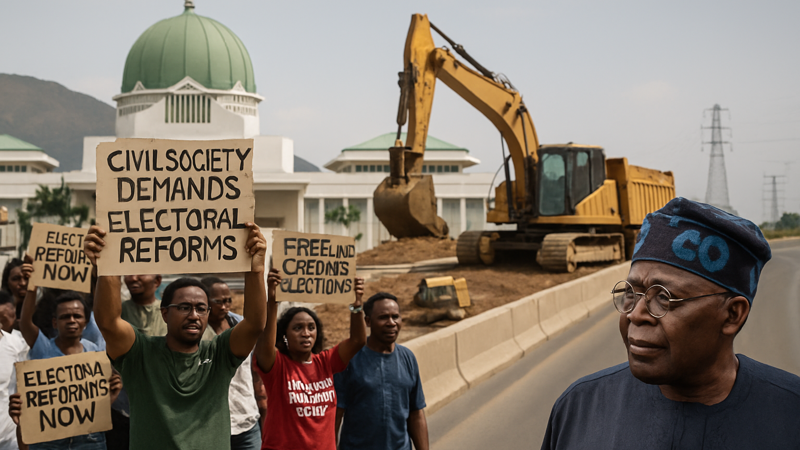
Nigeria finds itself at a critical juncture in February 2026, as civil society organizations mobilize for electoral reforms while the government advances ambitious infrastructure projects and President Bola Tinubu prepares for significant regional visits, underscoring the multifaceted challenges facing Africa's most populous democracy.
The Movement for Credible Elections (MCE), a coalition of prominent civil society leaders and labor organizations, has announced plans for a media rally at the National Assembly to demand comprehensive electoral reforms. The demonstration brings together influential figures including human rights lawyer Femi Falana, SAN; constitutional expert Dr. Olisa Agbakoba, SAN; political economist Prof. Pat Utomi; and democratic reform advocate Dr. Usman Bugaje.
Electoral Reform Campaign Gains Momentum
The civil society coalition's pressure campaign reflects mounting concerns about the integrity of Nigeria's electoral processes following previous election controversies. The Movement for Credible Elections has secured the backing of organized labor, with Nigeria Labour Congress President Joe Ajaero and former NLC President Ayuba Wabba joining the reform advocacy.
This coordinated effort represents one of the most significant civil society mobilizations in recent Nigerian political history, bringing together legal experts, academics, and labor leaders under a unified agenda for electoral transparency and accountability. The timing of the demonstration coincides with ongoing legislative discussions about potential amendments to electoral laws and procedures.
"The integrity of our electoral system is fundamental to Nigeria's democratic progress and national development."
— Civil Society Coalition Statement
The involvement of such prominent legal and academic figures lends considerable weight to the reform movement, particularly given their collective expertise in constitutional law, political economy, and democratic governance. Their participation signals that electoral reform concerns extend beyond partisan politics to encompass broader questions of democratic legitimacy and institutional effectiveness.
Infrastructure Development Accelerates Across Regions
Despite political pressures, Nigerian states continue advancing significant infrastructure projects designed to address longstanding development challenges. In Plateau State, the government has launched a comprehensive five-day training program on Compressed Natural Gas (CNG) conversion, safety, and maintenance for 120 youths in Jos, marking a significant step toward cleaner energy adoption.
The initiative, implemented in collaboration with the Nigerian Content Development and Monitoring Board (NCDMB) and Thermolinks Ltd., aligns with the Federal Government's National Gas Expansion Programme. The training program kicked off at the Federal Secretariat in Jos, representing a practical approach to addressing both youth employment and environmental sustainability concerns.
Simultaneously, Plateau State has reaffirmed its commitment to tackling persistent water scarcity through innovative solar-powered schemes. The state's Commissioner for Water Resources has outlined ambitious plans to end long-standing water shortages that have affected communities across the region for decades.
Presidential Regional Engagement Strategy
President Bola Tinubu's planned visit to the South-East and South-South regions on May 12, 2026, represents a significant diplomatic and political initiative aimed at strengthening national unity and addressing regional concerns. Minister of Works Engr. David Umahi announced that the presidential visit will focus on inaugurating key road projects targeted for completion in April.
The timing of this regional engagement is particularly significant, as it demonstrates the administration's commitment to inclusive development and direct presidential involvement in infrastructure delivery. The South-East and South-South regions have historically expressed concerns about federal resource allocation and political representation, making presidential attention to these areas politically and symbolically important.
"The President's visit will showcase our commitment to equitable development across all Nigerian regions."
— Engr. David Umahi, Minister of Works
The planned road project inaugurations reflect broader federal infrastructure investments designed to improve connectivity, reduce transportation costs, and stimulate economic development in these strategically important regions. The South-South region, in particular, remains crucial to Nigeria's oil production capacity, while the South-East represents a significant commercial and industrial hub.
Governance Challenges in Context
These developments occur against the backdrop of Nigeria's complex governance challenges, including security concerns in various regions, economic pressures from global commodity price volatility, and ongoing debates about fiscal federalism and resource distribution. The simultaneous pursuit of electoral reforms, infrastructure development, and regional engagement reflects the multidimensional nature of contemporary Nigerian governance.
The civil society campaign for electoral reforms highlights persistent concerns about democratic accountability and institutional effectiveness. Previous elections have been marred by allegations of irregularities, violence, and procedural deficiencies, creating ongoing legitimacy challenges for democratic institutions.
Meanwhile, infrastructure development initiatives like the CNG training program and water projects demonstrate practical approaches to addressing citizens' immediate needs while building long-term economic capacity. These programs require sustained political commitment, adequate funding, and effective implementation to achieve their intended objectives.
Regional and National Implications
The convergence of these various initiatives reflects Nigeria's position as a continental leader grappling with common African governance challenges. Electoral integrity, infrastructure development, and regional integration remain critical issues across sub-Saharan Africa, making Nigeria's experiences potentially influential for neighboring countries and regional organizations.
The success or failure of these concurrent initiatives will likely influence Nigeria's international reputation, investor confidence, and domestic political stability. International observers, development partners, and neighboring countries are closely monitoring Nigeria's ability to balance democratic accountability with effective governance and development delivery.
The emphasis on youth engagement through skills training programs and the inclusion of civil society voices in electoral reform discussions suggests recognition that Nigeria's future depends on broadening participation in both economic opportunities and democratic processes.
Looking Forward
As Nigeria navigates these multiple challenges simultaneously, the outcomes will provide important lessons about democratic governance in Africa's largest economy and most populous country. The ability to maintain democratic institutions while delivering tangible improvements in infrastructure and public services represents a fundamental test of governmental capacity and political leadership.
The planned presidential regional visits, combined with ongoing civil society advocacy and infrastructure development, create opportunities for enhanced national dialogue about Nigeria's future direction. Success in these various endeavors could strengthen democratic institutions, improve citizen welfare, and enhance Nigeria's regional leadership role.
However, the complexity of addressing electoral reforms, infrastructure deficits, and regional concerns simultaneously requires sophisticated coordination, sustained political will, and continued civic engagement from all stakeholders in Nigerian society.