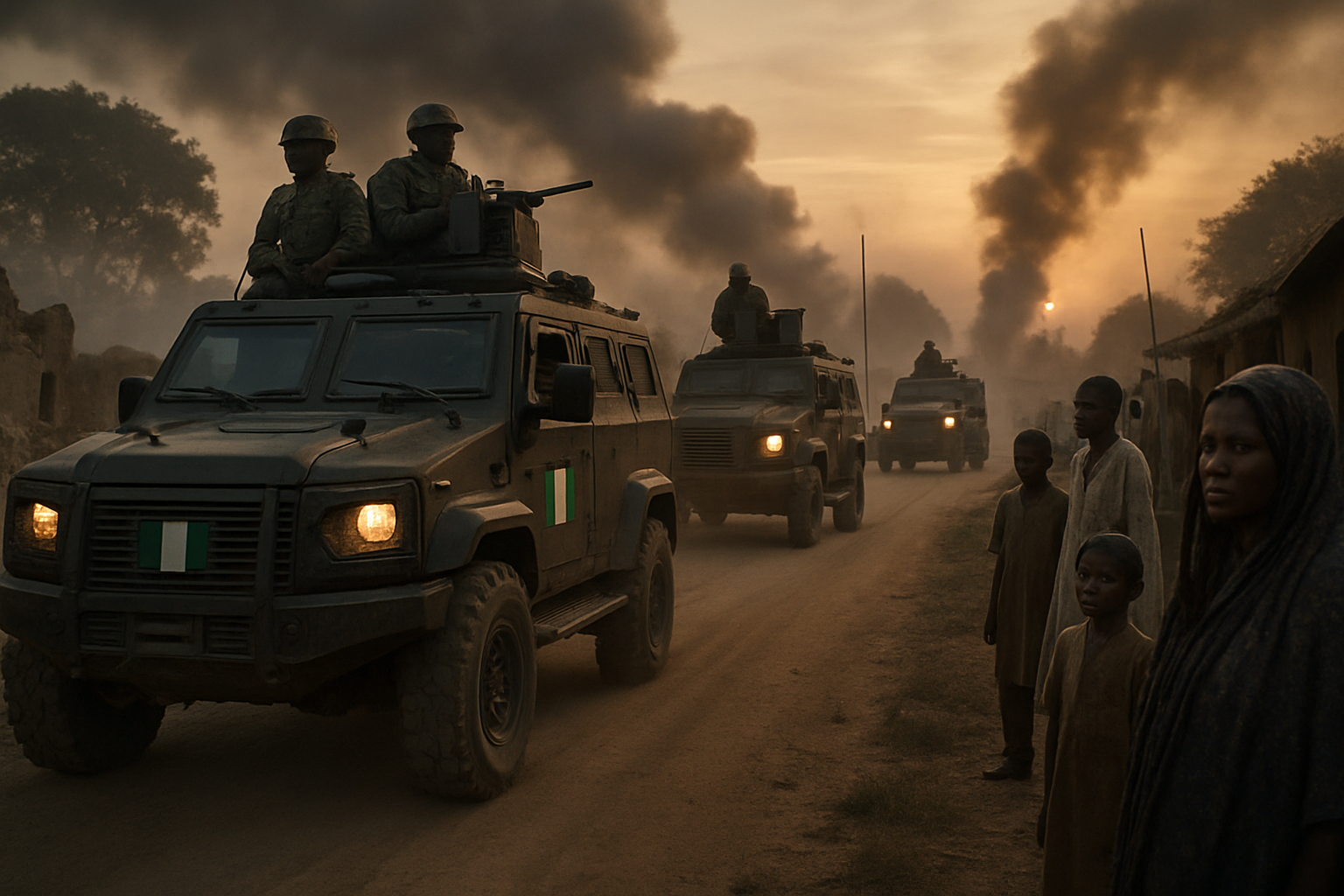
Armed groups have killed over 30 people in fresh attacks across Nigeria, with simultaneous assaults by bandits in Zamfara State and Boko Haram terrorists in Borno State highlighting the country's expanding security crisis that now threatens multiple regions beyond traditional conflict zones.
The latest wave of violence underscores Nigeria's deteriorating security situation, as armed groups demonstrate increasing sophistication and territorial expansion that challenges the country's security apparatus on multiple fronts simultaneously.
Zamfara State Massacre
In the most deadly recent incident, bandits killed over 30 people in a coordinated attack on a Zamfara community on Thursday night. According to SaharaReporters, the armed men arrived on motorbikes after strategically blocking entry and exit points before unleashing terror on defenseless residents.
The systematic nature of the attack demonstrates the advanced planning capabilities of criminal networks operating in Nigeria's northwest. Residents described how the attackers surrounded the community, cutting off escape routes before conducting their assault—a tactical approach that has become increasingly common in bandit operations.
"The armed group is known to engage in cattle rustling, raids on villages and kidnappings for ransom."
— Stuff News Security Assessment
The Zamfara attack represents a continuation of systematic violence that has plagued Nigeria's northwestern states, where armed bandits have established territorial control over vast rural areas, imposing their own governance structures and taxation systems on local populations.
Boko Haram Operations Intensify
Simultaneously, Boko Haram/ISWAP terrorists intercepted and destroyed three trucks loaded with fish at Mile-forty area of Magumeri Local Government Area in Borno State, according to Daily Trust reports. The attack on commercial vehicles highlights how terrorist groups continue to disrupt economic activities and supply chains across northeastern Nigeria.
In separate operations, the Nigerian Army reported killing suspected terrorists during a raid in Benue State, with Acting Media Information Officer Ahmad Zubairu confirming that intelligence-driven operations targeted fighters at Kumeh Village, resulting in the recovery of rifles and other weapons.
The military successes, however, appear overshadowed by the scale and frequency of terrorist operations across multiple states, indicating that security forces remain reactive rather than proactive in addressing the expanding threat landscape.
Broader Security Deterioration
The current attacks build on a pattern of escalating violence documented throughout early 2026. The most significant incident occurred in February when at least 170 people were killed in coordinated attacks by the Lakurawa (Islamic State-affiliated group) on Woro and Nuku villages in Kwara State—representing a concerning expansion of terrorism into previously stable middle belt regions.
Recent reports from SaharaReporters reveal that neighboring Kwara communities continue to cry out over lack of security following the Woro massacre, with visits to Kali, Baburasa, and Gada Oli communities highlighting "escalating fear among residents" who feel abandoned by government security provisions.
The geographic spread of violence now encompasses multiple Nigerian states across different regions, challenging traditional security approaches that focused primarily on northeastern strongholds of Boko Haram operations.
Intelligence Failures and Community Warnings
A disturbing pattern emerges from survivor testimonies and security analyses indicating systematic intelligence failures across multiple attack locations. Communities have repeatedly provided advance warnings about suspicious armed groups camping in surrounding areas, only to see these alerts ignored by security authorities.
In the Kwara State massacre, survivors reported that government authorities ignored months of warnings about armed terrorists establishing camps in local bushes. Similar patterns of dismissed community intelligence have been documented in other attack locations, suggesting institutional failures in Nigeria's early warning systems.
The disconnect between community-based intelligence gathering and official security responses represents a critical vulnerability that armed groups have learned to exploit, allowing them to establish operational bases with impunity while planning major attacks.
Regional and International Implications
Nigeria's security crisis carries implications far beyond national boundaries, affecting regional stability throughout West Africa. As the continent's largest economy and most populous nation, Nigeria's internal security challenges impact trade routes, humanitarian access, and overall regional development prospects.
The expansion of terrorist activities into new territories demonstrates organizational capabilities that transcend traditional ethnic and religious boundaries, with groups like Lakurawa showing Islamic State affiliations that connect local grievances to global extremist networks.
International partners, including the United States and European Union, have expressed growing concern about the deterioration of security conditions in West Africa's most strategic nation, recognizing that Nigerian stability affects broader continental security architecture.
Government Response and Military Deployment
President Bola Ahmed Tinubu has deployed army battalions including specialized forest guards to affected regions, representing an acknowledgment that conventional military approaches require adaptation to address guerrilla tactics employed by various armed groups.
However, opposition parties continue to demand independent investigations into security sector failures, citing systemic problems that enable preventable tragedies through ignored early warning systems and inadequate intelligence coordination between federal and state security agencies.
The coordination challenges between multiple security agencies—military, police, local vigilante groups, and community hunters—remain a significant obstacle to effective counter-terrorism and counter-banditry operations across Nigeria's vast territorial expanse.
Humanitarian Crisis and Displacement
The ongoing violence has created a growing humanitarian emergency, with thousands of displaced residents seeking shelter in neighboring communities or urban centers. Commercial establishments have been systematically destroyed, disrupting local economies and creating cycles of poverty that make communities more vulnerable to recruitment by armed groups.
Red Cross officials report being overwhelmed by the scale of humanitarian needs, while international aid organizations face increasing challenges accessing affected communities due to deteriorating security conditions that restrict movement and service delivery.
The destruction of educational facilities, healthcare centers, and economic infrastructure represents a long-term development challenge that extends far beyond immediate security concerns, potentially creating conditions for sustained instability across multiple generations.
Looking Forward: Comprehensive Solutions Required
Security experts increasingly argue that military responses alone cannot address the complex drivers of Nigeria's security crisis, which include poverty, youth unemployment, climate change effects on agriculture, competition over natural resources, and weak governance structures at local levels.
The expansion of violence from northeastern strongholds to middle belt regions and northwestern states suggests that security challenges require comprehensive approaches addressing root causes alongside immediate security responses.
Enhanced regional cooperation through the Economic Community of West African States (ECOWAS) and improved intelligence sharing with international partners may provide frameworks for addressing transnational criminal networks that operate across porous national borders.
The coming months will test whether Nigerian authorities can develop integrated approaches combining military operations with developmental interventions, community engagement, and institutional reforms necessary to address underlying vulnerability factors that armed groups exploit to recruit supporters and establish territorial control.