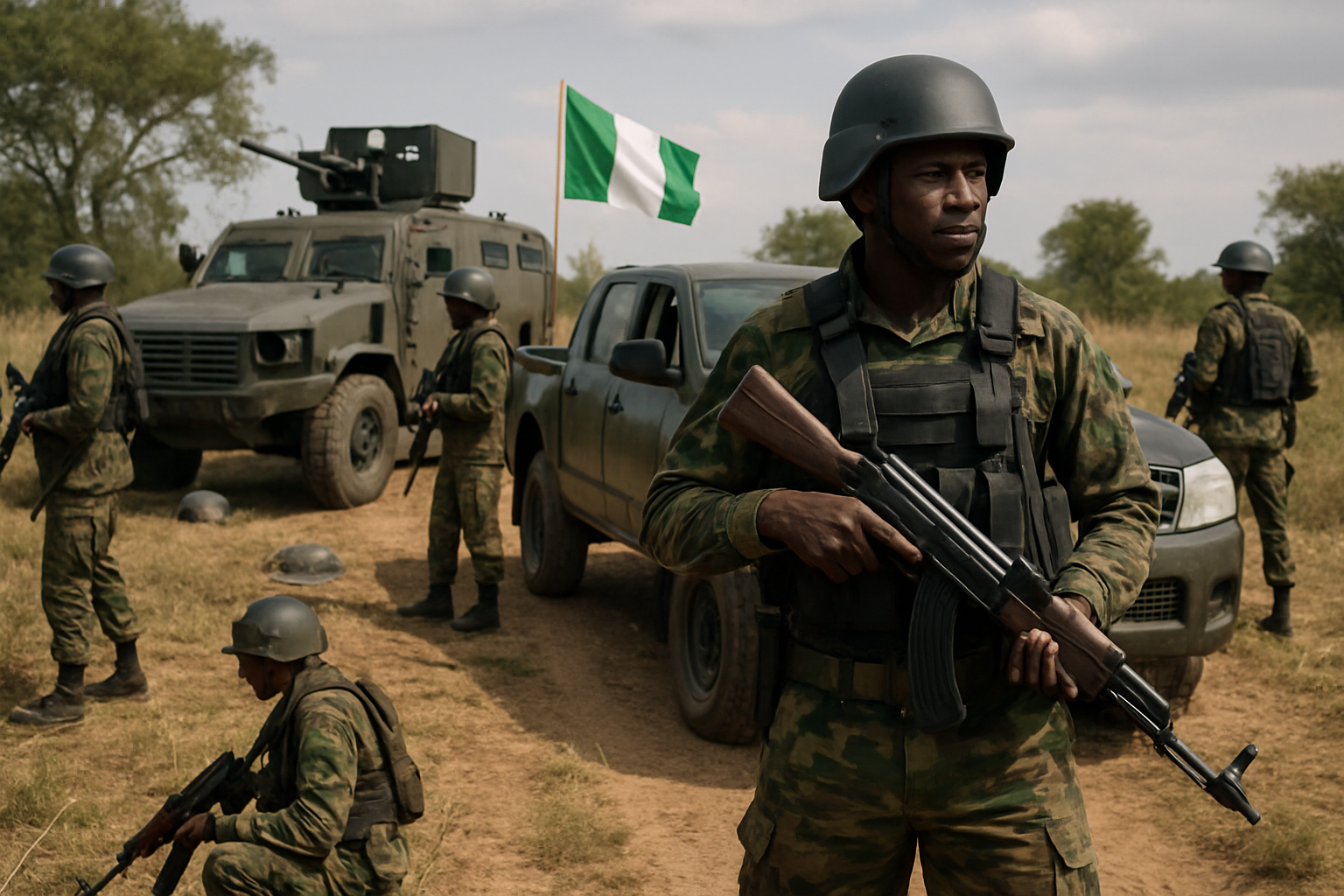
Nigerian military forces successfully rescued 31 civilians who were taken hostage during an attack on a church in northwest Kaduna state, authorities announced Sunday, while five people were reportedly killed in the initial assault.
The rescue operation represents the latest success in Nigeria's intensified counter-terrorism campaign amid an expanding security crisis that has seen extremist activities spread beyond traditional strongholds in the northeastern regions to previously stable areas across the country.
Details of the Rescue Operation
According to military sources, the hostages were freed following coordinated operations by Nigerian Army units deployed specifically to combat the growing threat of kidnapping and terrorist attacks targeting religious communities. The church attack in Kaduna state occurred amid a broader pattern of assaults on Christian worship sites that have become increasingly common across Nigeria's middle belt region.
The successful rescue comes as Nigerian security forces have intensified their operations against various criminal networks, including the elimination of over 400 militants in Balochistan operations earlier this year and coordinated counter-terrorism efforts across multiple states.
Escalating Security Crisis Context
The Kaduna hostage situation unfolds against the backdrop of Nigeria's most severe security crisis in decades. Recent months have witnessed a dramatic expansion of terrorist activities from the traditional Boko Haram and ISWAP strongholds in the northeast to new territories across the federation.
The crisis has been marked by several devastating attacks, including the February 2026 Kwara State Lakurawa massacre that killed at least 162 people in Kaiama Local Government Area. In March, coordinated suicide bombings in Maiduguri, the counter-terrorism hub in Borno State, killed 23 people and wounded over 100 others during evening iftar meals, shattering years of relative calm in the strategic city.
"The expansion of terrorist activities beyond traditional northeastern strongholds to previously stable regions represents a fundamental challenge to Nigeria's security architecture."
— Security Analysis Report, March 2026
Perhaps most concerning has been the systematic targeting of military installations, including March 2026 coordinated attacks on multiple Nigerian military bases in Borno State that resulted in the death of commanding officer Lt. Col. Umar Farouq and the seizure of military equipment by Boko Haram and ISWAP forces.
Pattern of Religious Targeting
The church attack in Kaduna follows a disturbing pattern of religious targeting that has characterized much of Nigeria's security crisis. Earlier this year, 89 Christians who were kidnapped from churches in mid-January were eventually released, highlighting both the scope of the threat facing religious communities and the ongoing efforts to secure their freedom.
Intelligence reports consistently document how extremist groups have deliberately targeted Christian worship sites and religious gatherings, viewing them as vulnerable soft targets that can generate maximum psychological impact while advancing sectarian objectives.
Government Response and Military Operations
President Bola Ahmed Tinubu has responded to the expanding crisis with enhanced military deployments, including army battalions and forest guards across affected regions. The administration has launched comprehensive counter-terrorism operations spanning multiple states, from Balochistan in the northwest to Borno in the northeast.
However, opposition parties have demanded independent investigations into persistent security sector failures, particularly the documented pattern of communities providing advance warnings about terrorist presence that authorities have repeatedly ignored. These intelligence failures have enabled armed groups to establish operational bases in remote areas before launching major attacks.
Regional and International Implications
Nigeria's security deterioration carries profound implications for West African regional stability, given the country's status as the continent's largest economy and most populous nation. The crisis affects critical trade routes, disrupts humanitarian access, and threatens broader regional development initiatives.
International partners, including Enhanced ECOWAS cooperation mechanisms and various bilateral agreements, continue providing technical assistance and intelligence sharing support. However, experts emphasize that military responses alone remain insufficient for addressing the complex root causes driving extremist expansion.
Humanitarian Crisis Deepens
The ongoing security crisis has created a massive humanitarian emergency, with thousands of civilians displaced across multiple states seeking shelter and basic services. Commercial establishments have been systematically destroyed, disrupting local economies and forcing residents to abandon their livelihoods.
Educational and healthcare facilities have become specific targets, representing calculated efforts to undermine essential services supporting community resilience and long-term development. Red Cross operations have been overwhelmed by the scale of the crisis, while aid organizations face significant access challenges in contested areas.
Comprehensive Solutions Needed
Security analysts emphasize that sustainable solutions must address not only immediate military challenges but also underlying factors driving extremist recruitment and territorial expansion. These include persistent poverty, unemployment, climate-induced resource competition, and governance deficits that create vulnerabilities for armed groups to exploit.
The success of operations like the Kaduna hostage rescue demonstrates the capabilities of Nigerian security forces when provided with adequate intelligence and coordination. However, the broader pattern of attacks suggests that enhanced community engagement, improved early warning systems, and comprehensive development approaches will be essential for long-term stability.
Looking Forward
As Nigeria continues its fight against terrorism and kidnapping networks, the successful rescue of 31 hostages in Kaduna provides a measure of hope amid an increasingly complex security environment. The operation showcases the dedication and professionalism of Nigerian military personnel while highlighting the ongoing need for sustained national and international cooperation.
The coming months will prove critical in determining whether enhanced military operations, combined with improved intelligence gathering and community partnerships, can begin to reverse the territorial expansion of extremist groups and restore security to affected communities across the federation.
For the 31 individuals freed in this latest operation, the successful rescue represents a return to safety and family. For Nigeria as a whole, it underscores both the magnitude of current security challenges and the country's determination to protect its citizens from those who would spread terror and division.