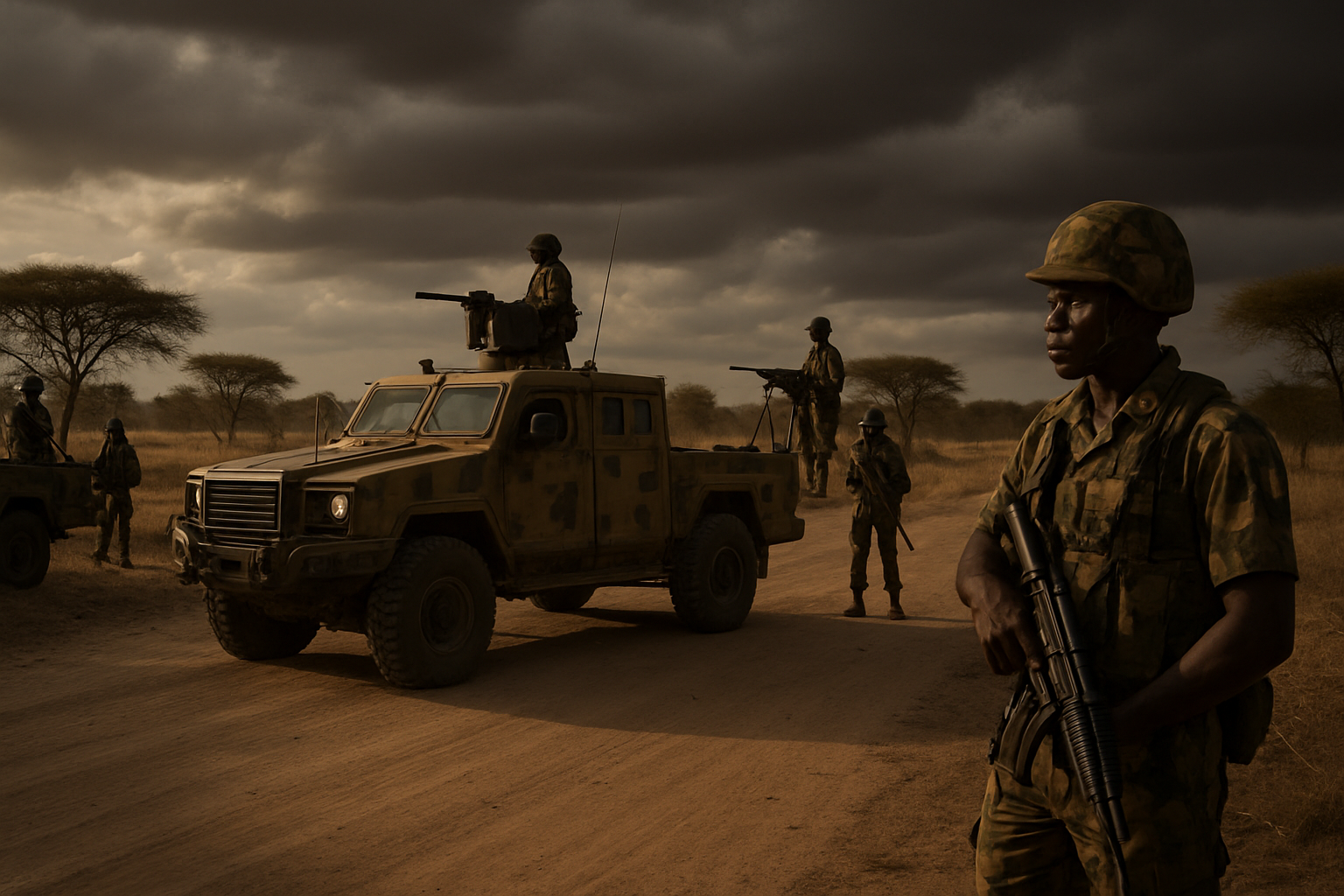
A Nigerian general was killed alongside several soldiers in a coordinated jihadist attack on a military base in the northeastern region of the country, according to local authorities and intelligence sources, underscoring the persistent security challenges facing Africa's most populous nation.
The deadly assault occurred at a military installation in Nigeria's volatile northeast, where terrorist groups including Boko Haram and Islamic State West Africa Province (ISWAP) have maintained a presence for over a decade despite sustained military operations.
The attack represents the latest in a series of high-profile security incidents that have plagued Nigeria throughout 2026, demonstrating the evolving capabilities of extremist networks operating across the region. Local military sources confirmed the death of the senior officer, though his identity has not been officially released pending notification of family members.
Escalating Security Crisis
This latest incident comes as Nigeria grapples with an expanding security crisis that has seen terrorist activities spread beyond traditional northeastern strongholds into previously stable regions. The attack follows a disturbing pattern of sophisticated operations targeting military installations and civilian infrastructure across multiple states.
In recent months, Nigeria has witnessed a surge in terrorist activities that have tested the capacity of security forces. Mass trials of 500 suspected terrorists are currently underway in 13 courtrooms across Abuja under heavy security, reflecting the scale of the challenge facing the Tinubu administration.
The geographical expansion of terrorist activities has been particularly concerning for security analysts. What began as a localized insurgency in the northeast has increasingly spread into Nigeria's middle belt and northwestern regions, creating new security challenges for authorities.
Historical Context and Pattern of Attacks
The death of the general echoes previous high-profile military casualties that have shaken Nigeria's security establishment. In March 2026, Lieutenant Colonel Umar Farouq was killed in coordinated attacks on multiple military bases in Borno State, including installations at Mainok, Jakana, Marte, and Konduga.
These attacks have demonstrated increasingly sophisticated tactical capabilities, with terrorist groups successfully targeting command structures and seizing military equipment. The ability to conduct coordinated multi-target operations suggests enhanced organizational capacity and intelligence gathering capabilities among extremist networks.
"The systematic targeting of military leadership represents a dangerous escalation in terrorist capabilities and poses significant challenges to our counter-terrorism efforts."
— Security analyst speaking on condition of anonymity
Broader Regional Impact
The persistence of security challenges in Nigeria has far-reaching implications for West African stability. As the region's largest economy and most populous country, Nigeria's security situation affects neighboring nations and international partners who have invested heavily in counter-terrorism cooperation.
Previous major incidents, including the February 2026 Kwara State attacks that killed 162 people and the March 2026 Maiduguri suicide bombings that claimed 23 lives during Ramadan, have highlighted the geographic spread and operational sophistication of terrorist networks.
The attacks have also exposed recurring intelligence failures, with communities repeatedly providing advance warnings about terrorist presence that authorities have failed to act upon effectively. This pattern has created a crisis of confidence in government security responses among vulnerable populations.
Government Response and Challenges
President Bola Ahmed Tinubu's administration has deployed army battalions and forest guards across affected regions while conducting operations that have eliminated hundreds of militants. However, the continued success of terrorist attacks against military targets demonstrates the limitations of purely reactive security approaches.
The government faces mounting pressure to address not only the immediate security threats but also the underlying factors that enable extremist recruitment and territorial expansion, including poverty, unemployment, weak governance, and limited economic opportunities in affected regions.
Military operations have achieved tactical successes, with reports of significant militant casualties in various operations. However, the ability of terrorist groups to continue conducting sophisticated attacks against hardened military targets suggests that these networks retain substantial operational capabilities despite sustained pressure.
International Implications
The ongoing security crisis has attracted international attention and support, with regional partners and global allies providing counter-terrorism assistance. However, the persistence of attacks against military targets raises questions about the effectiveness of current strategies and the need for comprehensive approaches addressing root causes.
Enhanced ECOWAS cooperation and international intelligence sharing have been identified as critical components for addressing transnational criminal networks that exploit porous borders and weak governance structures across the Sahel region.
The situation in Nigeria serves as a case study for contemporary counter-terrorism challenges, where military responses alone have proven insufficient to address complex security threats that interweave local grievances with international extremist ideologies.
Looking Forward
The death of another senior military officer underscores the urgent need for adaptive security strategies that can address both immediate threats and long-term stability requirements. Security experts emphasize that sustainable solutions must combine enhanced security measures with economic development, governance improvements, and community engagement.
As Nigeria continues to grapple with these challenges, the international community watches closely, understanding that the country's success or failure in addressing terrorism will have significant implications for regional stability and global security architecture.
The resilience of Nigerian communities and security forces provides hope, but sustained commitment from government, international partners, and civil society will be essential for achieving lasting peace and security in Africa's most populous nation.