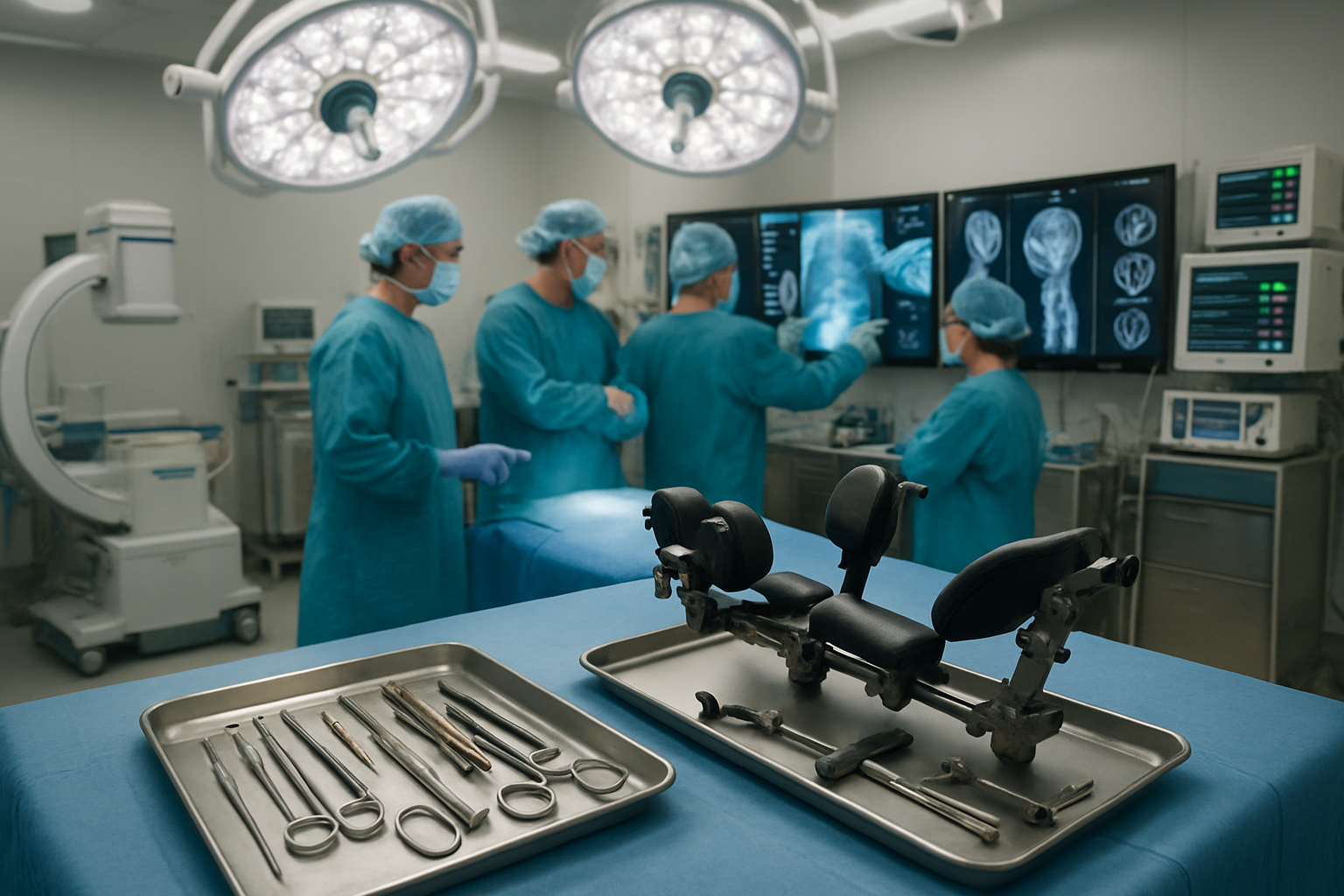
A nine-year-old boy has become the first child in the United Kingdom to undergo a revolutionary leg extension operation using groundbreaking surgical techniques, marking a historic milestone in pediatric orthopedic medicine at Alder Hey Children's Hospital.
The innovative procedure, which specifically targets children with fibular hemimelia—a rare congenital condition where the fibula bone is partially or completely absent—represents a paradigm shift in treating complex limb deformities in pediatric patients. This breakthrough positions Britain at the forefront of advanced orthopedic surgery and offers new hope to families worldwide dealing with similar conditions.
A Medical First in Pediatric Orthopedics
The pioneering surgery at Alder Hey Children's Hospital utilizes cutting-edge techniques that allow surgeons to gradually extend the affected limb through sophisticated bone reconstruction methods. Unlike traditional approaches that often required amputation or complex prosthetic interventions, this revolutionary technique enables the child's own bone to grow and develop naturally over time.
Fibular hemimelia is a rare condition affecting approximately 1 in 40,000 births, where children are born with a shortened or absent fibula bone in the lower leg. This condition typically results in significant limb length discrepancy, ankle instability, and foot deformities that can severely impact mobility and quality of life.
International Recognition and Medical Context
This medical milestone occurs within the broader context of what experts are calling the "therapeutic revolution of 2026," a period marked by unprecedented advances in precision medicine and surgical innovation. The success at Alder Hey Children's Hospital builds upon a remarkable wave of pediatric medical breakthroughs documented across the globe.
Recent months have witnessed extraordinary advances in children's healthcare, including the World Pediatric Project's historic first pediatric cancer surgery in Saint Vincent and the Grenadines, Germany's breakthrough in designer-cell therapies specifically adapted for children with cancer, and revolutionary prenatal treatments emerging from French medical centers.
The British advancement aligns with global trends emphasizing prevention-first healthcare approaches and precision medicine techniques that prioritize patient outcomes while reducing long-term complications. International medical cooperation has been instrumental in advancing these complex procedures, with knowledge sharing between institutions accelerating breakthrough discoveries.
Surgical Innovation and Technique
The revolutionary leg extension procedure employs advanced bone lengthening techniques combined with sophisticated biomechanical engineering. The surgical team utilizes specialized external or internal fixation devices that gradually distract the bone, stimulating new bone formation in a controlled, measured process.
This technique, known as distraction osteogenesis, allows surgeons to achieve significant limb lengthening while maintaining proper alignment and function. The process typically occurs over several months, with the bone being gradually extended at a rate that promotes healthy tissue regeneration and optimal healing.
The innovation lies not just in the surgical technique itself, but in the comprehensive pediatric approach that considers the unique physiological and psychological needs of young patients. The surgical team has developed specialized protocols for pain management, rehabilitation, and long-term monitoring specifically designed for children.
Global Impact and Future Implications
The success of this groundbreaking procedure has implications far beyond Britain's borders. Medical institutions worldwide are closely monitoring the outcomes, as this technique could potentially transform treatment protocols for thousands of children born with similar conditions globally.
Dr. experts in pediatric orthopedics emphasize that this advancement represents more than a single successful surgery—it establishes a new treatment paradigm that could benefit children in developing nations where advanced prosthetic care may be limited or unavailable.
The timing of this breakthrough is particularly significant given the evolving landscape of global healthcare cooperation. Despite funding challenges facing traditional multilateral health organizations, bilateral partnerships and regional medical collaborations continue driving innovation through peer-to-peer knowledge sharing and best practices exchange.
Economic and Healthcare System Implications
The economic implications of this medical advancement extend beyond immediate treatment costs. Prevention-focused approaches like this revolutionary surgery demonstrate substantial long-term cost reductions by eliminating the need for multiple corrective procedures, extensive prosthetic interventions, and lifelong medical management typically associated with traditional treatments.
Healthcare economists note that such innovations, while requiring significant initial investment in training and technology, ultimately contribute to healthcare system resilience by reducing chronic care demands and improving patient quality of life outcomes.
The success at Alder Hey Children's Hospital also positions Britain as a potential destination for specialized pediatric medical tourism, creating economic multiplier effects while establishing the country as a center of excellence for complex orthopedic procedures.
Challenges and Implementation Requirements
Despite the remarkable success of this first procedure, significant challenges remain in scaling this technology to benefit more children. The complexity of the surgery requires specialized training for surgical teams, advanced imaging technologies, and comprehensive post-operative care protocols.
Healthcare infrastructure requirements include specialized pediatric orthopedic units, advanced anesthesia capabilities for extended procedures, and dedicated rehabilitation facilities equipped to manage the unique needs of children undergoing limb reconstruction.
Regulatory frameworks must also evolve to accommodate these innovative techniques while ensuring patient safety standards. International cooperation will be essential for establishing standardized protocols and sharing best practices across medical institutions worldwide.
Patient-Centered Care and Quality of Life
The revolutionary aspect of this surgery extends beyond technical innovation to encompass a fundamentally patient-centered approach. The procedure not only addresses the physical aspects of the condition but considers the long-term psychological and social development of young patients.
Children with limb length discrepancies often face significant challenges in mobility, sports participation, and social integration. This surgical breakthrough offers the possibility of normal or near-normal limb function, potentially transforming these children's life trajectories and future opportunities.
The success of this first case provides hope to families worldwide who have been told that amputation or complex prosthetic management represented their only options. The possibility of preserving and enhancing natural limb function represents a paradigm shift toward more optimistic outcomes for children with complex orthopedic conditions.
Future Research and Development
The success of Britain's first pediatric leg extension surgery opens new avenues for research and development in pediatric orthopedics. Medical institutions are now investigating applications for other complex limb deformities and exploring refinements in surgical techniques that could further improve outcomes.
Future research directions include developing minimally invasive approaches, investigating biological enhancement techniques to accelerate bone healing, and creating predictive models to optimize surgical timing and approach for individual patients.
International collaboration will be crucial for advancing this field, with research institutions sharing data, protocols, and outcomes to continuously refine these complex procedures. The goal is to establish this revolutionary technique as a standard treatment option for eligible children worldwide.
Conclusion: A New Era in Pediatric Medicine
The successful completion of Britain's first pediatric leg extension surgery represents more than a single medical achievement—it symbolizes the dawn of a new era in pediatric orthopedic care. This breakthrough demonstrates how innovative surgical techniques, combined with comprehensive patient-centered care, can transform outcomes for children facing complex medical challenges.
As medical institutions worldwide continue to build upon this foundation, the hope is that such revolutionary procedures will become increasingly accessible to children globally, regardless of geographic or economic constraints. The success at Alder Hey Children's Hospital provides a beacon of hope for families and represents the continued evolution of medicine toward more effective, compassionate, and transformative care for our youngest patients.
This medical milestone occurs within a broader context of unprecedented healthcare innovation in 2026, positioning the global medical community to address complex pediatric conditions with solutions that were unimaginable just years ago. The future of pediatric orthopedic care has been forever changed by this remarkable achievement.