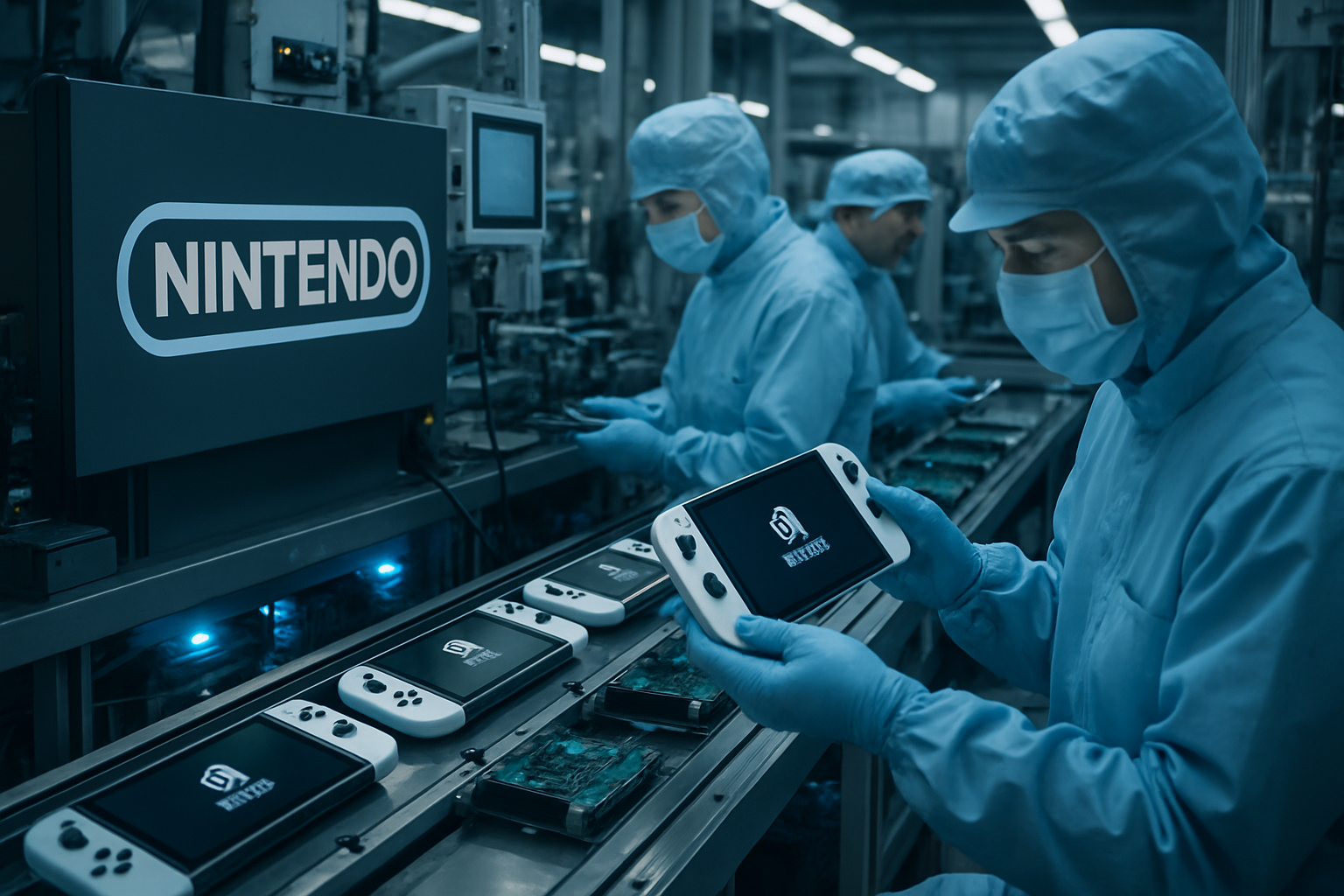
Nintendo has announced a dramatic reduction in Switch 2 production targets by over 30% following disappointing holiday sales performance that fell significantly short of management expectations, according to reports from Japanese industry sources.
The production cuts come as a major blow to Nintendo's ambitious rollout plans for its highly anticipated next-generation gaming console. After what industry analysts described as a "record-setting debut" in June 2025, the Switch 2's momentum appears to have stalled during the crucial holiday shopping period.
Production Challenges Mount
The decision to slash production represents one of the most significant strategic reversals in Nintendo's recent history. Industry sources suggest the company had initially projected much stronger consumer adoption rates based on the original Switch's phenomenal success, which became Nintendo's best-selling console with 155.37 million units sold worldwide, surpassing the previous Nintendo DS record.
The production cuts are particularly concerning given Nintendo's strong financial position entering 2026. The company reported impressive net profits rising 51.3% year-on-year to ¥358.9 billion during the April-December 2025 period, driven largely by continued strong performance from the original Switch platform.
Global Supply Chain Pressures
The Switch 2 production challenges coincide with broader industry headwinds affecting gaming hardware manufacturers worldwide. Global memory chip shortages have created substantial cost pressures, with semiconductor prices increasing sixfold across major suppliers including Samsung, SK Hynix, and Micron.
These supply chain disruptions have forced Nintendo to reassess its manufacturing strategy at a time when the company faces mounting production costs that could impact the Switch 2's retail pricing and profitability margins.
"After a record-setting debut in June, sales of the Switch 2 have failed to meet Nintendo management's high expectations."
— The Japan Times
The timing of these production cuts is particularly challenging for Nintendo, which had been counting on the Switch 2 to maintain its dominant position in the hybrid portable-console gaming market that the original Switch helped create and define.
Market Analysis and Consumer Response
Gaming industry analysts point to several potential factors behind the Switch 2's underwhelming holiday performance. The global economic environment has created more cautious consumer spending patterns, particularly for premium electronics and entertainment products.
Additionally, the original Switch's continued strong performance may have inadvertently cannibalized some potential Switch 2 sales, as consumers remained satisfied with their existing gaming systems rather than upgrading immediately to the newer model.
The production reduction suggests Nintendo is taking a more conservative approach to inventory management, avoiding the overstock situations that have plagued other consumer electronics manufacturers during recent market volatility.
Strategic Implications for Nintendo
This production adjustment marks a significant recalibration of Nintendo's growth expectations for its next-generation platform. The company had been positioning the Switch 2 as the natural evolution of its highly successful hybrid gaming concept, combining portable and home console functionality.
The revised production targets indicate Nintendo is prioritizing sustainable demand matching over aggressive market expansion, potentially allowing the company to maintain higher profit margins per unit while building more predictable supply chain relationships.
Industry observers note that Nintendo has historically demonstrated remarkable resilience in adapting to market conditions, having successfully navigated various challenging periods throughout its long gaming industry presence.
Looking Forward
Despite the production cuts, Nintendo remains well-positioned in the gaming market with its established intellectual property portfolio and loyal customer base. The original Switch continues to generate substantial revenue streams through both hardware sales and an extensive software library.
The company's decision to reduce Switch 2 production may ultimately prove strategically sound if it allows Nintendo to better align supply with actual market demand while maintaining the premium positioning that has characterized its most successful product launches.
As the gaming industry continues evolving amid global economic uncertainty and supply chain challenges, Nintendo's more measured approach to the Switch 2 rollout could establish a template for sustainable console generation transitions in an increasingly competitive and unpredictable market environment.