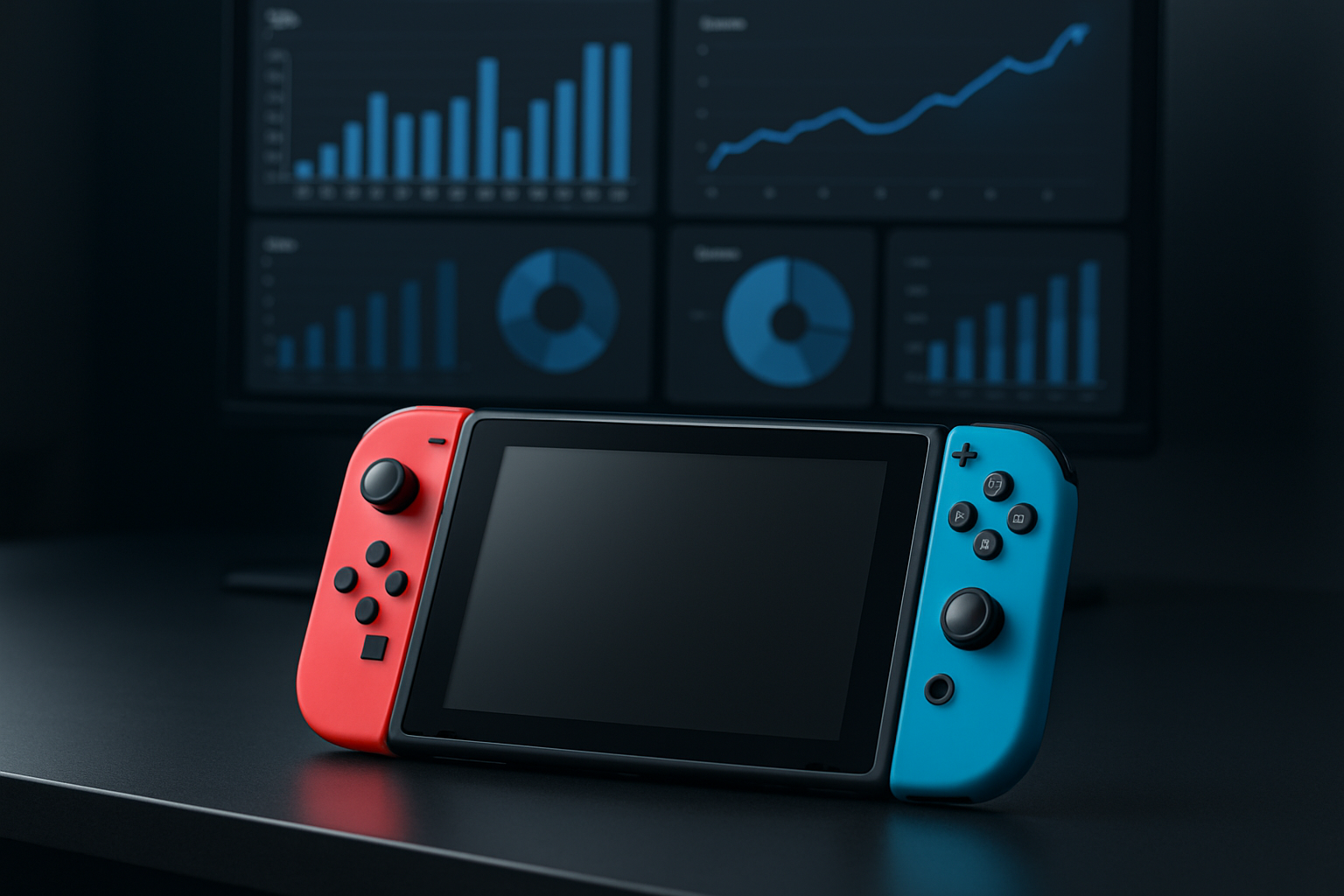
Nintendo Switch has officially become the company's best-selling console of all time, reaching 155.37 million units sold worldwide and surpassing the previous record held by the Nintendo DS, marking a historic milestone for the Kyoto-based gaming giant.
The achievement represents a significant triumph for Nintendo's hybrid console strategy, which launched in March 2017 and has consistently defied industry expectations with its innovative portable-docked gameplay concept. The Switch's sales figure now places it among the most successful gaming consoles in history, solidifying Nintendo's position as a dominant force in the global gaming market.
Record-Breaking Financial Performance
Nintendo's financial results for the April-December period demonstrate the console's continued commercial success, with net profits rising an impressive 51.3% year-on-year to ¥358.9 billion (approximately $2.4 billion). This substantial profit increase underscores the strength of Nintendo's business model and the enduring appeal of its gaming ecosystem.
The Switch's success has been driven by a combination of factors, including its unique hybrid design that allows seamless transitions between handheld and docked gaming, a robust library of exclusive first-party titles, and strategic third-party partnerships. Popular franchises such as The Legend of Zelda, Super Mario, and Pokémon have continued to drive hardware sales throughout the console's lifecycle.
Historical Context and Significance
The Nintendo DS, which previously held the company's sales record, was released in 2004 and became a cultural phenomenon with its dual-screen design and touch controls. The DS family, including the DS Lite, DSi, and DSi XL variants, had maintained its position as Nintendo's most successful platform for nearly two decades until the Switch's recent achievement.
This milestone places the Nintendo Switch in elite company within the broader gaming industry. Only a handful of consoles in gaming history have exceeded the 150 million unit threshold, including Sony's PlayStation 2, which remains the best-selling video game console of all time with over 155 million units sold.
Strategic Market Positioning
Nintendo's success with the Switch represents a remarkable recovery from the commercial disappointment of its predecessor, the Wii U, which sold only 13.56 million units during its lifetime. The Switch's hybrid approach effectively merged Nintendo's handheld and home console businesses, creating a unified platform that appeals to both traditional console gamers and mobile gaming enthusiasts.
Manufacturing Challenges on the Horizon
Despite the celebration of this sales milestone, Nintendo faces significant challenges moving forward, particularly related to the global semiconductor shortage that has impacted the entire technology industry. The company has indicated that memory chip shortages could substantially increase manufacturing costs for future hardware production.
This concern is particularly relevant given the widespread anticipation surrounding the upcoming Switch 2, Nintendo's next-generation console. Industry analysts have expressed concerns about how supply chain disruptions and increased component costs might affect the launch and pricing strategy of the new system.
Memory Crisis Impact
The ongoing global memory crisis, driven by unprecedented demand from artificial intelligence development and data center expansion, has created a perfect storm for consumer electronics manufacturers. Memory prices have surged dramatically, with some components experiencing cost increases of up to 600% compared to previous years.
For Nintendo, this presents a delicate balancing act between maintaining competitive pricing for consumers while managing increased production costs. The company's ability to navigate these supply chain challenges will likely play a crucial role in determining the success of its future hardware releases.
Industry Implications
The Switch's record-breaking success has broader implications for the gaming industry, demonstrating that innovative hardware design and exclusive content can still drive substantial market success in an increasingly competitive landscape. The console's achievement comes at a time when traditional hardware sales face pressure from cloud gaming services and mobile gaming platforms.
Nintendo's approach of focusing on unique gaming experiences rather than raw processing power has proven to be a winning strategy, contrasting with competitors who have prioritized high-end graphics and technical specifications. This success validates the company's long-standing philosophy of lateral thinking in game development and hardware design.
Future Market Dynamics
As the gaming industry continues to evolve, the Switch's success provides valuable insights into consumer preferences and market trends. The console's popularity across diverse demographic groups, from children to adults, suggests that accessibility and innovative gameplay concepts remain more important to many consumers than cutting-edge graphics or processing capabilities.
The transition to the Switch 2 will be closely watched by industry observers, as Nintendo attempts to replicate the success of its current platform while addressing the technological and manufacturing challenges that lie ahead. The company's ability to maintain momentum during this transition period will be crucial for sustaining its market position.
Looking Ahead
With the Nintendo Switch now holding the title of the company's best-selling console, Nintendo faces the challenge of maintaining this success while preparing for its next generation of hardware. The upcoming Switch 2 launch will be critical in determining whether the company can continue its current trajectory or if the original Switch represents a unique peak in gaming history.
The gaming industry will be watching closely to see how Nintendo navigates the complex landscape of supply chain challenges, evolving consumer preferences, and increasing competition from both traditional console manufacturers and emerging gaming platforms. The Switch's record-breaking achievement sets a high bar for future Nintendo hardware and establishes a new benchmark for success in the gaming console market.