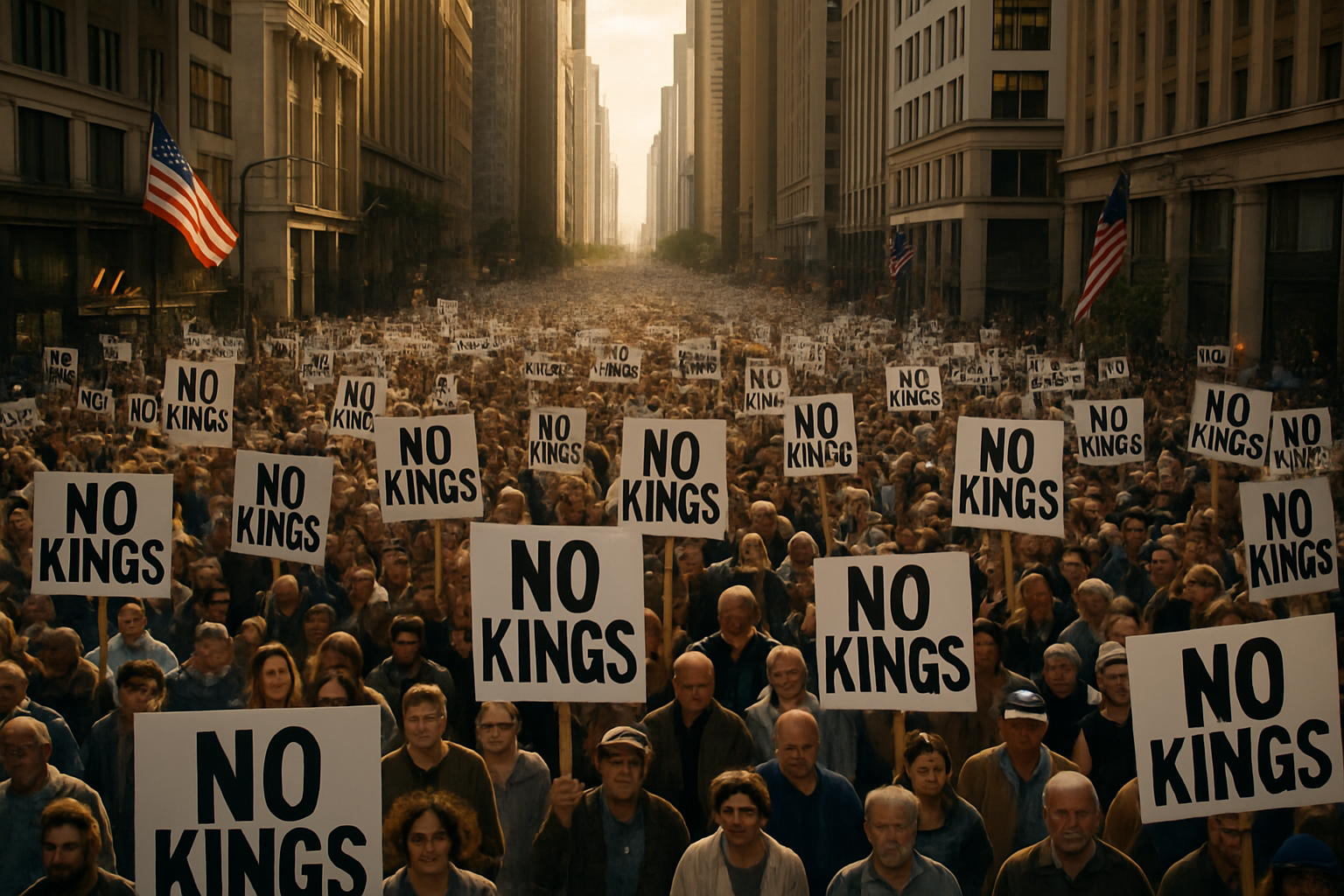
Eight million Americans participated in the largest single-day demonstration in United States history on March 28, 2026, as 'No Kings' protests swept across more than 3,300 cities nationwide in unprecedented opposition to President Trump's policies.
The historic mobilization marked the third major wave of resistance since Trump's return to office, building from several million participants in June 2025 to seven million in October 2025, culminating in the record-breaking March demonstration that organizers claim represents the most significant peaceful protest in American history.
Opposition to Iran War Drives Record Turnout
The primary catalyst for the massive demonstrations was widespread opposition to Trump's military engagement in Iran, codenamed "Operation Epic Fury," which has cost $11.3 billion in its first week alone, with over 150 US casualties including three confirmed deaths. Despite the administration's military commitment, polling shows only 25% of Americans support the Iran strikes, with 56% believing Trump is too willing to use military force—including nearly a quarter of his own Republican base.
The Pentagon has extended operations through September, far beyond the initial 4-6 week projection, creating sustained domestic opposition to what many view as an unnecessary conflict. The military campaign proceeded despite Geneva talks that achieved "broad agreement on guiding principles," representing the most significant diplomatic progress since the 2018 JCPOA collapse.
Geographic Expansion Beyond Traditional Centers
The March protests demonstrated unprecedented geographic reach, with two-thirds of events occurring outside major metropolitan areas—a 40% increase in small community participation since June 2025. The movement successfully penetrated deep into traditionally conservative regions, including rural West Virginia and Texas, demonstrating organizational infrastructure that extends far beyond typical urban activism.
All 50 states participated in the coordinated demonstrations, with protest events reaching small towns and rural communities that rarely see political mobilization on this scale. This geographic diversity signals the movement's evolution from reactive urban protests to proactive political organizing with sophisticated coordination across the entire country.
International Solidarity and NATO Tensions
The domestic protests coincided with international solidarity demonstrations in Amsterdam, Madrid, Rome, and other European cities, with approximately 20,000 participants marching in Rome alone. The international dimension reflects growing concern about American policies and their global implications.
"This is not just an American issue—the whole world is watching what happens to democratic institutions here."
— International observer at Rome demonstration
Adding to the administration's international challenges, European allies have rejected Trump's requests for naval coalition support in the Strait of Hormuz, with German Defense Minister questioning what a "handful of European frigates" could accomplish. Trump's response that the US "no longer needs NATO assistance" has created significant transatlantic tensions, providing additional context for the international solidarity with American protesters.
Constitutional Messaging and Democratic Resistance
The "No Kings" moniker deliberately invokes America's founding rejection of monarchy, positioning the protests within a historical framework of democratic resistance that appeals beyond traditional partisan divisions. This constitutional messaging has proven effective in mobilizing diverse communities that might not typically participate in political demonstrations.
Celebrity support amplified the movement's reach, with Bruce Springsteen performing "Streets of Minneapolis" at the St. Paul rally—referencing the fatal January shootings of Alex Pretti and Renee Nicole Good by ICE agents. Robert De Niro made multiple appearances, calling Trump an "existential threat to democracy," while Democratic leaders participated despite security concerns.
Immigration Enforcement Under Fire
Beyond Iran war opposition, protesters strongly condemned the administration's immigration enforcement tactics. Deportations have quadrupled during Trump's first nine months back in office, with two-thirds of Americans now believing ICE has "gone too far" according to NPR/PBS/Marist polling.
The Minneapolis shootings became a powerful symbol of enforcement overreach, leading to the withdrawal of 700 ICE agents from Minnesota and the implementation of mandatory body cameras. Federal courts have increasingly required ICE to obtain warrants before arrests, while civil rights lawsuits challenge deportation policies affecting 75 countries through visa suspensions.
Strategic Evolution and Tactical Sophistication
The movement demonstrated remarkable tactical evolution, employing a "without mobilization" strategy in some regions that focused on economic pressure through strikes and work stoppages rather than street demonstrations. This strategic sophistication shows the progression from reactive protests to proactive political organizing with long-term planning capabilities.
The peaceful character of the demonstrations was maintained despite their record scale, providing legitimacy and avoiding negative publicity that could undermine the movement's broader political goals. The coordination across 50 states reveals unprecedented logistical capacity and sustained political engagement infrastructure.
Federal Response and Internal Divisions
The White House dismissed the protests as irrelevant, with Trump calling participants "weak on security." However, the administration faced its first major internal defection when Joseph Kent resigned as counterterrorism chief, publicly protesting the Iran war and becoming the first senior administration official to break openly with Trump over military policy.
Kent's resignation, combined with the massive street demonstrations, suggests deeper tensions within the government over current policies. Congressional resistance has also intensified, with the Senate voting 53-47 to block bipartisan war powers restrictions, though the close vote indicates growing unease even among some Republicans.
Midterm Elections and Political Implications
With November 2026 midterm elections approaching, the protests serve dual functions as both opposition demonstrations and organizing tools for political change. The success in mobilizing diverse geographic and demographic communities indicates significant potential for continued political pressure on the administration.
The constitutional governance messaging extends beyond partisan frameworks while building sustained engagement infrastructure that could prove crucial in upcoming elections. The movement's ability to maintain momentum over nearly a year suggests institutional staying power beyond typical protest cycles.
Historical Significance and Future Implications
March 28, 2026 represents a critical juncture in American politics, occurring amid foreign conflicts, economic pressures, and fundamental questions about democratic institutions and presidential authority. The protests mark a significant moment in the struggle between executive power and popular resistance, with implications extending far beyond the current administration.
The movement's capacity for sustained mobilization, geographic expansion, and peaceful approaches while addressing both domestic and international concerns demonstrates continued civic engagement vitality in American democracy. Whether viewed as legitimate democratic dissent or a challenge to elected authority, the demonstrations undeniably showcase the strength of civic engagement in contemporary America.
The events of March 28 establish a template for sustained democratic resistance in the 21st century, combining record scale with geographic diversity, strategic coordination, and constitutional messaging. The precedent set by these peaceful mobilizations within a constitutional framework will likely influence the trajectory of political confrontation, democratic institutions, and international relations for years to come.