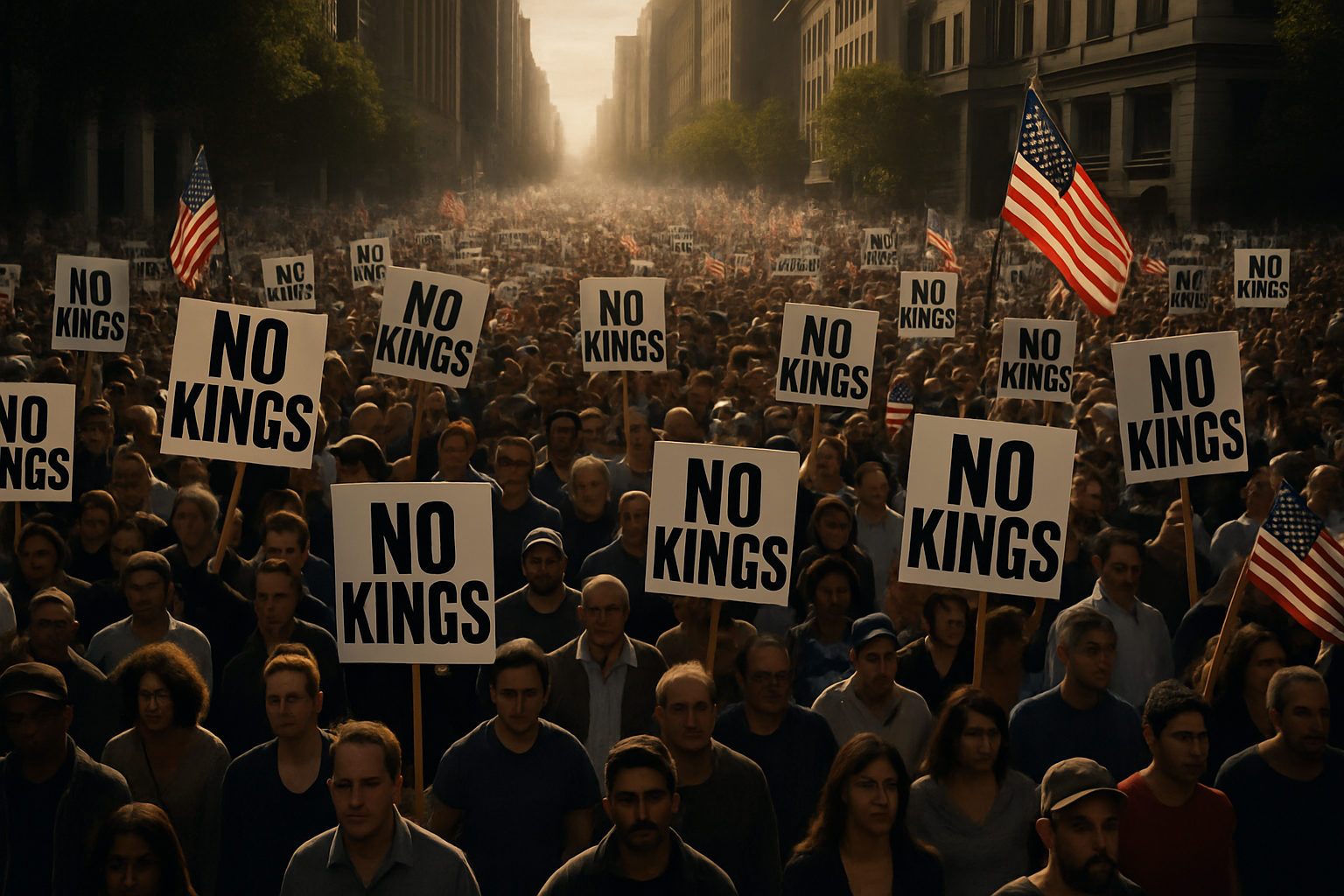
Millions of demonstrators took to the streets across the United States and Europe on March 28, 2026, in what organizers called the largest 'No Kings' protest yet, marking the third major wave of opposition to President Trump's policies since his return to office in January 2025.
The coordinated demonstrations, spanning over 3,200 cities nationwide and extending to international solidarity protests in Vienna, Madrid, and Amsterdam, represented a significant escalation in organized resistance to the Trump administration's domestic and foreign policies, particularly the ongoing military engagement with Iran.
Record-Breaking Scale of Mobilization
Protest organizers claimed the March 28 demonstrations constituted the largest single-day protest in American history, building on previous mobilizations that drew several million participants in June 2025 and an estimated seven million in October 2025. The movement has shown remarkable growth, expanding from traditional urban centers to rural communities across the American heartland.
Reports from Australia's Sydney Morning Herald noted that "even the deep-red Republican heartlands are showing signs of Trump fatigue," with demonstrations occurring in small towns across West Virginia and other traditionally conservative states. This geographic expansion represents a significant shift in the protest movement's demographic and regional reach.
International participation added a global dimension to the demonstrations, with solidarity protests reported in Bosnia and Herzegovina, where demonstrators declared "We don't want kings and oligarchies to rule over us," according to N1 Info coverage.
Iran War Opposition Drives Mobilization
Central to the March 28 protests was opposition to Trump's military engagement with Iran, designated "Operation Epic Fury," which has already cost $11.3 billion in its first week and extended far beyond initial Pentagon projections. The operation, which has resulted in over 150 wounded American service members and three confirmed deaths, has faced significant public opposition.
Polling data indicates only 25% of Americans support the Iran strikes, with 56% believing Trump is too willing to use military force—a sentiment that includes a quarter of the Republican base. This rare bipartisan skepticism of military action has provided significant momentum for the protest movement.
The Times of Israel reported that the protests marked a "nearly 40% jump in events outside big cities" since the movement began in June 2025, as organizers work to "turn dissatisfaction in red states into midterm gains" ahead of the November 2026 elections.
Celebrity Support and Political Participation
The demonstrations drew notable celebrity participation, with Bruce Springsteen performing "Streets of Minneapolis" at a St. Paul rally. Italian media outlet ANSA reported Springsteen's declaration that "the reactionary nightmare will not prevail," reflecting the cultural dimension of the resistance movement.
"Minnesota is an inspiration. The reactionary nightmare will not prevail."
— Bruce Springsteen, Musician
Actor Robert De Niro made multiple appearances at rallies, continuing his pattern of high-profile opposition to Trump policies. The celebrity participation has helped maintain media attention while providing platforms for broader political messages.
Strategic Evolution of the Movement
The March 28 protests demonstrated significant tactical sophistication compared to earlier demonstrations. The movement has adopted a "without mobilization" strategy in some regions, focusing on economic pressure through strikes and work stoppages rather than traditional street demonstrations.
This strategic evolution reflects lessons learned from previous confrontational approaches and represents an attempt to sustain political pressure through diverse means of civic engagement. The coordination across 50 states demonstrates the movement's organizational capacity and infrastructure development.
European participation, while smaller in scale, provided important international solidarity. Demonstrations in Vienna, Madrid, and Amsterdam showed the global dimensions of concern about American domestic and foreign policies under Trump's second term.
Constitutional Messaging Framework
The "No Kings" designation reflects the movement's core constitutional argument, referencing the founding rejection of monarchy and positioning protests within America's historical democratic resistance tradition. Protesters consistently invoke constitutional principles and institutional norms they claim are under threat.
NPR's photo coverage documented protesters carrying signs emphasizing democratic themes and constitutional governance, positioning the movement as a defense of institutional democracy rather than partisan opposition.
This framing allows the movement to appeal beyond traditional partisan divisions, presenting itself as a fundamental defense of American democratic principles rather than merely opposition to Republican policies.
European Allied Rejection Context
The international solidarity protests occurred against the backdrop of unprecedented European rejection of Trump's foreign policy initiatives. European allies have refused requests to join Trump's naval coalition in the Strait of Hormuz, with German Defense Minister Pistorius questioning what "a handful of European frigates" could accomplish that the US Navy cannot.
Trump responded to this allied resistance by declaring the United States "no longer needs NATO assistance," creating additional tension in transatlantic relationships and providing international context for domestic opposition movements.
Midterm Election Implications
With November 2026 midterm elections approaching, the protests serve both as demonstrations of political opposition and organizing tools for electoral engagement. The movement's emphasis on constitutional governance and democratic accountability provides messaging that extends beyond traditional partisan frameworks.
The success in mobilizing diverse geographic and demographic communities indicates the potential for continued political pressure on the Trump administration, particularly as economic pressures from the Iran conflict continue to mount on American households.
Peaceful Character Maintained
Despite the massive scale of the demonstrations, reports consistently emphasized the peaceful character of the March 28 protests. This represents a tactical shift from some earlier confrontational approaches and demonstrates the movement's commitment to working within democratic institutions.
The maintained peaceful character of the protests, despite their record scale, provided legitimacy for the movement's constitutional messaging while avoiding negative publicity that could undermine public support.
Historical Significance
The March 28, 2026 'No Kings' protests represent a critical juncture in American politics, occurring amid ongoing foreign conflicts, economic pressures, and fundamental questions about democratic institutions and presidential authority.
The protests mark a significant moment in the ongoing struggle between executive power and popular resistance, with implications that extend well beyond the Trump administration. The movement's ability to sustain mobilization over nearly a year, expand geographically, and maintain peaceful approaches while addressing both domestic and international concerns demonstrates the continued vitality of American civic engagement.
As the movement continues to evolve strategically and build infrastructure for sustained political engagement, the March 28 demonstrations may be remembered as the moment when scattered resistance coalesced into a comprehensive challenge to what protesters see as authoritarian governance, setting the stage for continued political confrontation in the months ahead.