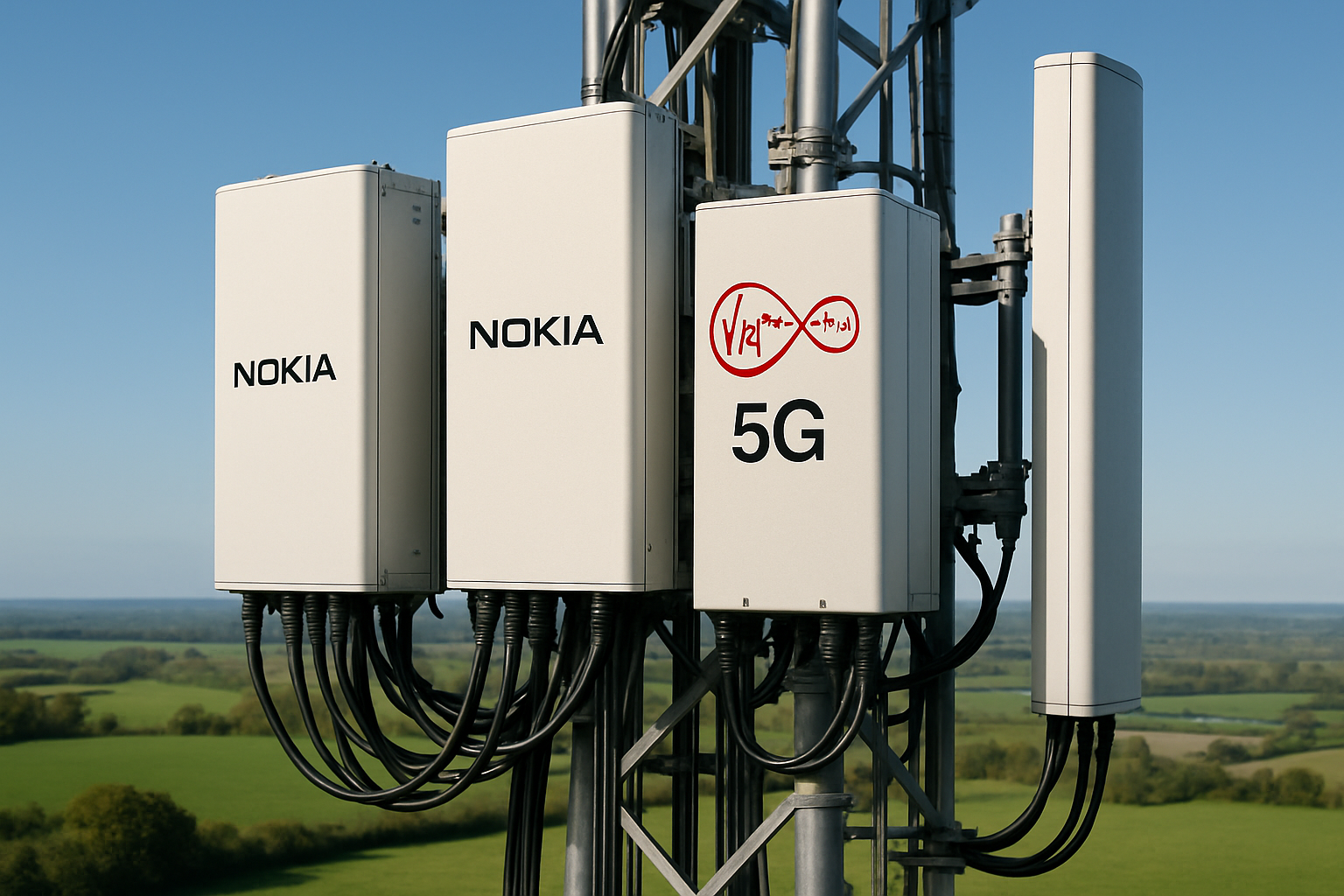
Nokia Corporation announced on Tuesday that it has been selected by Virgin Media O2 for a major new multi-year 5G Radio Access Network (RAN) deployment across the United Kingdom, marking a significant victory for the Finnish telecommunications giant in one of Europe's most competitive mobile markets.
The contract represents Nokia's continued expansion in the UK telecommunications infrastructure sector, positioning the company as a key player in Britain's nationwide 5G rollout. Virgin Media O2, formed through the merger of Virgin Media and O2 UK in 2021, operates one of Britain's largest mobile networks with over 34 million customers.
Strategic Significance for Nokia
This UK contract win comes at a crucial time for Nokia as the company strengthens its global 5G infrastructure portfolio. The Finnish manufacturer has been aggressively pursuing contracts worldwide, building on its reputation as a trusted alternative to Chinese competitors like Huawei and ZTE, particularly in Western markets concerned about supply chain security.
The Virgin Media O2 partnership builds directly on Nokia's recent successes, including its March 2026 AI-powered 5G expansion in Brazil through an enhanced Nvidia partnership. That collaboration demonstrated Nokia's capability to deploy advanced AI-enhanced networks that optimize signal strength, prevent congestion, and predict equipment failures through sophisticated algorithms processing millions of data points per second.
"This contract reinforces Nokia's position as a leading provider of cutting-edge 5G technology in the UK market."
— Nokia Corporation, Official Statement
UK Telecommunications Landscape
The UK's telecommunications sector has undergone significant transformation in recent years, with operators investing heavily in 5G infrastructure to support the country's digital economy ambitions. The government's commitment to achieving zero-carbon power grid by 2030 has created additional opportunities for technology companies like Nokia to provide energy-efficient network solutions.
Virgin Media O2's selection of Nokia comes amid broader changes in the UK's digital infrastructure priorities. Recent government policies have emphasized supporting British suppliers for contracts in sectors vital to national security, including telecommunications infrastructure, though this has been balanced with the need for world-class technology solutions.
Competitive Market Dynamics
Nokia's success with Virgin Media O2 reflects the company's strategic positioning during a period of intense global competition in the 5G infrastructure market. The Finnish company has been competing against both established Western rivals and Chinese manufacturers who have invested heavily in AI-enhanced telecommunications technology.
The contract is particularly significant given the ongoing global supply chain challenges, including the sixfold increase in semiconductor prices that has affected the entire telecommunications industry. Nokia's ability to secure major contracts during this period demonstrates the company's operational resilience and supply chain management capabilities.
Technology Integration and Innovation
The Virgin Media O2 deployment will leverage Nokia's latest 5G RAN technology, which incorporates advanced features for network optimization and management. This includes capabilities for artificial intelligence-driven network management, predictive maintenance, and automated traffic routing that Nokia has been developing through partnerships with companies like Nvidia.
Nokia's approach emphasizes creating self-optimizing networks that can adapt to varying geographic and demographic conditions across the UK, from dense urban areas like London to rural communities requiring reliable connectivity. The technology platform enables real-time network optimization and ultra-low latency for applications including autonomous vehicles, industrial automation, and real-time streaming services.
Economic and Strategic Implications
The multi-year nature of the contract provides Nokia with stable revenue streams and strengthens its presence in the UK market. For Virgin Media O2, partnering with Nokia offers access to cutting-edge 5G technology while supporting the broader trend toward supply chain diversification in critical infrastructure sectors.
This contract win positions Nokia favorably for potential future UK government and private sector telecommunications projects. The company's growing portfolio of successful deployments, including recent projects in Brazil and other international markets, demonstrates its capability to deliver complex network infrastructure at scale.
Global Context and Future Prospects
Nokia's UK success occurs within the broader context of the "2026 AI Infrastructure Inflection Point," where telecommunications companies worldwide are transitioning from experimental AI implementations to essential infrastructure components. The Virgin Media O2 contract provides Nokia with valuable operational experience that could influence future deployments across Europe and other markets.
The partnership also reflects Nokia's strategy of positioning itself as the preferred Western alternative to Chinese telecommunications equipment suppliers, particularly in markets where governments and operators prioritize trusted supply chain relationships. This approach has proven successful in multiple markets where concerns about technological sovereignty and security have influenced procurement decisions.
As the UK continues its nationwide 5G rollout, Nokia's partnership with Virgin Media O2 establishes a foundation for potential expansion into additional telecommunications infrastructure projects, including the eventual transition toward 6G technology development where AI integration will become even more critical for network performance and capability.