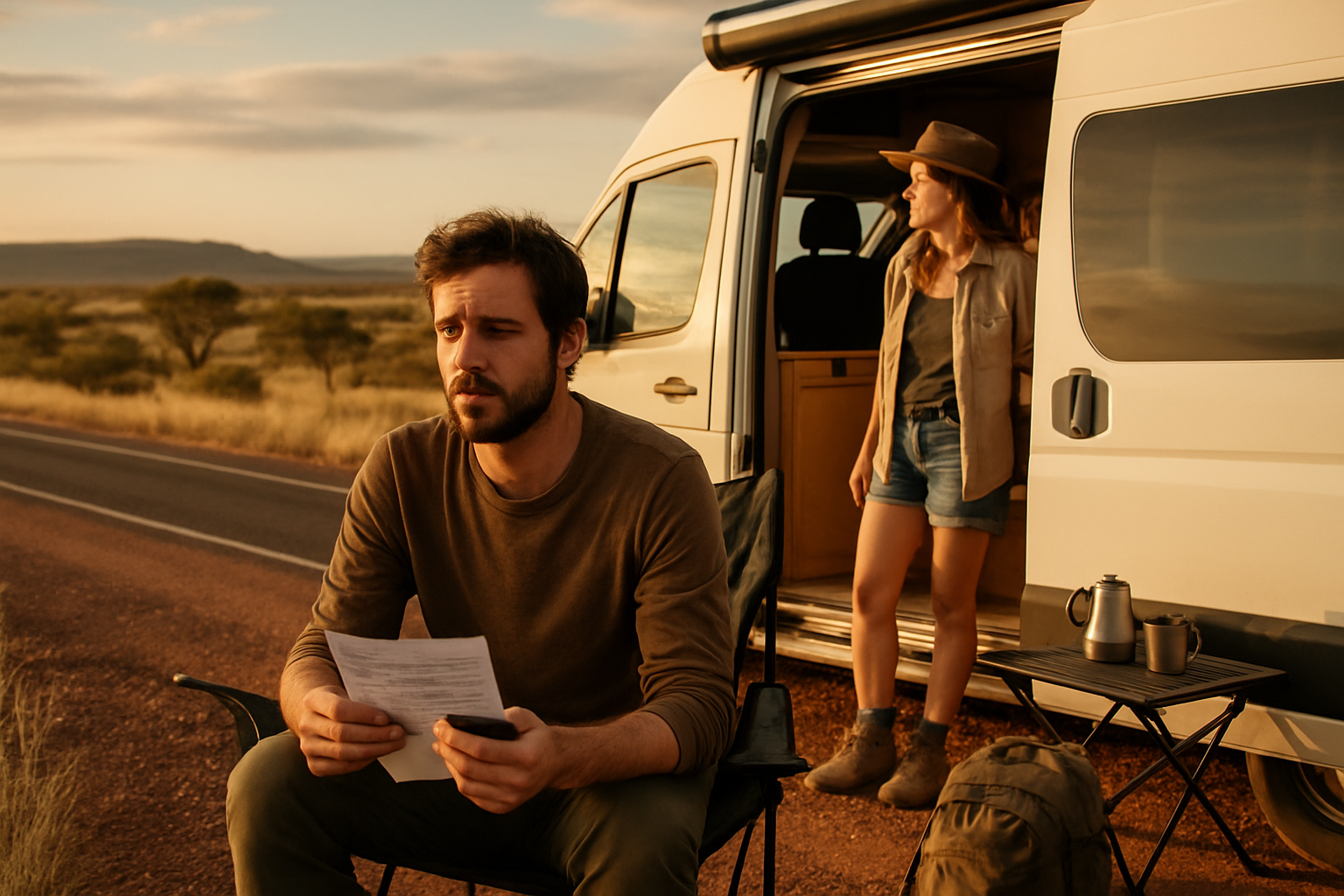
Duncan Jones, 44, and Max Pascual, 46, sold everything they owned to chase the ultimate freedom: an indefinite lap around Australia. But when a stage-four cancer diagnosis shattered their nomadic dream, their story became a stark reminder that the road doesn't shield us from life's cruelest realities.
The Australian couple's journey began in early 2024 with the kind of optimism that defines the modern nomad movement. They quit their full-time jobs, liquidated their assets, and set off on what they believed would be an endless adventure. "We didn't really have an end date. We decided to just hit the road and keep going until we get sick of it," Pascual told Nine News.
Their story represents a growing phenomenon that has captured imaginations worldwide: the rise of "not so grey" nomads who abandon conventional life paths for the promise of perpetual travel. Yet beneath the Instagram-worthy sunsets and freedom narratives lies a more complex reality that few nomads prepare for.
The Romanticization of Nomadic Life
The digital nomad movement has exploded in recent years, fueled by remote work opportunities and social media's endless stream of adventure content. From European cities to Southeast Asian beaches, millions have embraced location independence as the ultimate lifestyle upgrade. But Jones and Pascual's experience reveals the dangerous gap between romantic idealization and practical reality.
Their diagnosis came without warning, transforming their journey from an adventure into a medical emergency on wheels. The couple now faces the unprecedented challenge of managing serious illness while maintaining their nomadic lifestyle—a scenario that exposes the vulnerability inherent in rejecting traditional support systems.
"We're not going to let this derail our dream. But we're learning that freedom comes with responsibilities we never anticipated."
— Max Pascual, Modern Nomad
Beyond the Hashtags: Real Challenges Face Real Nomads
The couple's story intersects with broader concerns about the nomad lifestyle that rarely surface in travel blogs or social media feeds. Recent developments across popular nomad destinations reveal growing tensions between romantic ideals and practical challenges.
In Mexico City, anti-digital nomad sentiment has reached a boiling point, with "gringo go home" expressions appearing across gentrified neighborhoods. Professor Maria Moreno Carranco, who has lived in La Condesa for over 20 years, documents 30-40% rental price increases in Roma Norte and La Condesa over the past three years, with local families priced out by remote workers earning dollar salaries.
These tensions reflect a broader pattern emerging globally. Croatia targets 600,000 empty homes affected by nomad tourism, Cyprus implements foreign real estate restrictions, and Portugal cancels 6,765 accommodation licenses—a 40% reduction in Lisbon alone. The nomad movement that promised liberation is creating displacement pressures that governments worldwide are scrambling to address.
Healthcare: The Ultimate Test of Nomadic Resilience
For Jones and Pascual, the cancer diagnosis represents the ultimate test of their lifestyle choice. Managing chronic illness while constantly mobile presents logistical nightmares that settled individuals rarely consider: coordinating treatment across jurisdictions, maintaining medical records without permanent addresses, and accessing specialists in unfamiliar locations.
Their experience highlights a critical gap in nomadic planning: the assumption that health will remain constant. While travel insurance covers emergencies, serious chronic conditions require sustained medical relationships and consistent care—luxuries difficult to maintain on the road.
The Australian healthcare system provides some advantages for nomadic patients, but even within a single country, coordinating care across states presents challenges. For international nomads, the complexity multiplies exponentially.
The Economics of Perpetual Motion
Beyond health challenges, the economics of nomadic life prove more complex than the freedom narrative suggests. While Jones and Pascual sold everything to fund their journey, their experience reflects broader financial realities facing nomads globally.
Recent data from tourism recovery patterns shows that sustainable nomadism requires significant financial resources. Singapore's tourism receipts exceeded $29-30.5 billion forecasts in 2025, while Hong Kong projects 1.4 million mainland Chinese visitors with 6% increases during peak periods. These numbers reflect the premium costs associated with constant travel.
The construction industry faces negative profit margins worldwide due to rising material costs, affecting housing supply and potentially forcing more people into nomadic lifestyles out of necessity rather than choice. Memory chip shortages affecting smart building technology further complicate new development, creating housing scarcities that make nomadism seem attractive by default.
Cultural Impact and Community Responsibility
The nomad movement's impact extends beyond individual stories to affect entire communities. Malaysia's Penang prepares for Chinese New Year-Ramadan convergence with 60% hotel occupancy, demonstrating how nomadic consumption patterns intersect with local cultural events.
Success stories exist where nomads contribute positively to local economies while respecting community values. However, Jones and Pascual's medical crisis illustrates how quickly nomads can shift from economic contributors to requiring emergency support systems they haven't contributed to building.
Croatia's development of 62 tourist medical clinics for the 2026 season—Europe's most extensive seasonal healthcare network—represents one approach to managing nomadic healthcare needs. Yet such systems address symptoms rather than the fundamental question of community responsibility in an age of perpetual mobility.
Technology's Promise and Limitations
Digital tools promised to make nomadism seamless, but Jones and Pascual's experience reveals technology's limitations when facing serious real-world challenges. Telemedicine helps with routine consultations, but cannot replace hands-on medical care or provide the emotional support of established medical relationships.
The broader digital transformation affecting travel includes concerns about data privacy and platform reliability. Recent developments in digital border control, including the UK's Electronic Travel Authorization system and various nations' social media restrictions, suggest that the regulatory environment for digital nomads may become more complex, not simpler.
Redefining Success in Nomadic Life
As Jones and Pascual navigate their medical challenge, their definition of nomadic success has evolved. Rather than endless adventure, they now seek sustainable ways to maintain their lifestyle while managing serious health concerns—a more mature approach that acknowledges the realities of human vulnerability.
Their experience provides lessons for the broader nomadic community: the importance of maintaining some form of healthcare continuity, establishing emergency support networks, and recognizing that true freedom includes the ability to seek help when needed.
"We thought freedom meant leaving everything behind. We're learning it means being responsible for the life we've chosen, even when that life gets complicated."
— Duncan Jones, Reflecting on His Nomadic Journey
The Future of Responsible Nomadism
The couple's story occurs amid broader conversations about sustainable tourism and responsible travel. From Rome's Trevi Fountain €2 entry system generating €6 million annually while managing crowds, to various destinations implementing measures to balance tourism benefits with community needs, the industry is evolving toward more sustainable models.
Generation Z travelers increasingly demand authentic experiences combined with environmental sustainability and meaningful community engagement. This suggests future nomadism may require more thoughtful integration with local communities and greater personal responsibility for long-term impacts.
International cooperation on tourism development, demonstrated through various regional partnerships and infrastructure investments, provides frameworks for managing nomadic populations while protecting community interests.
Lessons from the Road
Jones and Pascual's experience offers sobering insights for anyone considering nomadic life. While their story doesn't invalidate the nomadic dream, it demands honest conversation about its challenges and responsibilities.
Their cancer diagnosis doesn't represent the failure of nomadism, but rather its ultimate test. How they navigate treatment while maintaining their chosen lifestyle may provide a roadmap for others facing similar challenges—or reveal the boundaries where nomadic life must adapt to human needs rather than the reverse.
As the couple continues their journey under dramatically changed circumstances, their story reminds us that authentic freedom includes accepting responsibility for our choices, especially when those choices are tested by forces beyond our control.
The road that promised endless possibilities has instead taught them about limits—not the end of dreams, but perhaps their evolution into something more sustainable, more honest, and ultimately more human than the glossy nomadic fantasy that initially inspired their journey.