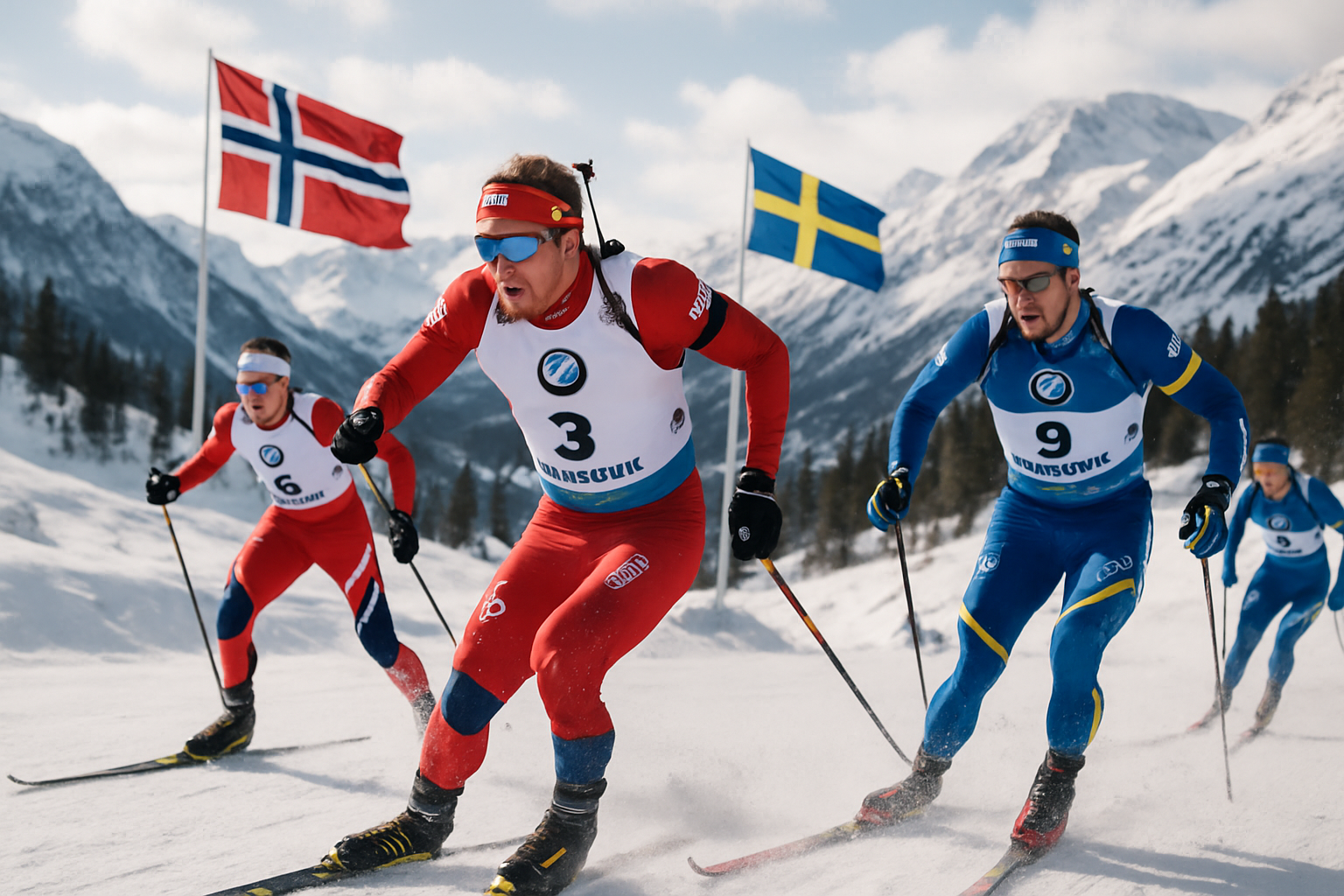
Norwegian cross-country skiing superstar Johannes Høsflot Klæbo extended his phenomenal season with another commanding victory, while Swedish athletes dominated across multiple winter sports disciplines in recent international championship competitions.
The 29-year-old Klæbo, fresh off his record-breaking performance at the Milano-Cortina 2026 Winter Olympics where he won six gold medals in a single Games, showed no signs of slowing down as he powered to victory in his latest World Cup appearance. His latest triumph moves him closer to securing yet another World Cup crystal globe, cementing his status as the most successful cross-country skier of his generation.
Swedish Success Stories Across Multiple Disciplines
Sweden emerged as the story of these championships, with athletes achieving breakthrough performances across both cross-country skiing and biathlon. The Swedish sprint team delivered exceptional results in Lahtis, Finland, where Jonna Sundling claimed a decisive victory over compatriot Linn Svahn in the women's World Cup sprint final.
"It feels great to be back," Sundling told Viaplay after her victory, marking a significant rebound following her Olympic disappointment.
— Jonna Sundling, Swedish Cross-Country Skier
The victory was particularly sweet for Sundling, who had been defeated by Svahn during the Olympic sprint competition at Milano-Cortina 2026. This World Cup triumph demonstrated the depth of Swedish sprinting talent and their ability to bounce back from setbacks on the biggest stage.
Biathlon Excellence from Scandinavia
Swedish biathlon athletes also made their mark, with impressive performances in the challenging mass start competition held in Kontiolahti, Finland. Elvira Öberg secured second place, while Anna Magnusson claimed the bronze medal position, delivering a strong Swedish 1-2-3 finish that highlighted the nation's growing biathlon prowess.
However, the competition wasn't without its dramatic moments. Norway's Maren Hjelmeset Kirkeeide, the defending Olympic champion, suffered a costly mistake during the mass start event. The 25-year-old missed completing a mandatory penalty loop after missing two shots during the third shooting stage, resulting in a two-minute time penalty that dropped her from medal contention to a disappointing 28th place finish.
"It's a classic mistake that happens sometimes, and this time it happened to her," explained International Biathlon Union race director Borut Nunar.
— Borut Nunar, IBU Race Director
Alpine Skiing Breakthrough
The alpine skiing world witnessed a stunning performance from Lucas Pinheiro Braathen, the 25-year-old skier who has been making headlines throughout the season. Competing in the giant slalom in Kranjska Gora, Slovenia, Braathen dominated the competition with a masterful display of technical skiing that left his rivals trailing in his wake.
The victory marked another significant milestone in what has been a breakthrough season for the young athlete, who has emerged as one of the most exciting talents in alpine skiing. His performance in the challenging Slovenian venue demonstrated his ability to excel in varying snow conditions and technical terrain.
Building on Olympic Legacy
These championship results come on the heels of the groundbreaking Milano-Cortina 2026 Winter Olympics, which established new paradigms for international winter sports competition. The Games, spanning 400+ kilometers across northern Italy's most spectacular venues, showcased unprecedented global participation and competitive depth.
The success of Nordic athletes in these post-Olympic competitions demonstrates the sustained excellence that has made Scandinavia the epicenter of winter sports development. With systematic training programs, world-class facilities, and a deep cultural connection to winter sports, Norway and Sweden continue to set the standard for international competition.
Technical Excellence and Strategic Preparation
The recent competitions highlighted the technical evolution of winter sports, with athletes employing increasingly sophisticated training methods and equipment. Cross-country skiers demonstrated remarkable tactical awareness in sprint competitions, while biathlon athletes showcased the mental toughness required to perform under pressure in mass start formats.
Weather conditions played a crucial role in the competitions, with varying snow quality and temperatures testing the adaptability of elite athletes. The Scandinavian competitors showed their experience in handling diverse conditions, a skill that has been honed through decades of training in their home countries' challenging winter environments.
Looking Ahead to Future Competitions
As the winter sports season continues, the momentum from these championship performances sets the stage for upcoming World Cup events and future Olympic preparations. The depth of talent emerging from Nordic countries suggests continued dominance in the years leading to the next Winter Olympics.
The success of athletes like Klæbo, Sundling, and the Swedish biathlon team reflects the broader health of Scandinavian winter sports programs. These results not only celebrate individual achievements but also demonstrate the effectiveness of long-term athlete development strategies that have made Nordic nations the benchmark for winter sports excellence.
With several more major competitions scheduled throughout the season, these recent victories have established clear favorites while also highlighting the unpredictable nature of winter sports competition, where conditions, strategy, and split-second decisions can determine championship outcomes.