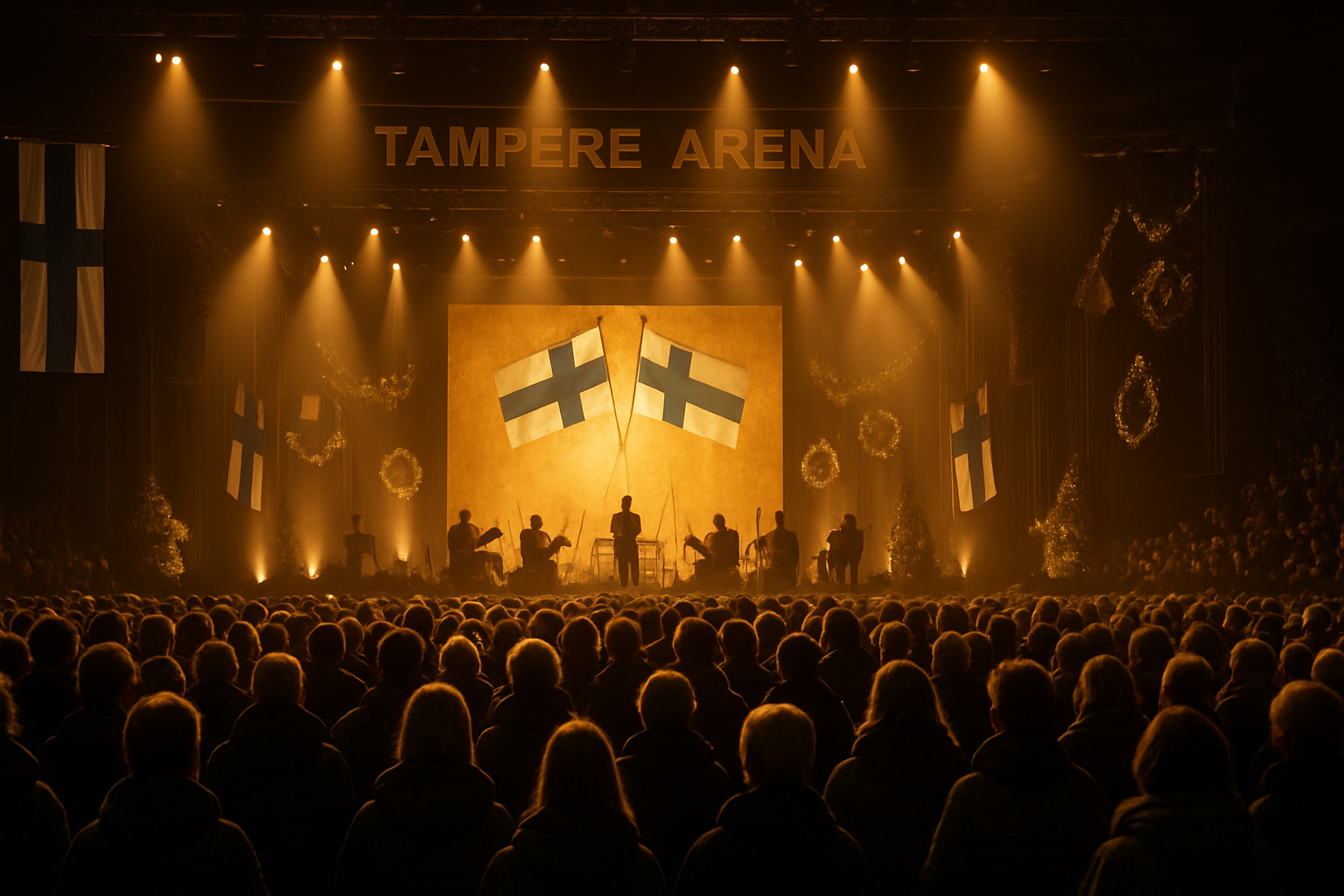
The Nordic region is experiencing a profound cultural awakening as Finland prepares a major memorial concert for beloved musician Pate Mustajärvi, while Sweden's Solliden Castle announces its prestigious summer lineup, contributing to what experts are calling the "February 2026 Cultural Renaissance."
The announcement of these significant cultural events across Finland and Sweden demonstrates the region's commitment to celebrating both its musical heritage and contemporary artistic expression, positioning Nordic countries at the forefront of European cultural revitalization.
Finland Honors Musical Legend Pate Mustajärvi
Tampere Arena is set to host an extraordinary memorial concert for Pate Mustajärvi, the legendary Finnish musician who would have celebrated his 70th birthday on the concert day. The event, drawing unprecedented attention from Finnish media and international observers, will feature over ten renowned artists paying tribute to Mustajärvi's enduring legacy.
The memorial concert represents more than just a musical tribute—it embodies Finland's deep respect for artistic heritage and the role of music in national identity. Mustajärvi's influence on Finnish music culture extends far beyond his recordings, having shaped generations of musicians and touched the hearts of countless fans across Scandinavia.
According to Finnish broadcasting sources, the Tampere Arena concert will showcase the breadth of Mustajärvi's impact on Nordic music, with participating artists spanning multiple generations and genres. The venue choice itself is significant, as Tampere Arena represents one of Finland's premier cultural facilities, capable of accommodating the massive audience expected for this historic tribute.
Sweden's Royal Summer Cultural Program
Meanwhile, Sweden's cultural calendar receives a royal boost with the announcement of this summer's artistic lineup at Solliden Castle on Öland. The prestigious venue will welcome an impressive roster of performers including Lill Lindfors, Titiyo, Sven Ingvars, and E-Type, creating what promises to be one of Sweden's most diverse and engaging summer cultural celebrations.
Solliden Castle, with its rich royal heritage and stunning Baltic Sea setting, provides an unparalleled backdrop for artistic performances. The venue's selection of artists reflects Sweden's commitment to showcasing both established legends and contemporary stars, creating a multigenerational celebration of Swedish musical excellence.
The inclusion of artists like E-Type, representing Sweden's electronic music heritage, alongside traditional folk influences from Sven Ingvars, demonstrates the country's sophisticated approach to cultural programming that honors both innovation and tradition.
Nordic Cultural Renaissance in Global Context
These announcements occur within the broader context of what cultural historians are documenting as the "February 2026 Cultural Renaissance"—an unprecedented period of international cultural activity spanning multiple continents. Nordic countries have emerged as leaders in this movement, successfully balancing technological innovation with authentic cultural expression.
The success factors evident in Nordic cultural programming include strong community engagement, institutional support for sustainable cultural development, and the strategic use of technology to enhance rather than replace traditional artistic forms. This approach has created a template that other regions worldwide are studying and adapting.
From Iceland's spectacular Winter Festival of Light to Denmark's sophisticated Eurovision preparations, Nordic nations demonstrate how smaller countries can achieve global cultural influence through authentic programming and international cooperation while maintaining distinctive local identities.
Economic and Cultural Impact
The economic significance of these cultural events extends well beyond immediate ticket sales. Finland's memorial concert is expected to generate substantial tourism revenue for the Tampere region, while Sweden's Solliden performances will contribute significantly to Öland's summer economy through increased hotel bookings, restaurant visits, and cultural tourism activities.
More importantly, these events create lasting cultural infrastructure—performance networks, artistic collaborations, and community organizations that remain active year-round, serving as bridges between local and international cultural communities. The ripple effects include enhanced educational partnerships, cultural exchange programs, and increased global recognition of Nordic artistic excellence.
Industry analysts note that Nordic cultural events consistently achieve superior return on investment compared to purely commercial entertainment offerings, suggesting that authentic cultural programming resonates more deeply with audiences seeking meaningful experiences over superficial entertainment.
Technology Integration and Cultural Preservation
Nordic countries excel at integrating modern technology with traditional cultural forms without compromising authenticity. The upcoming concerts will likely feature sophisticated digital enhancement including live streaming capabilities, augmented reality experiences for remote audiences, and comprehensive accessibility features including sign language interpretation—areas where Nordic countries lead global best practices.
This technological sophistication enables global sharing of local cultural treasures while maintaining the essential human connections that make live performance meaningful. Social media integration allows international audiences to participate virtually in cultural celebrations, creating diaspora bridges and expanding cultural influence beyond geographic boundaries.
The success of Nordic cultural technology integration provides practical models for cultural institutions worldwide seeking to enhance audience engagement while preserving artistic integrity and community ownership of cultural celebrations.
International Recognition and Future Trends
The international attention drawn to these Nordic cultural announcements reflects growing global appreciation for Scandinavian approaches to cultural development. The region's emphasis on sustainability, community involvement, and authentic expression offers alternatives to commercialized entertainment models that often sacrifice cultural depth for mass appeal.
Cultural experts predict that the Nordic model—combining heritage preservation with contemporary innovation, local authenticity with international accessibility, and community engagement with professional excellence—will influence cultural programming decisions across Europe and beyond throughout 2026.
The success of Finland's memorial concert approach and Sweden's royal venue programming demonstrates how smaller nations can achieve outsized cultural influence through thoughtful curation, authentic presentation, and sophisticated audience engagement strategies.
Looking Ahead: Summer 2026 and Beyond
As Finland prepares for its emotional tribute to Pate Mustajärvi and Sweden finalizes arrangements for Solliden's summer celebration, both events represent more than isolated cultural moments. They embody the Nordic region's vision of culture as essential infrastructure—fundamental to community well-being, national identity, and international cooperation.
The success of these events will likely inspire additional cultural programming throughout the Nordic region, potentially establishing 2026 as a watershed year for Scandinavian cultural influence. The combination of memorial reverence and celebratory innovation suggests a mature cultural ecosystem capable of honoring the past while embracing future possibilities.
For global audiences, these Nordic cultural events offer opportunities to experience the distinctive Scandinavian approach to artistic celebration—sophisticated yet accessible, deeply rooted yet internationally relevant, technologically enhanced yet fundamentally human. As the February 2026 Cultural Renaissance continues to unfold, Nordic countries stand as exemplars of how authentic cultural programming can achieve both local meaning and global resonance.