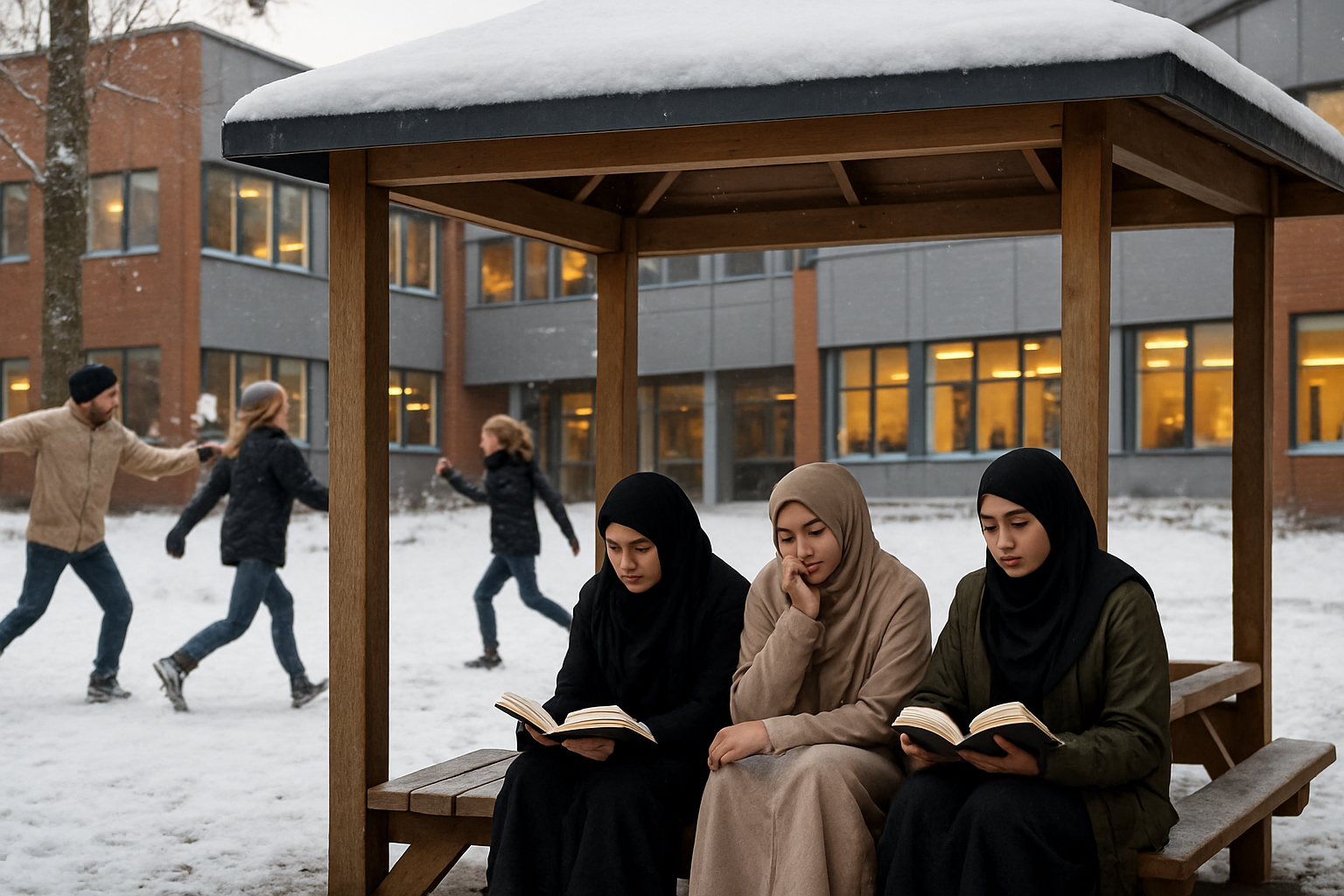
Nordic educational systems are pioneering innovative approaches to student welfare and engagement as Finnish schools create specialized "fasting parks" for Muslim students during Ramadan while Swedish educators push for the return of traditional physical activities like snowball fights and wrestling to address concerning declines in youth physical development.
The developments reflect broader challenges facing European educational institutions as they balance cultural inclusion, student safety, and physical development amid rapidly changing social dynamics and heightened awareness of youth mental health issues.
Finland's Ramadan Accommodation Innovation
A Helsinki secondary school has established its fourth annual "fasting park" during Ramadan, providing dedicated spaces where Muslim students can rest and reflect during lunch periods while their peers eat in the cafeteria. The initiative emerged from practical necessity when school administrators recognized that the dining hall environment made proper observance of daytime fasting difficult for Muslim students.
The program represents a sophisticated understanding of religious accommodation in secular educational environments. Rather than requiring Muslim students to remain in cafeterias during meal times, which could create social pressure or discomfort, the fasting park offers an alternative space that respects both religious obligations and social integration needs.
According to school officials, up to 100 students utilize these spaces during Ramadan lunch periods, highlighting the significant Muslim student population in Helsinki schools and the practical need for such accommodations. The initiative has received positive feedback from both Muslim families and the broader school community as an example of inclusive education policy.
Sweden's Physical Activity Renaissance Debate
Meanwhile, Swedish educational policy is grappling with proposals from the Svenska idrottslärarföreningen (Swedish Physical Education Teachers' Association) to reintroduce activities like wrestling and snowball fights during school breaks. The controversial recommendation is backed by research suggesting that current restrictions on physical contact and robust play are hindering children's motor skill development and social learning.
Physical education teacher Rakel Willman observes a fundamental shift in children's play patterns, noting that "children don't play the same way anymore." The association argues that activities involving chasing, light physical contact, and wrestling are essential for healthy social development and motor skill acquisition.
However, the proposal faces significant opposition from school administrators concerned about safety and bullying prevention. Ingrid Gustavsson, headmaster at Skanskvarnsskolan in Stockholm, warns that such activities could exacerbate existing bullying problems: "A student who is already vulnerable might receive an extra hard hit or an extra hard snowball."
The Physical Development Crisis
The Swedish debate reflects broader concerns about declining physical activity among Nordic youth. Educators report that traditional "rough and tumble" play, which developmental psychologists consider crucial for social skills and physical confidence, has been systematically removed from school environments due to safety concerns and anti-bullying policies.
Research supporting the physical education association's position indicates that supervised physical play, including activities involving light contact and competitive elements, contributes to emotional regulation, social boundary-setting, and motor skill development that cannot be replicated through sedentary activities.
Swedish schools are now training physical education teachers in how to make "playful rough-housing" safer while preserving its developmental benefits. The approach represents a middle ground between complete prohibition and unrestricted physical play, requiring careful supervision and clear behavioral guidelines.

Cultural Integration Challenges
The Finnish Ramadan accommodation and Swedish physical activity debates highlight the complex cultural navigation required in modern Nordic education. Both initiatives demonstrate educational systems responding to changing demographics and evolving understanding of child development while maintaining core educational objectives.
Finland's approach emphasizes inclusive accommodation, recognizing that effective education requires environments where all students can participate fully regardless of religious or cultural background. The fasting park concept provides practical solutions that respect religious obligations without creating social isolation or educational disruption.
Sweden's physical activity debate reflects ongoing tensions between safety-first policies implemented over the past two decades and growing recognition that some restrictions may have unintended consequences for child development. The discussion represents broader European educational policy reconsiderations as research emerges about the importance of physical play for psychological and social development.
Broader Nordic Educational Context
These developments occur within the broader context of Nordic educational systems facing multiple pressures, including declining youth mental health indicators, changing demographics, and evolving understanding of inclusive education practices. Previous coverage has documented concerning social trends in Sweden, including declining LGBTQ+ tolerance among youth and rising obesity rates in northern regions.
Educational researchers note that both initiatives represent prevention-first approaches to student welfare. Finland's religious accommodation prevents social isolation and cultural conflict, while Sweden's physical activity proposals address motor skill deficits and social development concerns before they become more serious problems.
International Educational Policy Implications
The Nordic approaches offer contrasting models for international educational policy development. Finland's systematic religious accommodation demonstrates how secular educational systems can effectively integrate diverse religious practices without compromising educational objectives or social cohesion.
Sweden's reconsideration of physical activity restrictions provides a case study in policy evolution based on emerging research about child development. The careful balance between safety concerns and developmental needs may inform similar debates in other European countries experiencing comparable challenges.
"We cannot force anyone to eat," states the Finnish school administrator, emphasizing the principle of voluntary participation that underlies effective accommodation policies.
— Helsinki School Official
Implementation and Future Considerations
Both initiatives require sustained implementation support and ongoing evaluation. Finland's fasting parks need adequate staffing and space allocation during Ramadan periods, while Sweden's physical activity proposals require comprehensive teacher training and clear safety protocols.
The success of these programs will likely influence broader Nordic educational policy development and may serve as models for other European Union countries facing similar demographic changes and educational challenges. Early indicators suggest positive reception from student populations and families, though long-term outcomes require continued monitoring.
Educational experts emphasize that both approaches demonstrate the evolution of Nordic educational systems from one-size-fits-all models toward more nuanced, responsive policies that acknowledge student diversity while maintaining high educational standards and social cohesion objectives.
As European educational systems continue adapting to changing social contexts, the Finnish and Swedish experiences provide valuable insights into balancing cultural accommodation, physical development, safety considerations, and educational effectiveness in increasingly diverse school populations.