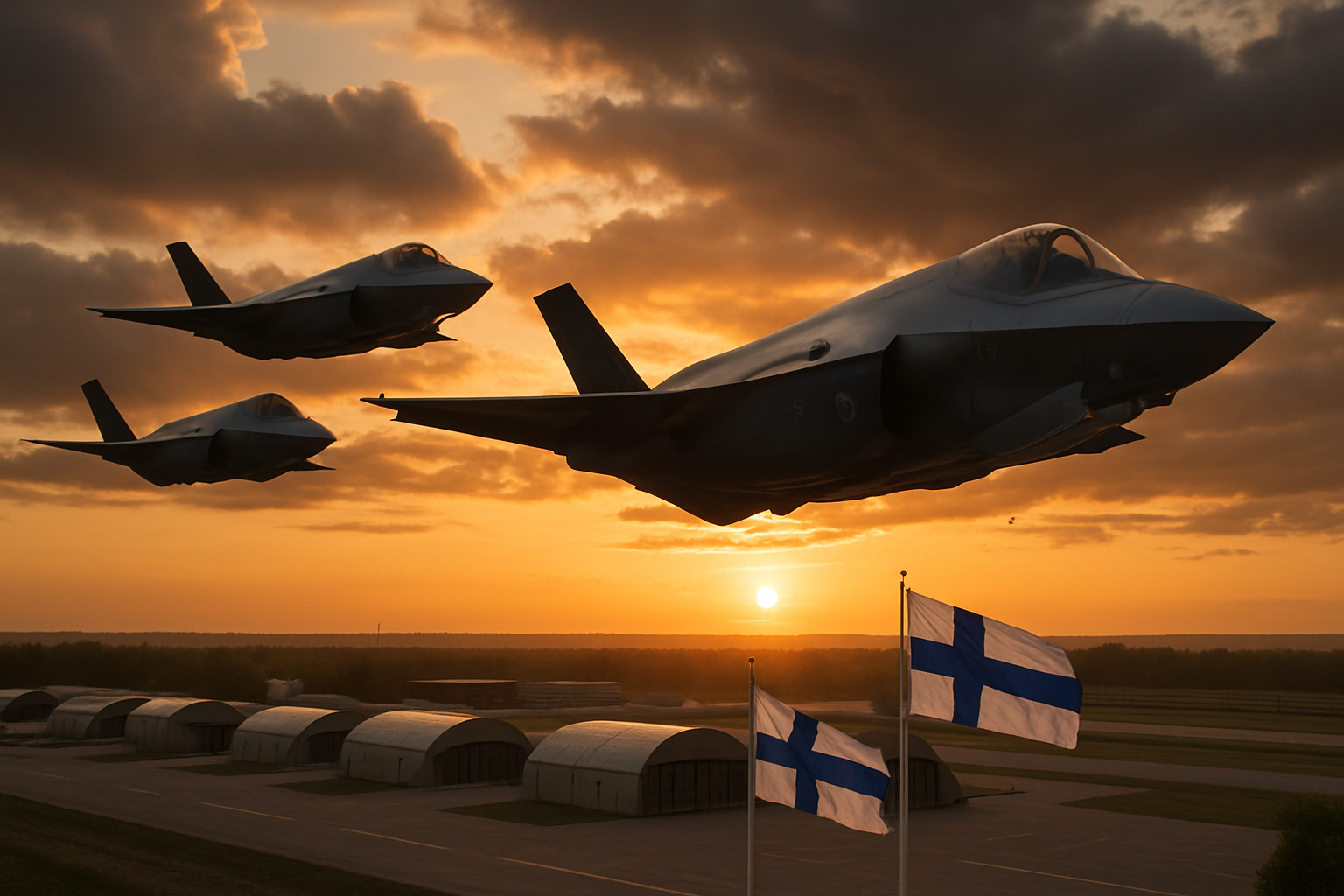
Finland's air force commander announced that the country's new F-35 Lightning II fighter jets will dramatically improve drone defense capabilities, marking a significant evolution in Nordic air power as regional security challenges intensify across Europe and the Arctic.
The acquisition of advanced F-35 aircraft represents more than a simple equipment upgrade—it signals a fundamental transformation in how Nordic nations approach air defense in an era characterized by sophisticated drone warfare, hybrid threats, and renewed great power competition.
Enhanced Drone Defense Capabilities
According to Finnish Air Force leadership, the F-35's advanced sensor systems and data fusion capabilities provide unprecedented situational awareness against unmanned aerial threats. The aircraft's sophisticated radar and electronic warfare systems can detect, track, and engage both traditional aircraft and modern drone swarms that have become central to contemporary conflicts.
This enhancement comes at a critical time, as European airspace has witnessed increasing drone incidents throughout 2026. From commercial airport disruptions in Berlin to security breaches across the Baltic region, unmanned systems have emerged as both defensive tools and potential threats requiring advanced countermeasures.
"The F-35's integrated sensor package fundamentally changes our ability to detect and respond to small, low-signature targets that traditional radar systems struggle to identify."
— Finnish Air Force Commander
Global Military Aviation Challenges
While Finland celebrates advanced capabilities, recent aviation incidents underscore persistent safety challenges facing military air operations worldwide. A tragic Norwegian F-35 flight over Karasjok village reportedly caused a reindeer calf's death from acoustic shock, highlighting the complex relationship between advanced military technology and civilian environments.
The incident, reported by Norwegian broadcaster NRK, involved a domesticated reindeer calf that allegedly died from the stress caused by the fighter jet's noise during an overflight of the village center. Finnish veterinarians confirmed such acoustic trauma is possible in wildlife, particularly young animals sensitive to sudden, intense sound exposure.
This occurrence reflects broader concerns about military flight operations near civilian areas and wildlife habitats, an issue that becomes more complex as training requirements intensify in response to regional security threats.
Sixth-Generation Fighter Development
Beyond current F-35 operations, European defense cooperation is advancing toward next-generation capabilities. Italy's defense sector confirmed signing the first international contract for the GCAP (Global Combat Air Programme) sixth-generation fighter aircraft, valued at £686 million.
The GCAP program, designed to eventually replace the Eurofighter Typhoon, represents unprecedented tri-national cooperation between the United Kingdom, Italy, and Japan. With operational deployment targeted for 2035, this advanced fighter will incorporate artificial intelligence, directed energy weapons, and enhanced electronic warfare capabilities far beyond current generation aircraft.
Regional Security Environment Evolution
The emphasis on advanced air defense capabilities reflects rapidly changing security dynamics across Northern Europe. Russian military activity in the Arctic has increased by 23% since Finland and Sweden joined NATO, prompting comprehensive defensive responses including the NATO Arctic Sentry mission.
Recent incidents demonstrate the complexity of modern threats. Russian drones have struck critical infrastructure in Estonia and Latvia, while Ukrainian drones have inadvertently entered Baltic airspace during operations against Russian targets. These developments require sophisticated identification systems capable of distinguishing between hostile threats and friendly aircraft operating in increasingly congested airspace.
"Geographic boundaries no longer contain regional conflicts. We must be prepared for spillover effects that can rapidly escalate into broader security crises."
— Lithuanian Defense Intelligence
Technology Integration and Training
The F-35 program extends beyond aircraft acquisition to encompass comprehensive training systems, maintenance capabilities, and international cooperation frameworks. Nordic nations are establishing sophisticated maintenance, repair, and overhaul (MRO) facilities to support sustained operations without dependence on distant logistics networks.
This approach reflects lessons learned from ongoing conflicts where rapid repair capabilities and operational autonomy prove decisive. The United Kingdom has acknowledged establishing multiple MRO facilities in Ukraine, demonstrating how maintenance infrastructure becomes strategically critical during extended operations.
International Defense Partnerships
Nordic F-35 operations occur within broader international defense cooperation initiatives. The recent India-France agreement for 114 additional Rafale fighter jets valued at $39 billion demonstrates global demand for advanced air capabilities, while Turkey and Saudi Arabia explore joint investment in fifth-generation fighter development.
These partnerships reflect evolving defense relationships where technology transfer, joint production, and strategic cooperation replace traditional buyer-seller arrangements. Nations increasingly prioritize defense industrial autonomy while maintaining alliance interoperability.
Environmental and Societal Considerations
The Karasjok incident highlights often-overlooked environmental impacts of military aviation. As training intensity increases in response to security threats, air forces must balance operational readiness with environmental stewardship and community relations.
Nordic nations, with their strong environmental traditions and indigenous communities dependent on reindeer herding, face particular challenges in managing military flight operations. Flight path planning, altitude restrictions, and seasonal considerations become essential elements of responsible defense planning.
Future Implications
The integration of F-35 capabilities into Nordic air defense represents a fundamental shift toward networked, sensor-rich warfare where information dominance proves as important as traditional firepower. These aircraft serve as airborne command centers capable of coordinating responses across multiple domains—air, land, sea, space, and cyber.
As international tensions persist and new threats emerge, the combination of advanced technology, comprehensive training, and international cooperation exemplified by Nordic F-35 operations provides a template for 21st-century air defense. Success will depend on balancing technological advancement with environmental responsibility, operational effectiveness with community relations, and national security with international stability.
The ongoing transformation of military aviation reflects broader changes in how democratic nations approach security challenges. Enhanced capabilities must serve not just national defense but contribute to broader stability, alliance cooperation, and peaceful resolution of international disputes through credible deterrence and defensive strength.