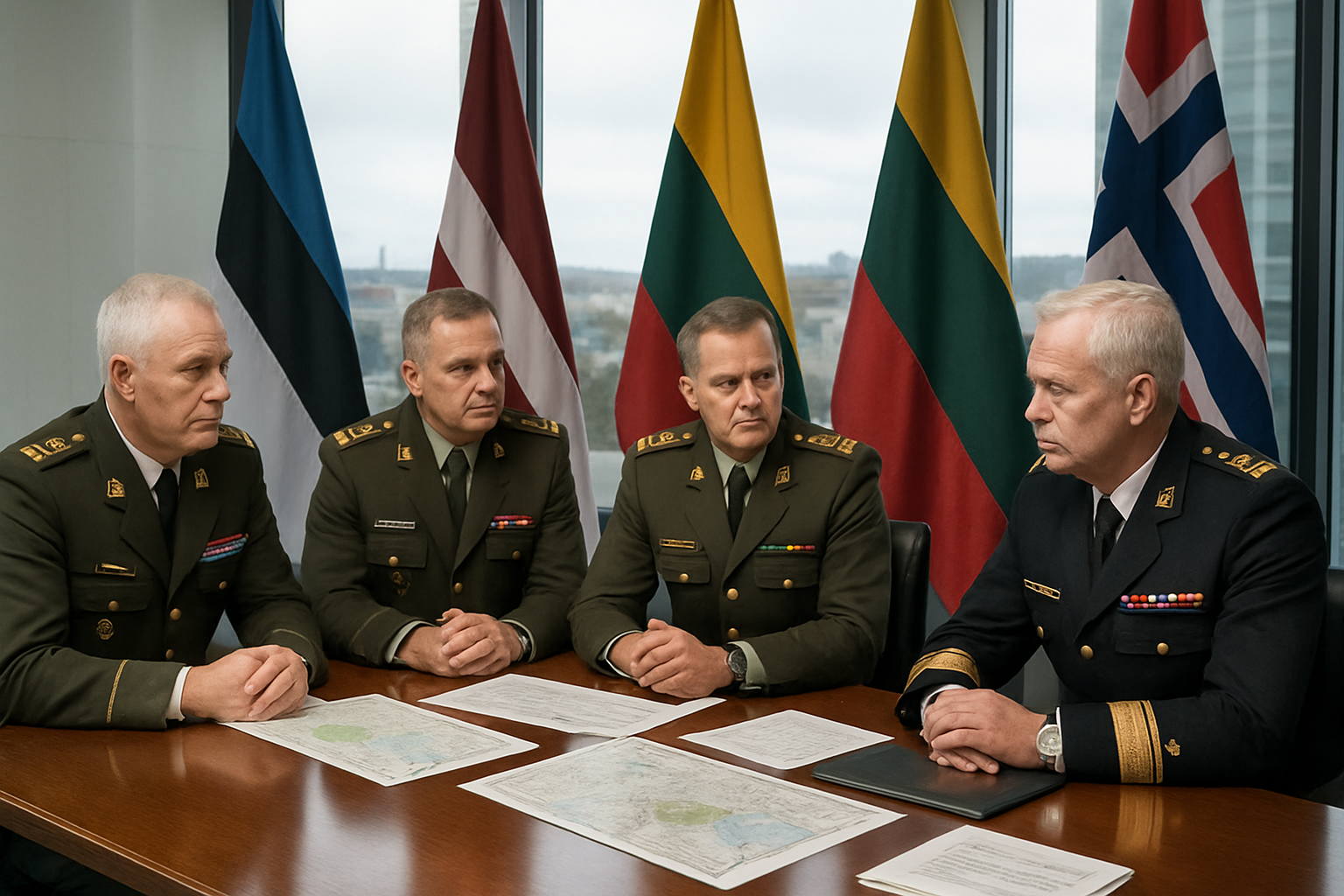
Intelligence agencies across the Nordic-Baltic region are issuing unprecedented warnings about Russian military intentions in the Baltic Sea, with Lithuanian intelligence predicting Moscow could be ready for "limited military conflict" within three to five years if current hostilities in Ukraine subside. The alarming assessments have prompted urgent security consultations among regional allies and accelerated defense preparations across Estonia, Latvia, Lithuania, and Norway.
The warnings come as Nordic security officials report a dramatic increase in Russian reconnaissance activities since Finland and Sweden joined NATO, fundamentally altering the strategic balance in the Baltic Sea region. Norwegian researcher Magnus Håkenstad has warned that Norway must prepare for the possibility of war within the next few years, reflecting growing concern among defense experts about Russian capabilities and intentions.
Intelligence Assessments Signal Dangerous Shift
Lithuanian intelligence services have provided the most detailed assessment, suggesting that in the event of a ceasefire in Ukraine, Russia would use the breathing space to rebuild military capabilities for operations in the Baltic region. The assessment represents a stark evolution from previous intelligence analysis that suggested Russia had "exhausted most military stockpiles inherited from the Soviet Union" during the prolonged Ukraine conflict.
Estonian Foreign Intelligence Service reports have noted a concerning pattern: while Russia may not have immediate plans to attack NATO member states, the unpredictable nature of the conflict requires sustained vigilance and international coordination. The Baltic states have observed Moscow developing new regional frameworks specifically focused on the Baltic Sea, suggesting long-term strategic planning for the area.
The intelligence warnings coincide with documented Russian provocations throughout the region, including submarine incursions, GPS jamming operations, and underwater cable sabotage attempts. Swedish Armed Forces recently confirmed that a Russian drone intercepted near the French aircraft carrier Charles de Gaulle originated from the Russian reconnaissance vessel Zhigulevsk, demonstrating escalating Russian intelligence operations targeting NATO assets.
Regional Response and Coordination
The security concerns have triggered unprecedented coordination among Nordic and Baltic nations. NATO's Arctic Sentry mission, officially launched during Brussels defense ministers meetings, represents the alliance's most comprehensive Arctic security response since the Cold War. The UK is doubling its troop presence in Norway from 1,000 to 2,000 over three years, while Finland contributes operational planning expertise gained through decades of managing Russian border tensions.
Sweden has announced its willingness to host nuclear weapons during wartime, marking a dramatic shift from traditional Nordic nuclear policies. Defense Minister Pål Jonson's announcement reflects growing concerns about the reliability of extended deterrence guarantees. Finland has gone even further, with Defense Minister Antti Häkkänen announcing plans to lift the country's comprehensive ban on nuclear weapons "as soon as possible," stating that "current legislation does not meet the needs Finland has as a NATO member."
These policy reversals break an 80-year Nordic taboo on nuclear alternatives to US security guarantees, demonstrating the severity of threat perceptions in the region. The moves are part of broader European strategic autonomy discussions that have gained momentum since Russia's invasion of Ukraine exposed vulnerabilities in traditional security arrangements.
Historical Context and Strategic Implications
The current security concerns must be understood within the broader context of deteriorating East-West relations and the ongoing Ukraine conflict. The February 2026 expiration of the New START treaty marked the first time in over 50 years that the United States and Russia lack bilateral nuclear constraints, creating what UN Secretary-General António Guterres has called a "grave turning point" with nuclear risks at their "highest in decades."
Previous Estonian intelligence assessments had suggested Russia lacked the capability for immediate NATO attacks, noting that Moscow had "exhausted most military stockpiles" after nearly three years of intensive conflict in Ukraine. However, the latest intelligence suggests a more concerning trajectory: that a temporary ceasefire would provide Russia with the opportunity to rebuild capabilities specifically for Baltic operations.
The Baltic Sea has emerged as a critical theater in the broader NATO-Russia confrontation. Russian activities include systematic reconnaissance operations, infrastructure targeting, and what intelligence officials describe as "hybrid warfare" tactics designed to test alliance responses while maintaining plausible deniability.
NATO Adaptation and Enhanced Deterrence
The alliance has responded with significant structural adaptations. NATO's Arctic Sentry mission involves specialized Arctic equipment investment, extreme weather training, and logistical support for operations in minus-40°C conditions. Enhanced intelligence sharing frameworks, satellite surveillance, maritime patrols, and ground-based monitoring systems provide real-time awareness of Russian activities across the region.
Poland has signaled strong NATO commitment to "overwhelming responses" against Arctic security threats, while European allies are assuming leadership roles to address burden-sharing concerns. The coordinated response establishes a framework for collective diplomatic and military action in defense of territorial sovereignty that could serve as a template for other contested regions.
French nuclear deterrent expansion discussions with Germany, Poland, and Finland represent the most serious European nuclear cooperation talks since the Cold War's end. These conversations reflect fundamental questions about sovereignty versus alliance dependence in an increasingly multipolar world, where traditional security guarantees face new challenges.
Russian Capabilities and Strategic Planning
Intelligence assessments suggest Russia has developed sophisticated planning for Baltic operations, despite current focus on Ukraine. The Kremlin has established new regional frameworks specifically for the Baltic Sea, indicating strategic long-term thinking about the area's importance to Russian security interests.
Russian military activities demonstrate continued capability for complex operations even while engaged in Ukraine. The systematic reconnaissance operations, including the recent drone incident near the Charles de Gaulle, show Moscow maintains advanced intelligence capabilities and willingness to test NATO responses in sensitive areas.
The three-to-five-year timeline cited by Lithuanian intelligence appears based on assessments of how long Russia would need to reconstitute forces currently committed to Ukraine operations. This timeframe would allow Moscow to rebuild stockpiles, reorganize command structures, and develop tactical approaches specifically designed for Baltic terrain and NATO defensive preparations.
Implications for Global Security Architecture
The Nordic security crisis extends beyond regional concerns to fundamental questions about international stability in the post-Cold War era. The erosion of arms control agreements, combined with aggressive Russian posturing, challenges the foundations of European security architecture established over decades of diplomatic efforts.
European strategic autonomy discussions accelerated by these threats could fundamentally alter transatlantic relations. If European nations develop independent nuclear capabilities and defense arrangements, it would mark the most significant shift in Western alliance structure since NATO's founding.
The situation also tests modern crisis management mechanisms. Unlike traditional military buildups that provide clear warning signs, the hybrid warfare and intelligence operations characterizing current tensions create ambiguity about intentions and appropriate responses. Nordic nations must balance deterrence requirements with escalation avoidance, particularly given the nuclear dimensions of the confrontation.
Looking Forward: Challenges and Opportunities
The coming months will prove critical for Nordic-Baltic security arrangements. The region faces the challenge of maintaining unity while individual nations pursue separate security enhancements. Coordination mechanisms must evolve to handle both traditional military threats and sophisticated hybrid operations that blur the lines between peace and conflict.
Success in deterring Russian aggression while maintaining regional stability could provide templates for addressing similar challenges in other contested areas where climate change, resource competition, and territorial disputes intersect. The Arctic's changing environment adds complexity, as melting ice creates new shipping routes and resource access that increase the strategic value of territories previously considered peripheral.
The Nordic response also demonstrates how middle powers can adapt alliance structures to meet contemporary challenges. European leadership in regional security, combined with enhanced burden-sharing, could influence NATO's broader evolution from Cold War-era structures to address 21st-century threats including climate change impacts, cyber warfare, and great power competition.
As intelligence warnings crystallize into policy responses, the Nordic-Baltic region finds itself at the forefront of efforts to maintain deterrence against authoritarian aggression while preserving the diplomatic space necessary for long-term stability. The effectiveness of these efforts will significantly influence European security for decades to come, determining whether democratic institutions can successfully adapt to meet contemporary authoritarian challenges while maintaining their fundamental values and international law commitments.