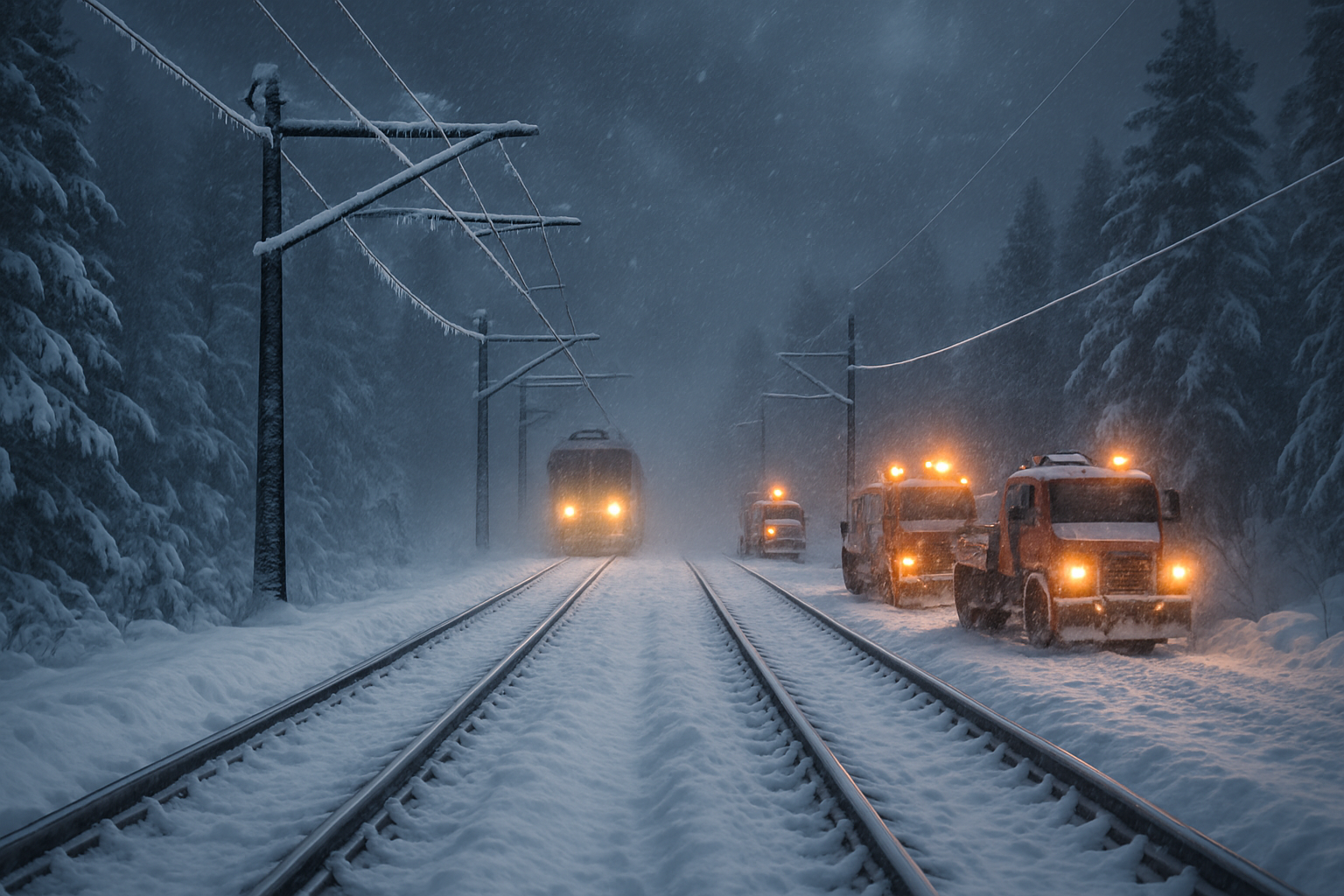
Nordic countries are experiencing widespread transportation disruptions as extreme weather patterns continue to challenge infrastructure across Scandinavia, with Denmark reporting major railway failures, Finland issuing storm warnings, and Iceland shutting down critical highways amid the 20th consecutive month of global temperatures exceeding 1.5°C pre-industrial levels.
The current crisis exemplifies the mounting pressure on Nordic transportation systems, which were designed for historical climate patterns but now face unprecedented conditions that repeatedly exceed operational parameters.
Denmark Railway Crisis Deepens
Danish authorities reported significant railway disruptions affecting S-train services throughout Friday, March 13, with rail failures continuing to impact thousands of commuters across the Copenhagen metropolitan area. The Danish State Railways confirmed that technical issues on key rail lines have created cascading delays affecting the entire network.
The railway problems come as Denmark continues to grapple with infrastructure vulnerabilities exposed during recent extreme weather events. Earlier this winter, the country was forced to implement emergency protocols including nationwide school closures due to "extremely treacherous" black ice conditions.
"These infrastructure challenges reflect a broader pattern we're seeing across the Nordic region," said transport analyst Erik Lundberg. "Systems built for predictable seasonal patterns are struggling to adapt to increasingly volatile weather conditions."
Finland Braces for Severe Storm Conditions
Finnish authorities issued urgent weather warnings as powerful storm systems threaten to bring severe conditions across Ostrobothnia throughout Friday. The Finnish Meteorological Institute warned of strong winds and dangerous weather conditions that could significantly impact transportation networks.
The warning comes as Finland continues to recover from previous weather-related transportation disruptions that have tested the country's resilience systems. Earlier this winter, authorities were unable to establish traditional Archipelago Sea ice roads due to deteriorated equipment, representing the end of traditional Baltic winter transport methods that had been relied upon for generations.
Transport authorities have advised against unnecessary travel during the storm period and recommended that essential services monitor conditions closely. The storm represents the latest challenge for Finnish infrastructure, which has faced unprecedented stress from the country's most severe winter conditions in 25 years.
Iceland Highway Closures Signal Major Crisis
Iceland's road authority, Vegagerðin, has closed Route 1 at Holtavörðuheiði as of 6 AM Friday, marking a critical disruption to the country's main transportation artery. Overnight rescue operations moved approximately 30 travelers who had become stranded in their vehicles due to impassable weather conditions.
Most of the rescued individuals were taken to Reykjaskóli for emergency accommodation, while their vehicles remain abandoned on the highway. Jón Þór Víglundsson, information officer for Landsbjörg (Icelandic Association for Search and Rescue), confirmed the scale of the operation and the dangerous conditions that necessitated the emergency response.
"The weather conditions have created extremely hazardous situations across multiple routes. We're seeing unprecedented challenges that require immediate emergency response."
— Jón Þór Víglundsson, Landsbjörg Information Officer
The Westfjords region faces particularly severe conditions, with authorities advising against all unnecessary travel. Multiple routes including Djúpvegur at Súðavíkurhlíð (route 61) and Flateyrarvegur (64) have been closed due to avalanche risks, while other sections of Djúpvegur remain impassable due to storm conditions and dangerous flying gravel.
Regional Climate Context and Infrastructure Strain
The current Nordic transportation crisis occurs within a broader context of unprecedented global climate volatility. March 2026 marks the 20th consecutive month that global temperatures have exceeded the critical 1.5°C threshold above pre-industrial levels, representing the longest sustained period of extreme warming in recorded human history.
This sustained warming has created what climate scientists term a "volatility paradox," where global heat records coincide with extreme regional winter conditions through disrupted polar vortex patterns and altered Atlantic circulation systems. Nordic countries, despite their reputation for climate resilience, are discovering that their infrastructure systems face challenges beyond their historical design parameters.
The region has experienced a series of severe weather events throughout the winter of 2025-2026, including Estonia's coldest winter in 25 years, which led to record electricity consumption of 1,723 megawatts. Traditional adaptation strategies, such as ice roads between islands, have become unreliable due to unpredictable freeze-thaw cycles.
Transportation Network Vulnerabilities Exposed
The current disruptions highlight critical vulnerabilities in Nordic transportation infrastructure that extend beyond immediate weather impacts. Railway systems, designed for predictable seasonal patterns, face particular challenges from temperature fluctuations that cause track expansion and contraction, signal failures, and power system disruptions.
Highway networks encounter similar problems, with road surfaces experiencing unprecedented stress from freeze-thaw cycles that create dangerous conditions including black ice formation, surface cracking, and reduced visibility during snow and ice storms. The challenges are compounded by the increasing frequency of extreme weather events, which strain maintenance capabilities and emergency response systems.
Aviation systems face additional complications from wind shear, icing conditions, and visibility problems that force flight cancellations and diversions. The interconnected nature of modern transportation means that disruptions in one mode create cascading effects across entire regional networks.
Economic and Social Consequences
The transportation disruptions carry significant economic and social implications for Nordic societies. Business operations face delays and increased costs, while supply chains experience interruptions that affect everything from food distribution to medical supplies. Tourism, a critical economic sector for the region, encounters substantial challenges during peak winter activity periods.
Social impacts include isolated communities cut off from essential services, canceled medical appointments, and educational disruptions. The elderly and vulnerable populations face particular risks during transportation emergencies, especially when combined with power outages and heating system failures.
Agricultural sectors experience both direct impacts from transportation delays and indirect effects from supply chain disruptions. Fishing industries, vital to Nordic economies, face challenges accessing ports and markets during severe weather periods.
Emergency Response and International Cooperation
Nordic countries have demonstrated enhanced cooperation in responding to transportation crises, building on frameworks developed during previous extreme weather events. The European Union's Civil Protection Mechanism has been activated multiple times during the 2025-2026 winter season, providing coordinated assistance and resource sharing.
Sweden and Denmark provided a €246 million assistance package during earlier European weather emergencies, representing the largest coordinated European weather response on record. This cooperation model provides a template for managing climate emergencies while maintaining effective governance structures.
Emergency services across the Nordic region have reached capacity limits during simultaneous weather events, highlighting the need for enhanced regional coordination and resource sharing capabilities. Traditional mutual aid mechanisms, designed for sequential regional emergencies, struggle when multiple countries face disasters simultaneously.
Infrastructure Adaptation Imperatives
The ongoing transportation challenges underscore the urgent need for comprehensive infrastructure adaptation strategies. Nordic countries face critical decisions about whether to pursue reactive crisis management approaches or invest in transformative infrastructure designed for future rather than historical climate conditions.
"Build back better" has evolved from an optional enhancement to an essential survival strategy for Nordic transportation systems. This approach requires fundamental reassessment of infrastructure design standards, incorporating climate resilience features that can withstand the "new normal" of extreme weather volatility.
Technology integration offers potential solutions, including advanced weather monitoring systems, predictive maintenance capabilities, and adaptive traffic management systems. However, these technological approaches require combination with traditional Nordic knowledge about seasonal adaptation and community-based emergency response systems.
Looking Forward: Permanent Climate Volatility
Climate scientists warn that the conditions experienced during March 2026 may represent a preview of routine circumstances throughout the 2030s without immediate and comprehensive climate adaptation investment. The window for effective climate action continues to narrow as ecological and infrastructure systems approach critical thresholds.
Nordic countries, despite their strong environmental credentials and adaptation capabilities, face the reality that current infrastructure systems require fundamental restructuring for permanent climate volatility. Traditional seasonal patterns that guided transportation planning for generations can no longer serve as reliable frameworks for future infrastructure development.
The success of Nordic adaptation efforts will likely influence broader European and global approaches to climate-resilient transportation infrastructure. As extreme weather events increase in frequency and intensity, the Nordic model of combining technological innovation with community resilience and international cooperation provides valuable lessons for other regions facing similar challenges.
Additional weather systems continue to develop across the Atlantic and Arctic regions, with authorities maintaining high alert levels throughout the Nordic region. The transportation challenges of March 2026 represent not an exceptional crisis but the beginning of a new era requiring transformative approaches to infrastructure resilience and emergency preparedness.