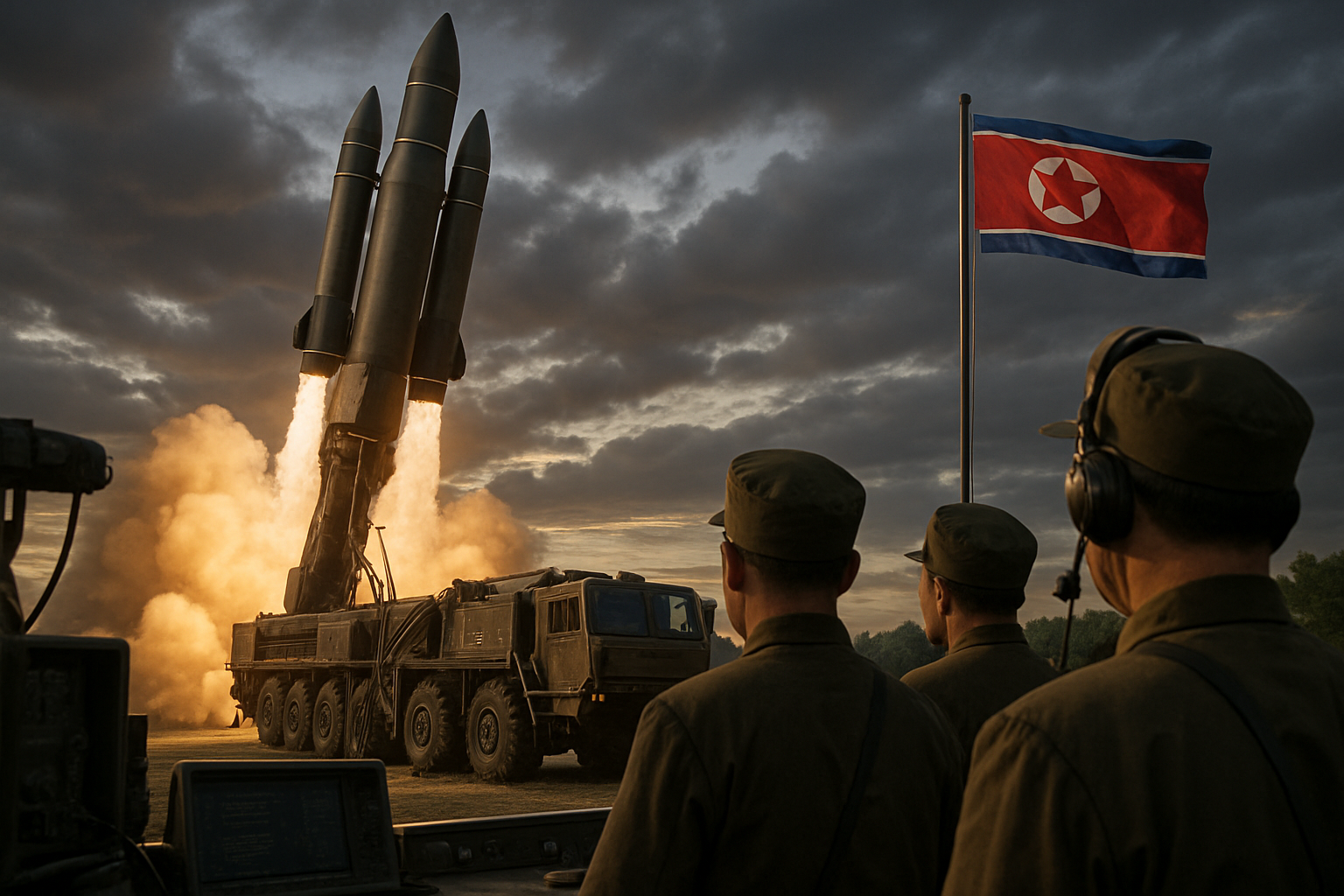
North Korea announced successful tests of sophisticated weapons systems including cluster warhead-equipped ballistic missiles, electromagnetic weapons, and advanced electronic warfare capabilities, marking a significant escalation in military development despite comprehensive international sanctions.
The Democratic People's Republic of Korea (DPRK) conducted what state media described as a three-day testing program featuring cluster munition warheads integrated with the Hwasong-11A short-range ballistic missile system, alongside graphite bombs designed to target electrical grids and mobile air defense platforms. The tests were supervised by Army General Kim Jong-sik, a member of the Central Military Commission and First Deputy Director of the Workers' Party Munitions Industry Department.
Advanced Weapons Systems Demonstrated
The Academy of Defense Science and Missile Administration tested multiple sophisticated weapons platforms representing North Korea's entry into advanced electronic warfare domains. According to state media reports, the cluster-bomb warheads demonstrated on ballistic missiles provide enhanced tactical strike capabilities through dispersing multiple smaller submunitions over wide areas, proving effective against personnel, airfields, military installations, and troop concentrations.
General Kim described the electromagnetic weapons and carbon-fiber bombs as "special assets" for the North Korean military. The graphite bombs, also known as carbon-fiber bombs, are specifically designed to disable electrical power grids through conductive carbon fiber dispersal, causing widespread blackouts and infrastructure disruption.

The electromagnetic weapons tested represent a significant technological leap for North Korean forces, targeting modern military electronics including command and control systems, radar networks, and communications infrastructure. These systems potentially lower the threshold for conflict while complicating defensive planning for technologically superior adversaries.
Strategic Timing and Regional Response
The weapons testing program was conducted ahead of Chinese Foreign Minister Wang Yi's scheduled visit to North Korea Thursday, marking the first such diplomatic trip in six years. South Korea's Joint Chiefs of Staff confirmed multiple missile launches occurred over several days, demonstrating advanced military capabilities during a critical period of regional diplomatic maneuvering.
Japan's Defense Minister Shinjiro Koizumi characterized North Korea's accelerating weapons development as an "increasingly urgent threat" to national security, following Pyongyang's latest testing spree. The pronouncement reflects growing concern among regional allies about the DPRK's systematic military modernization program.
"North Korea's advanced weapons testing poses an increasingly urgent threat to national security."
— Shinjiro Koizumi, Japanese Defense Minister
Historical Context and Succession Dynamics
The advanced weapons demonstrations occur during an unprecedented period in North Korean history, as the regime prepares for the first female leadership transition in the Kim dynasty's 78-year history. South Korean intelligence confirmed in February 2026 that Kim Jong Un has formally designated his teenage daughter, Kim Ju Ae, as his successor—representing the fourth generation of Kim family rule.
This systematic military modernization serves multiple strategic purposes: demonstrating regime strength during the succession planning period, building credentials for the potential female heir within the traditionally masculine political and military hierarchy, and showcasing advanced capabilities despite international sanctions pressure.
The weapons testing builds upon previous nuclear-capable systems unveiled in February 2026, including 600mm rocket systems described as "unique in the world" for "special attack missions," as well as naval cruise missile tests conducted in March 2026 that expanded maritime nuclear capabilities.
Electronic Warfare and Military Modernization
North Korea's development of electromagnetic warfare capabilities represents a fundamental shift in its military doctrine, moving beyond traditional kinetic weapons to sophisticated electronic warfare domains. These capabilities challenge modern military forces that depend heavily on electronic systems for coordination, communication, and operational effectiveness.
The integration of cluster munitions with short-range ballistic missiles enhances North Korea's tactical options in Korean Peninsula conflict scenarios. This technology provides flexible strike options while complicating defensive calculations for South Korean, Japanese, and U.S. forces stationed in the region.
International Sanctions and Indigenous Development
The comprehensive weapons testing program demonstrates North Korea's continued advancement of indigenous military capabilities despite extensive international sanctions regimes. The regime's success in developing sophisticated weapons systems through alternative economic relationships and domestic production capabilities highlights limitations in current non-proliferation approaches.
Intelligence assessments confirm North Korea possesses sufficient enriched uranium for multiple nuclear weapons with advanced centrifuge technology, enabling continued development despite international pressure. Military activity has increased 23% since 2025, indicating accelerated weapons program advancement across multiple domains.

Global Nuclear Governance Crisis Context
The North Korean weapons advancement occurs during a critical period for global nuclear governance. The New START treaty between the United States and Russia expired in February 2026, marking the first time in more than 50 years without superpower nuclear constraints. This creates a more permissive environment for regional nuclear powers to advance capabilities without traditional arms control frameworks.
UN Secretary-General António Guterres has warned that nuclear risks are at their "highest in decades," describing the current period as the "greatest test of multilateral cooperation in the modern era." North Korea's systematic weapons development during this nuclear governance crisis creates additional challenges for international efforts to manage proliferation risks.
Regional Security Implications
The advanced weapons testing complicates defensive planning for regional allies, requiring security strategy adaptations to address multiple levels of threat beyond traditional nuclear deterrence scenarios. Electronic warfare capabilities particularly challenge modern forces dependent on electronic systems for coordination and communication.
South Korea, Japan, and the United States face renewed challenges in addressing continued weapons advancement through diplomatic channels. The combination of nuclear capabilities, advanced conventional weapons, and electronic warfare systems creates a complex security environment requiring comprehensive response strategies that balance deterrence with diplomatic engagement opportunities.
Long-term Strategic Objectives
North Korea's systematic military demonstrations serve both external deterrence and internal legitimacy building functions during the unprecedented Kim Ju Ae leadership preparation period. The comprehensive approach to weapons development—combining nuclear deterrence with sophisticated conventional capabilities—reflects long-term strategic planning extending beyond current leadership.
The regime's continued capacity for sophisticated weapons development under international pressure provides a template for authoritarian adaptation in the 21st century. Success in managing unprecedented political transformation while maintaining military advancement demonstrates strategic planning capabilities that affect regional security calculations for decades ahead.
As international observers monitor these developments, the intersection of advanced military capabilities, historic succession planning, and diplomatic positioning represents a critical juncture for Korean Peninsula security and broader Northeast Asian stability. The regime's ability to combine military modernization with political transformation while resisting international pressure creates new dynamics that will shape regional security architecture for years to come.