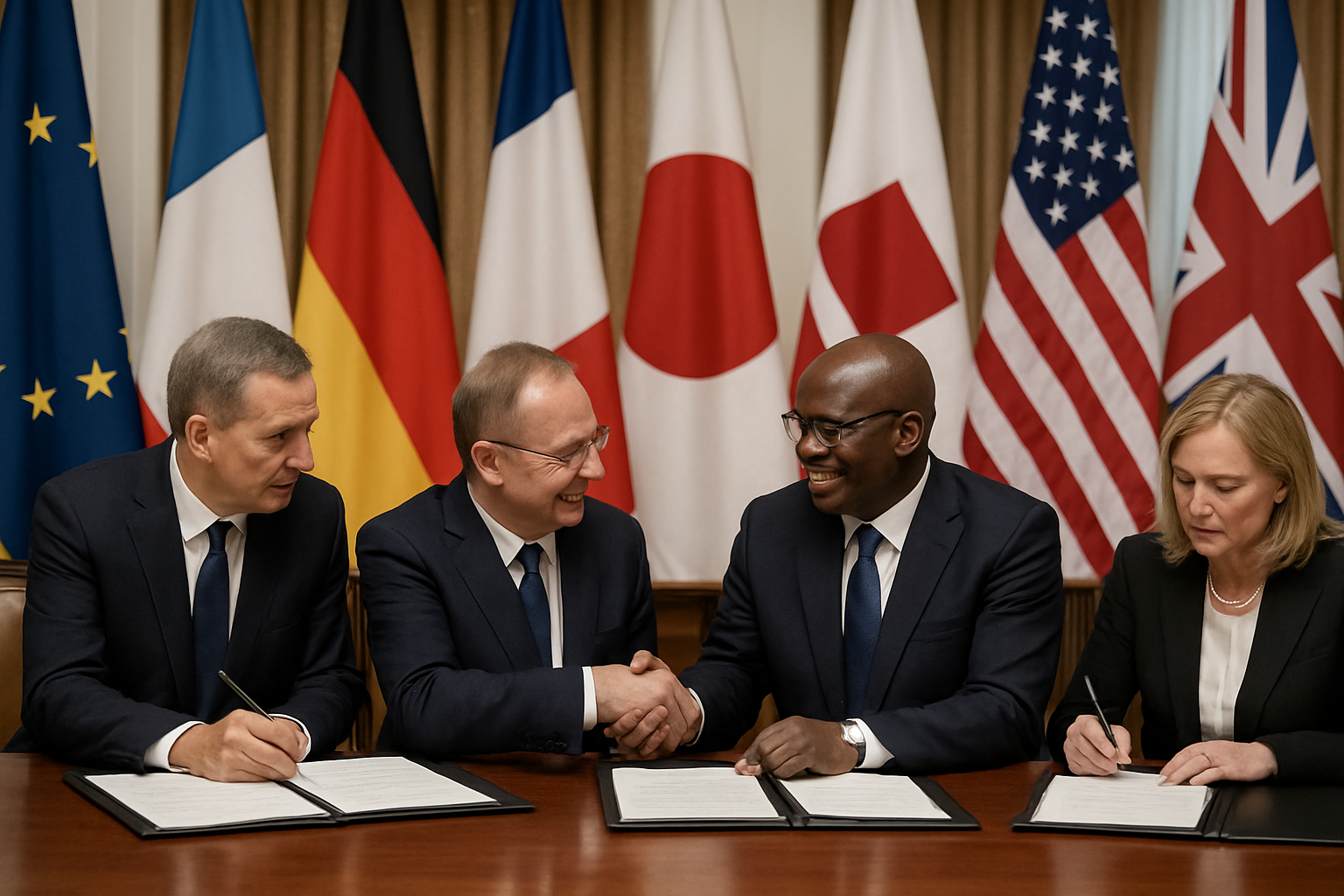
North Korean leader Kim Jong Un and Belarusian President Alexander Lukashenko signed a comprehensive friendship and cooperation treaty on Thursday, March 26, 2026, marking a significant milestone in diplomatic relations between two nations operating under extensive Western sanctions.
The agreement, signed during Lukashenko's first official visit to Pyongyang, encompasses multiple sectors including agriculture, education, healthcare, business, science, and information ministry exchanges, according to North Korean state media reports. The signing ceremony represents the culmination of months of diplomatic preparation as both countries seek to strengthen alternative partnerships outside traditional Western frameworks.
Historic Diplomatic Milestone
The friendship treaty comes during an unprecedented period in North Korean diplomacy, as Kim Jong Un simultaneously manages the most significant succession planning in the regime's 78-year history. South Korean intelligence confirmed in February 2026 that Kim's teenage daughter, Kim Ju Ae, has been formally designated as his successor – representing the first potential female leadership in the Kim dynasty.
Multiple international sources, including reports from Japan, Latvia, Finland, Denmark, and Romania, confirmed the treaty signing occurred during what North Korean media described as productive bilateral talks focused on strengthening "mutual cooperation in various fields." The agreement builds upon both countries' shared experience of international isolation and sanctions pressure.
"Both nations are under Western sanctions and are accused of human rights violations."
— The Japan Times analysis of the bilateral relationship
Strategic Context and Motivations
The North Korea-Belarus partnership emerges against the backdrop of a rapidly evolving global diplomatic landscape. Both countries have supported Russia's military actions in Ukraine, creating natural alignment in their foreign policy approaches. The treaty strengthens an axis of nations seeking alternatives to Western-dominated international institutions and frameworks.
For North Korea, the agreement provides another avenue for circumventing international sanctions while advancing Kim Jong Un's strategy of direct engagement with major powers rather than multilateral diplomacy. This approach has been evident in his recent conditional opening to the United States, where he declared readiness for either "peaceful coexistence or eternal confrontation" depending on Washington's approach.
Belarus, under Lukashenko's leadership since 1994, gains access to North Korean expertise in areas where Pyongyang has demonstrated resilience despite international pressure. The cooperation spans civilian sectors but occurs within the context of both nations' military partnerships with Russia and shared challenges from Western sanctions regimes.
Broader Diplomatic Realignments
The North Korea-Belarus treaty reflects broader shifts in international relations as sanctioned nations develop alternative cooperation frameworks. This pattern mirrors other recent diplomatic developments, including China's announcement of zero-tariff access for 53 African countries and the restoration of China-North Korea passenger rail service after a six-year suspension.
The timing is particularly significant as it coincides with North Korea's continued nuclear advancement. In February 2026, Kim Jong Un unveiled 600mm nuclear-capable rocket systems described as "unique in the world" for "special attack missions," demonstrating the regime's parallel track of military modernization alongside diplomatic engagement.
Regional Security Implications
The friendship treaty adds complexity to Northeast Asian security dynamics, particularly as regional powers navigate North Korea's unprecedented succession planning. Kim Ju Ae's systematic elevation since November 2022 has included attendance at weapons demonstrations, military parades, and her first international diplomatic visit to Beijing in September 2025.
From Belarus's perspective, the partnership provides another avenue for economic cooperation at a time when European sanctions have severely limited traditional trade relationships. The agreement comes as Lukashenko seeks to maintain political stability while managing economic pressures from international isolation.
"We need each other"
— Sentiment expressed during the treaty discussions, according to Romanian media reports
Implementation Challenges and Opportunities
The practical implementation of the friendship treaty faces significant obstacles, primarily the limited financial and logistical capabilities of both nations under sanctions. However, the agreement establishes frameworks for cooperation in sectors where both countries have demonstrated resilience and innovation despite international pressure.
Agricultural cooperation could prove particularly valuable, as both nations have developed techniques for maximizing food security under challenging conditions. Educational and information ministry exchanges may facilitate shared approaches to governance and public communications in authoritarian systems.
The business and science cooperation components of the treaty could enable technology sharing and joint development projects that help both countries reduce dependence on Western suppliers and systems. This mirrors broader trends among sanctioned nations to develop alternative economic architectures.
International Response and Future Implications
The North Korea-Belarus treaty represents another step in the emergence of alternative diplomatic and economic networks among countries excluded from or choosing to operate outside Western-led international institutions. As traditional multilateral frameworks face increasing strain, bilateral partnerships like this may become more common.
For the international community, the agreement presents both challenges and opportunities. While it potentially complicates sanctions enforcement and diplomatic isolation efforts, it also provides insights into how ostracized nations adapt and create new cooperation mechanisms.
The treaty's success or failure could influence similar partnerships among other sanctioned or diplomatically isolated nations, potentially reshaping global governance patterns in the coming decades. As North Korea continues its unprecedented succession planning with Kim Ju Ae's elevation, partnerships like the one with Belarus may prove crucial for regime stability and continuity.
The friendship and cooperation treaty between North Korea and Belarus thus represents more than a bilateral agreement – it signals the ongoing reorganization of international relations as nations seek new partnerships and frameworks in an increasingly multipolar world. The full implications of this diplomatic milestone will likely unfold over the coming years as both countries work to implement their ambitious cooperation agenda amid continued international pressure and regional security challenges.