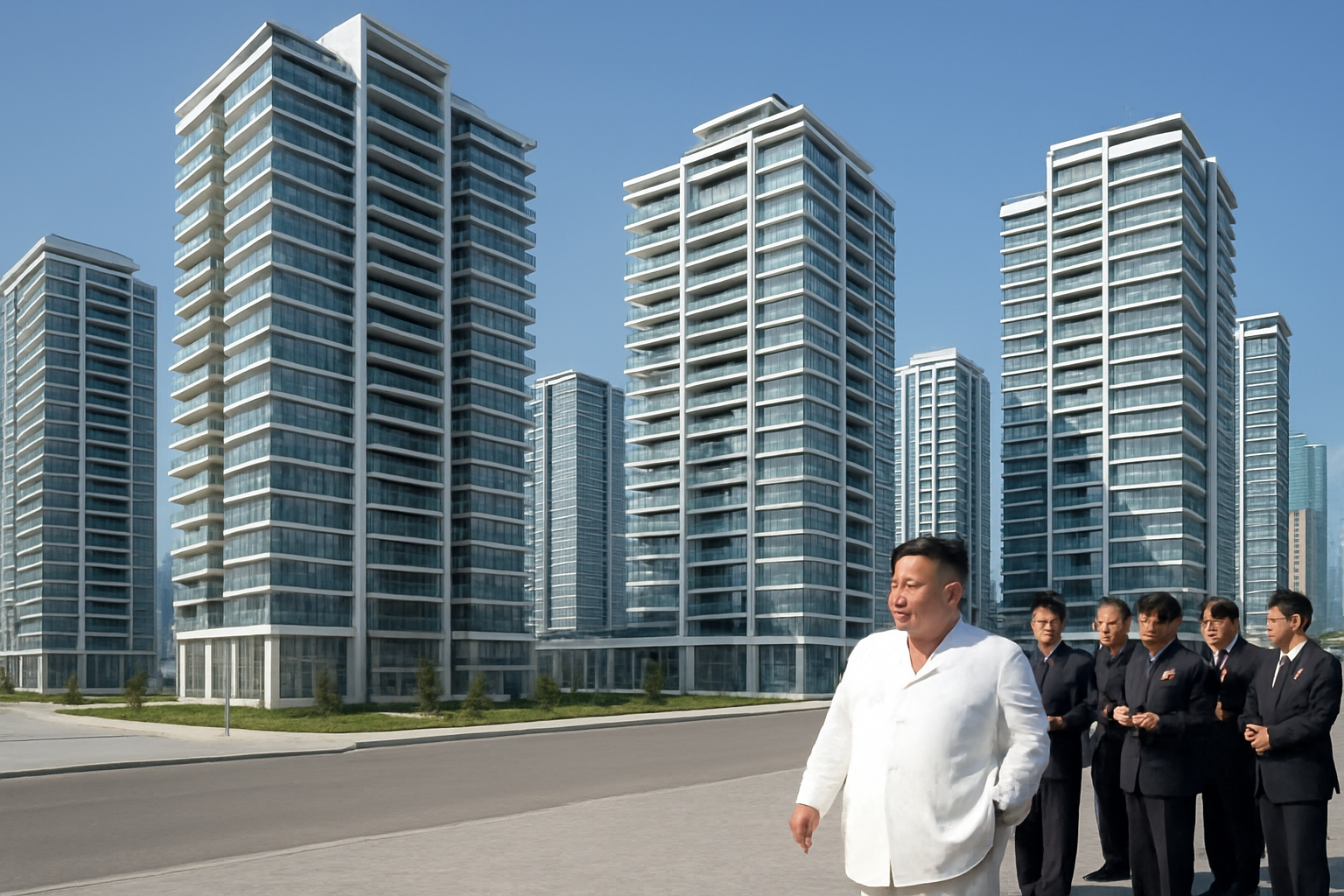
North Korean leader Kim Jong Un celebrated the completion of an ambitious five-year housing construction project on Monday, marking the delivery of 50,000 residential units in Pyongyang's new Hwasong Area district, according to state media reports.
The ceremony, broadcast by Korean Central News Agency (KCNA), showcased Kim Jong Un's latest push to modernize living conditions in the capital, with state propaganda focusing heavily on consumer amenities available to residents of the new residential skyscraper district.
Modern Living Standards Promoted
In a departure from traditional state messaging focused on military achievements or political ideology, Kim Jong Un's promotional visit to the Hwasong Area emphasized lifestyle improvements and consumer options for residents. State media highlighted the availability of puppies and computer games among the amenities designed to enhance quality of life in the new development.
The emphasis on consumer goods and recreational activities appears to be part of Kim's broader effort to demonstrate improved living standards for Pyongyang residents, representing a significant shift in how North Korean leadership presents domestic achievements to the population.
Five-Year Construction Achievement
The housing project represents one of the most substantial residential construction initiatives undertaken during Kim Jong Un's tenure as Supreme Leader. The 50,000-unit development was completed over a five-year construction period, involving massive state resources and coordinated planning across multiple construction phases.
According to KCNA reports, the project was designed to provide modern accommodation for Pyongyang residents, with the Hwasong Area featuring contemporary residential towers and supporting infrastructure. The scale of the development reflects North Korea's ongoing efforts to modernize its capital city despite international economic sanctions.
Strategic Timing and Political Context
The ceremonial completion announcement comes at a significant moment in North Korean politics, coinciding with preparations for the upcoming Workers' Party Congress expected later this month. The housing project's completion provides Kim Jong Un with a tangible domestic achievement to showcase during what will be the first major political gathering since the Eighth Congress in January 2021.
The five-year gap between party congresses represents the longest interval in recent North Korean history, making the housing project's timing particularly significant as a demonstration of economic progress and state capacity despite ongoing international isolation.
Regional Implications
South Korean intelligence services and regional observers have closely monitored the housing development as an indicator of North Korea's domestic priorities and resource allocation. The massive construction project required substantial state investment at a time when North Korea faces continuing economic challenges from international sanctions and limited trade relationships.
The emphasis on civilian infrastructure development contrasts with North Korea's continued military spending and nuclear program advancement, suggesting a dual approach to resource allocation designed to maintain both defense capabilities and domestic legitimacy through improved living conditions.
Economic Development Strategy
The Hwasong Area project reflects broader economic development strategies that Kim Jong Un has pursued since assuming power in 2011. The focus on urban modernization and housing improvement demonstrates an understanding that regime stability depends not only on military strength but also on providing tangible benefits to key constituencies, particularly in Pyongyang.
However, the project's impact remains limited to the capital city, with rural areas and secondary cities continuing to face significant infrastructure and housing challenges. The concentration of resources on Pyongyang development maintains the traditional North Korean approach of prioritizing the political center while other regions receive less attention.
International Context
The housing project completion occurs amid complex international dynamics surrounding North Korea, including ongoing discussions about diplomatic engagement and economic cooperation. While international sanctions continue to limit North Korea's access to global markets and technology, the successful completion of large-scale domestic projects demonstrates the regime's ability to mobilize internal resources for strategic priorities.
The emphasis on modern amenities and lifestyle improvements may also reflect North Korean awareness of living standards in neighboring countries, particularly South Korea and China, suggesting efforts to maintain competitive domestic conditions that discourage emigration and support regime legitimacy.
Future Development Plans
The Hwasong Area completion likely represents the beginning of additional urban development initiatives rather than the conclusion of North Korea's modernization efforts. Kim Jong Un's public focus on housing and living standards suggests that residential development will continue to be a priority for demonstrating state capacity and improving domestic conditions.
The success of the five-year housing project provides a model for future large-scale construction initiatives, potentially including additional residential districts in Pyongyang and expanded infrastructure development throughout North Korea's urban centers.