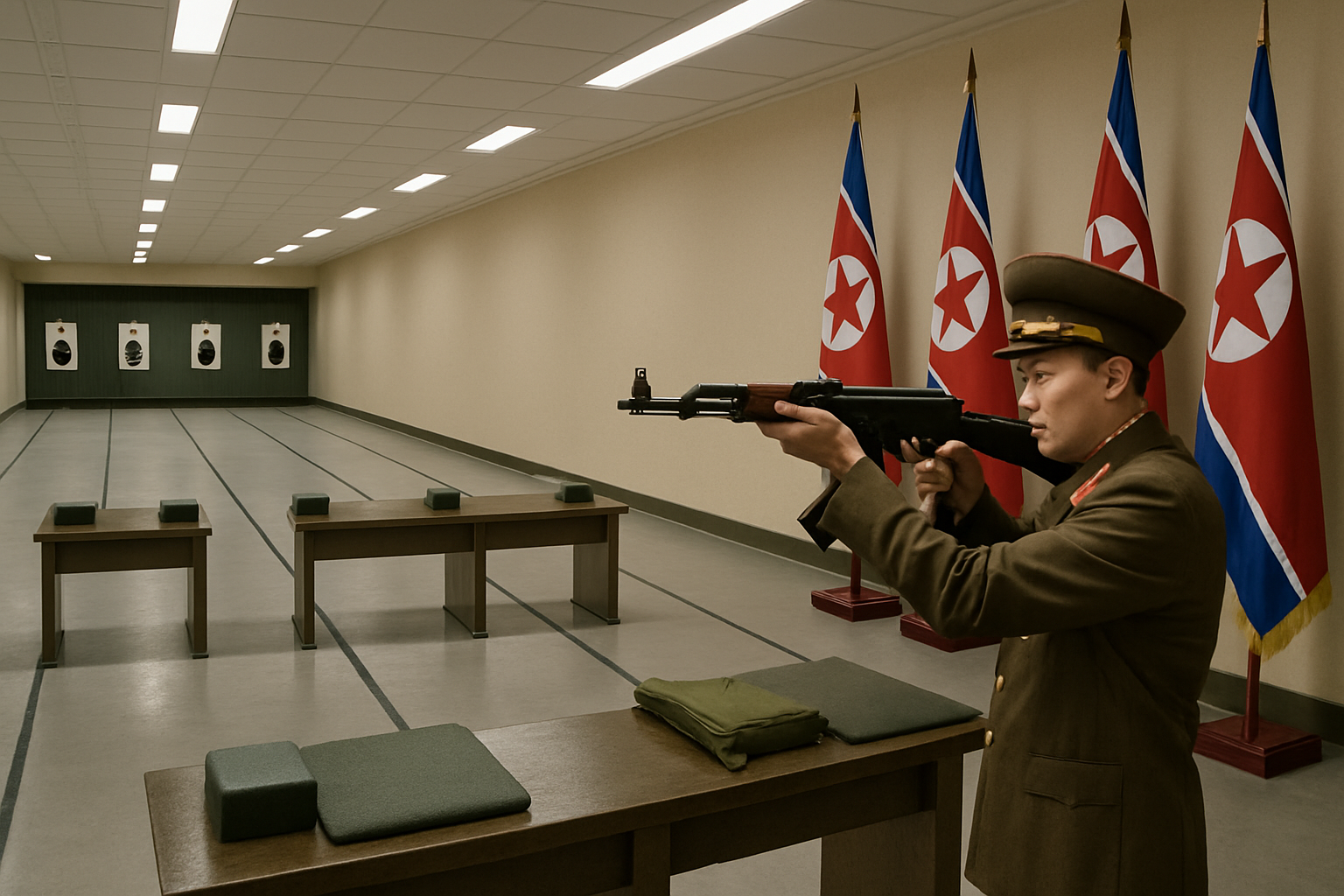
North Korea released extraordinary images Saturday showing Kim Jong Un's teenage daughter Kim Ju Ae firing rifles at a military shooting range, marking the most significant display yet of her systematic preparation for potential leadership succession in the 78-year-old dynasty.
The rare photographs, distributed by state media and confirmed by multiple international sources, show the approximately 13-year-old participating in weapons training activities alongside high-ranking military officials. The unusual release adds substantial weight to intelligence assessments that Kim Jong Un has formally designated his daughter as his successor, representing an unprecedented transition to female leadership in North Korean history.
Historic Succession Planning Confirmed
South Korean intelligence services delivered their most definitive assessment in February 2026, confirming that North Korea has "entered the stage of designating the leader's daughter Ju-ae as successor." This marked a crucial upgrade from previous speculation to concrete intelligence confirmation, with sources indicating Kim Ju Ae now provides "input on policy matters" beyond ceremonial appearances.
The systematic elevation of Kim Ju Ae represents the most significant adaptation of North Korean political culture since the regime's founding. Should the succession proceed, she would become the fourth generation of Kim dynasty leadership, following Kim Il Sung (1948-1994), Kim Jong Il (1994-2011), and Kim Jong Un (2011-present), while breaking the unprecedented barrier as the first female leader in the traditionally masculine Juche ideology system.
"This is a historic moment that would represent unique adaptation for a patriarchal society."
— Niklas Swanström, North Korea Expert
Strategic Military Exposure
The rifle training images follow a carefully orchestrated pattern of military exposure since Kim Ju Ae's public debut in November 2022. Intelligence reports document her attendance at weapons demonstrations, military parades, and state functions with increasingly prominent ceremonial roles. The February 2026 unveiling of 600mm nuclear-capable multiple rocket launcher systems coincided with her continued presence at military events, suggesting deliberate credibility-building within defense and security circles.
The systematic approach reflects the regime's understanding that successful leadership transition requires acceptance from the political elite and military hierarchy. By demonstrating Kim Ju Ae's familiarity with military affairs and weapons systems, North Korean leadership appears to be establishing her credentials within the traditionally male-dominated power structure that underpins regime survival.
International Diplomatic Preparation
Beyond military activities, Kim Ju Ae's preparation has included significant diplomatic exposure, most notably her September 2025 visit to Beijing—her first documented international travel. This diplomatic preparation demonstrates the regime's comprehensive approach to succession planning, recognizing that future leadership will require both domestic legitimacy and international engagement capabilities.
The timing of these revelations coincides with North Korea's recent diplomatic signals, including Kim Jong Un's conditional opening to improved US relations while simultaneously designating South Korea as a "hostile state" in the constitution. These strategic communications occur against the backdrop of succession planning that could fundamentally alter regional security dynamics for decades.
Cultural and Political Transformation
The unprecedented nature of female succession within the Kim dynasty cannot be overstated. Traditional Juche ideology has emphasized masculine leadership principles, making Kim Ju Ae's elevation a fundamental cultural adaptation requiring careful political preparation. Success depends on sustained legitimacy-building among the political elite and military hierarchy while maintaining regime stability.
International observers note that this represents one of the most significant experiments in authoritarian succession in modern history. The systematic approach—combining military exposure, policy involvement, and diplomatic preparation—suggests a sophisticated understanding of the challenges involved in such a dramatic departure from historical precedent.
Regional Security Implications
The succession planning occurs during a critical period for Korean Peninsula security. North Korea's recent nuclear capabilities advancement, including tactical weapons systems and artificial intelligence-based strike capabilities announced in February 2026, creates a complex strategic environment. Regional allies including South Korea, Japan, and the United States face the prospect of engaging with an entirely new type of North Korean leadership structure.
Chinese President Xi Jinping's congratulations to Kim Jong Un during the recent Workers' Party Congress suggest Beijing's awareness and potential acceptance of the succession trajectory. Regional powers must now develop diplomatic frameworks for potential engagement with unprecedented North Korean leadership, requiring innovative approaches to traditional security partnerships.
Economic Development Parallel Strategy
Alongside military and political preparation, the regime has demonstrated a dual approach combining weapons advancement with tangible domestic achievements. The recently completed 50,000-unit Hwasong Area housing project in Pyongyang showcases the leadership's commitment to providing material benefits while maintaining military capabilities—a balance that any successor would need to sustain.
This strategy demonstrates sophisticated resource allocation despite international sanctions, suggesting the regime's confidence in its ability to maintain both military deterrence and domestic support through the transition period.
Historical Precedent and Future Trajectory
The methodical approach to Kim Ju Ae's preparation contrasts sharply with previous Korean dynastic transitions, which typically occurred during periods of uncertainty or crisis. The current systematic elevation suggests long-term planning designed to ensure smooth succession when the time comes, rather than reactive crisis management.
International intelligence assessments indicate this preparation could continue for several years, allowing for comprehensive legitimacy-building both domestically and internationally. The success of this unprecedented transition will likely influence authoritarian succession models globally, providing either a template for managed political change or a cautionary example of the challenges involved in dramatic institutional adaptation.
As North Korea continues this historic political transformation, the rare images of Kim Ju Ae's military training represent more than ceremonial preparation—they signal a regime confident enough in its stability to publicly advance the most significant leadership change in its history, with implications extending far beyond the Korean Peninsula into the broader landscape of 21st-century international relations.