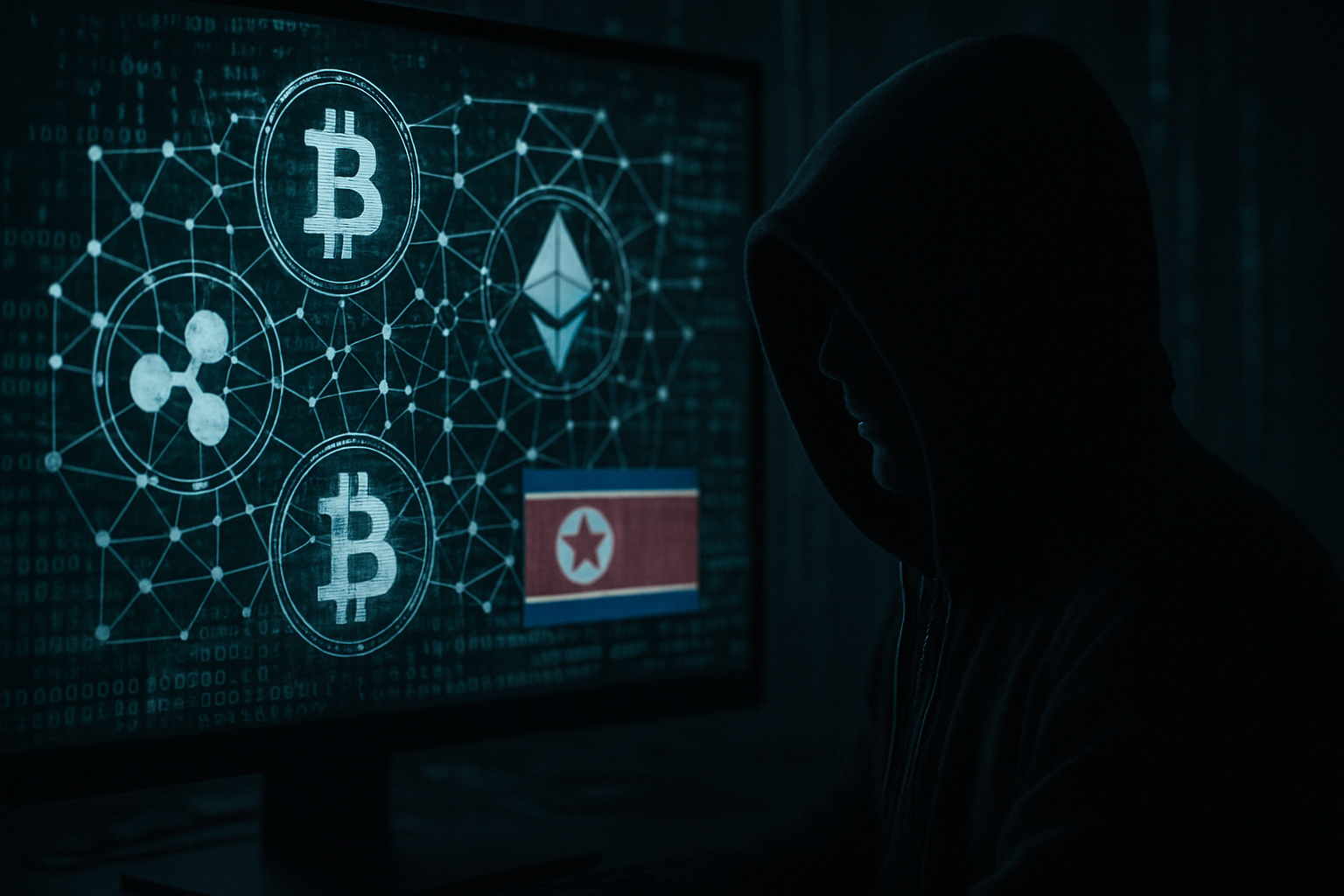
North Korea's notorious Lazarus Group is suspected of orchestrating the theft of nearly $300 million in cryptocurrency over the weekend, marking the largest known crypto heist of 2026 and underscoring the regime's sophisticated cybercrime apparatus that helps fund its nuclear weapons program.
Digital currency news site CoinDesk reported that the massive theft targeted the vault of online investment platform KelpDAO, with cybersecurity experts pointing to hallmark techniques consistent with North Korean state-sponsored hackers. The breach represents the latest escalation in what security researchers describe as an "industrialization of cyber threats" by the Democratic People's Republic of Korea (DPRK).
The KelpDAO Attack: Sophisticated Supply Chain Infiltration
According to preliminary investigations, the attack exploited vulnerabilities in the widely-used Axios JavaScript HTTP client library, which is present in approximately 80% of cloud service environments worldwide. Google researchers warned that the breach could have exposed "hundreds of thousands of secrets" through this supply chain attack vector.
The sophisticated nature of the operation suggests a dramatic evolution in North Korean cyber warfare capabilities, moving from traditional financial theft and espionage to targeting critical software infrastructure. Security analysts note that the attack demonstrated advanced knowledge of modern web development frameworks and cloud architectures.
"This represents a significant leap in North Korean cyber capabilities," said a senior cybersecurity researcher who requested anonymity due to the sensitive nature of the investigation. "They've moved from basic phishing and social engineering to sophisticated supply chain attacks that can affect millions of systems simultaneously."
Lazarus Group: North Korea's Elite Cyber Unit
The Lazarus Group has been linked to numerous high-profile cyberattacks over the past decade, including the 2014 Sony Pictures hack, the 2016 Bangladesh Bank heist that netted $81 million, and the WannaCry ransomware attacks that crippled healthcare systems globally in 2017. The group operates as part of North Korea's broader cyber warfare apparatus, which the United Nations estimates has stolen over $3 billion in cryptocurrency since 2017.
A UN panel of experts has documented how North Korea's sophisticated cybercrime program uses stolen cryptocurrency to circumvent international sanctions and fund its nuclear weapons development. The regime has systematically developed one of the world's most advanced state-sponsored hacking operations, employing thousands of skilled operatives who target financial institutions, cryptocurrency exchanges, and critical infrastructure worldwide.
Recent intelligence assessments indicate that North Korea's cyber operations have become increasingly sophisticated, with hackers now using artificial intelligence tools to enhance their social engineering attacks. In April 2026, security researchers documented the first AI-enhanced social engineering attack by North Korean actors, which successfully targeted a U.S.-based web3 service for $100,000 in cryptocurrency theft.
Global Cybersecurity Crisis Context
The KelpDAO heist occurs amid what experts describe as an unprecedented global cybersecurity crisis. Criminal organizations worldwide are leveraging artificial intelligence as "elite hackers," enabling automated vulnerability detection and sophisticated attack coordination. The emergence of AI-powered malware like "PromptSpy," discovered by ESET researchers, demonstrates how criminals are using machine learning for real-time target analysis and customized attack vectors.
The current security landscape is further complicated by a global semiconductor shortage that has created what industry analysts call a "critical vulnerability window" extending until 2027. Memory chip prices have increased sixfold, affecting major manufacturers like Samsung, SK Hynix, and Micron, while constraining the deployment of advanced security systems just as AI-enhanced threats are escalating.
"We're seeing a perfect storm of factors that favor criminal organizations," said Dr. Maria Christofidou, Cyprus Data Protection Commissioner. "Personal data has become the currency of the digital age, and criminals are exploiting our infrastructure limitations while their capabilities advance faster than our defensive measures."
— Dr. Maria Christofidou, Cyprus Data Protection Commissioner
North Korea's Nuclear Funding Strategy
The timing of the KelpDAO attack is particularly significant given North Korea's recent nuclear developments. The regime has been conducting an intensive weapons testing program throughout 2026, with seven missile tests recorded so far this year, including the unveiling of 600mm nuclear-capable rocket systems described as "unique in the world" for "special attack missions."
International Atomic Energy Agency (IAEA) Director General Rafael Grossi has warned of a "rapid increase in operations" at North Korea's Yongbyon nuclear reactor complex, describing it as the most alarming evaluation of North Korean nuclear advancement in recent years. Intelligence sources confirm that North Korea now possesses sufficient enriched uranium for multiple weapons, despite comprehensive international sanctions.
The cryptocurrency thefts provide crucial funding for these nuclear ambitions. Unlike traditional banking systems that can be monitored and sanctioned, cryptocurrency transactions offer North Korea a means to access international markets and convert stolen digital assets into resources for weapons development. The regime has developed sophisticated money laundering networks that can obscure the origins of stolen funds and convert them into usable resources.
Technological Evolution and AI Enhancement
What sets the latest wave of North Korean cyberattacks apart is the integration of artificial intelligence tools that dramatically enhance their effectiveness. Security researchers have documented North Korean hackers using AI chatbots to generate convincing phishing emails, create fake social media profiles, and even write malicious code.
The "total industrialization of cyber threats" means that barriers to entry for sophisticated attacks have virtually disappeared. Criminal organizations can now deploy AI systems that automatically scan for vulnerabilities, craft personalized attack vectors, and execute complex multi-stage operations with minimal human oversight.
This technological leap coincides with what some experts call a "nuclear governance crisis" following the expiration of the New START treaty between the United States and Russia in February 2026. For the first time in over 50 years, the world lacks bilateral nuclear constraints between the superpowers, creating what analysts describe as a "permissive environment" for regional nuclear advancement.
International Response and Law Enforcement Challenges
The international response to North Korean cyber operations has included some notable successes, such as the takedown of the LeakBase platform through coordination between Dutch police, Europol, the FBI, and 13 other countries. However, law enforcement officials acknowledge that traditional approaches are inadequate against digitally native criminal organizations that can instantly relocate across jurisdictions.
Spain has implemented the world's first criminal executive liability framework for technology platforms, creating imprisonment risks for executives who fail to adequately protect user data. This represents a new approach to cybersecurity governance, though critics argue it may not be sufficient to address state-sponsored threats like those emanating from North Korea.
The challenge is compounded by North Korea's ability to operate through proxy groups and maintain plausible deniability. The Lazarus Group often uses sophisticated false flag operations, creating the appearance that attacks originate from other countries or non-state actors.
Economic and Strategic Implications
The broader economic implications of North Korean cyber operations extend far beyond the immediate financial losses. The February 2026 "SaaSpocalypse" eliminated hundreds of billions in tech market capitalization amid regulatory uncertainty and cybersecurity concerns, demonstrating how cyber threats can create systemic economic disruption.
Consumer trust in digital financial services is eroding, with measurable declines in user engagement across multiple platforms. This trend threatens the digital transformation that has become essential to modern economic and social life, potentially forcing a choice between comprehensive security measures and maintaining essential digital services.
From a strategic perspective, North Korea's cyber capabilities represent a form of asymmetric warfare that allows the isolated regime to project power globally despite severe economic sanctions. The ability to steal hundreds of millions of dollars through cyber operations provides North Korea with resources that would otherwise be impossible to obtain through legitimate means.
Future Implications and Prevention Strategies
Looking ahead, experts warn that North Korea's cyber operations are likely to become even more sophisticated as the regime continues to invest in artificial intelligence and quantum computing capabilities. The integration of AI tools with traditional hacking techniques creates new attack vectors that are difficult to predict and defend against.
Prevention strategies must evolve beyond traditional cybersecurity measures to include supply chain security, international cooperation frameworks, and regulatory approaches that address the unique challenges posed by state-sponsored cyber operations. This includes developing better methods for attribution, creating meaningful deterrence mechanisms, and establishing international norms for state behavior in cyberspace.
The success of operations like the KelpDAO heist also demonstrates the need for fundamental improvements in cryptocurrency security and regulatory frameworks. As digital assets become increasingly important to the global economy, protecting them from state-sponsored theft becomes a matter of national security.
Conclusion: A Template for 21st-Century Conflict
The $300 million KelpDAO heist represents more than just another cryptocurrency theft – it exemplifies how authoritarian regimes are adapting to the digital age. North Korea's systematic use of cyber operations to fund nuclear weapons development creates a dangerous precedent that other isolated nations may seek to emulate.
The convergence of AI-enhanced criminal capabilities, nuclear proliferation, and global infrastructure vulnerabilities creates what experts describe as a "perfect storm" for international security. The window for effective coordinated action is narrowing as criminal capabilities advance faster than defensive measures.
The international community faces a critical choice: develop comprehensive frameworks for addressing the intersection of cybercrime and nuclear proliferation, or risk a future where digital theft becomes the primary funding mechanism for the world's most dangerous weapons programs. The stakes extend far beyond financial losses to include the fundamental security architecture of the 21st century.
As North Korea continues to demonstrate that cybercrime can successfully circumvent traditional sanctions and fund prohibited weapons programs, the urgent need for innovative approaches to digital security and international cooperation has never been clearer. The KelpDAO heist may be the largest crypto theft of 2026, but without decisive action, it is unlikely to be the last.