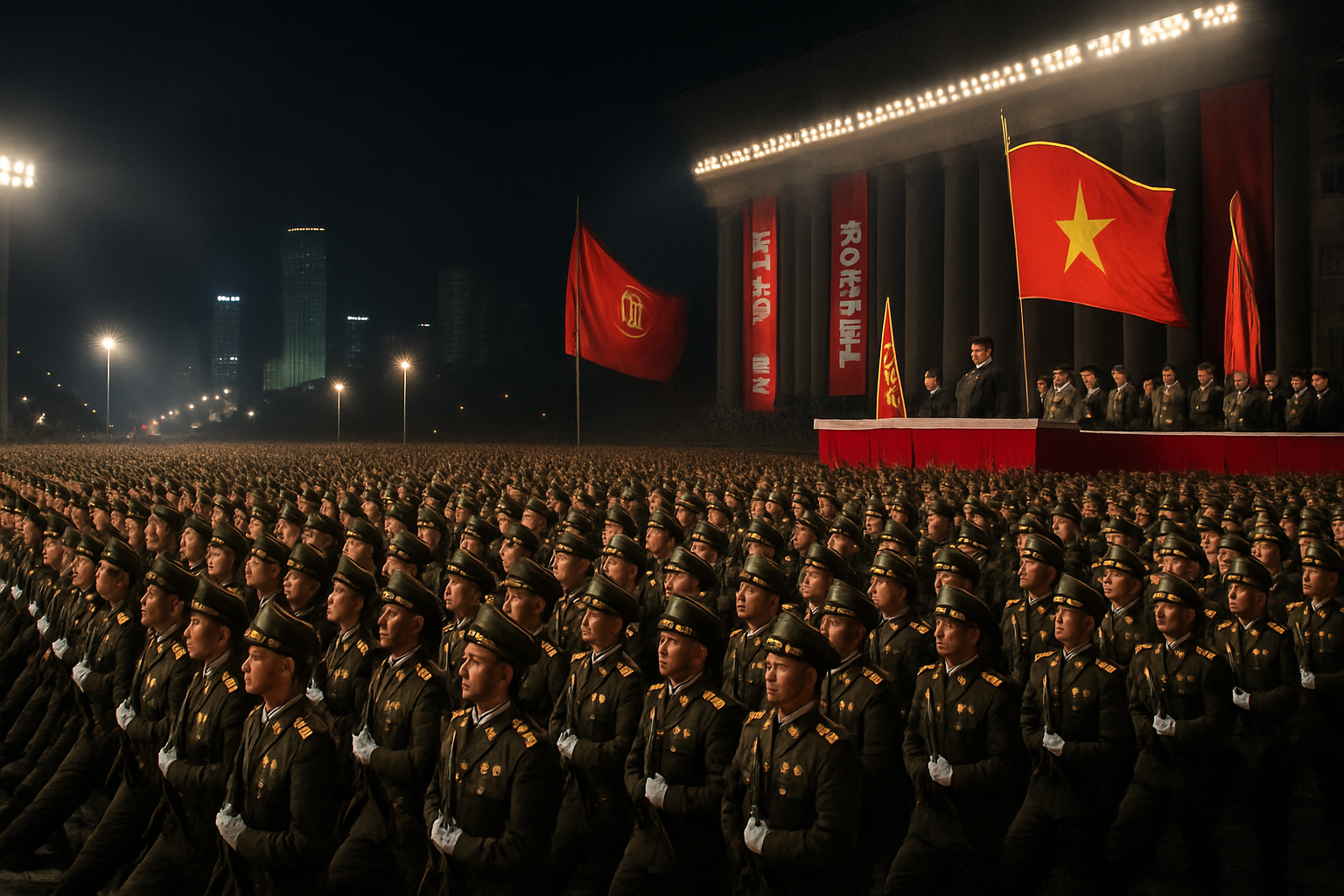
Kim Jong Un has signaled conditional willingness to improve relations with the United States following a major military parade in Pyongyang, marking the conclusion of North Korea's Ninth Workers' Party Congress with a display of military might that notably excluded nuclear weapons.
The North Korean leader's latest diplomatic overture comes as the regime concluded its most significant political gathering in five years with a military parade featuring over 14,000 troops but conspicuously absent of the nuclear missile displays that have characterized previous demonstrations of military power.
Conditional Diplomatic Opening
Speaking after the conclusion of the Workers' Party Congress, Kim Jong Un offered his clearest statement yet on potential US-North Korea relations, declaring that "If the US withdraws its policy of confrontation with North Korea by respecting our country's current status... there is no reason why we cannot get along well with the US."
This conditional diplomatic opening represents a significant shift in tone from the regime's traditional hardline rhetoric, though it comes with clear preconditions that would require fundamental changes in Washington's approach to the nuclear issue.
"If the US withdraws its policy of confrontation with North Korea by respecting our country's current status... there is no reason why we cannot get along well with the US."
— Kim Jong Un, North Korean Leader
The North Korean leader's remarks, reported by state media KCNA, came alongside warnings of "terrible" retaliation against any hostile military actions, demonstrating the regime's continued dual-track approach of diplomatic outreach combined with military deterrence.
Military Parade Without Nuclear Display
The Wednesday night military parade represented a carefully calibrated demonstration of state power, featuring more than 14,000 troops in formation but notably avoiding the display of intercontinental ballistic missiles or other nuclear delivery systems that have featured prominently in previous parades.
This strategic omission suggests deliberate messaging from Pyongyang, presenting military strength while avoiding the most provocative weapons displays that could undermine diplomatic messaging. The parade followed the conclusion of the Ninth Workers' Party Congress, the first such gathering since January 2021.
Historical Context and Succession Planning
Kim Jong Un's diplomatic overture occurs against the backdrop of unprecedented succession planning within the North Korean system. South Korean intelligence has confirmed that Kim has formally designated his daughter Kim Ju Ae as his successor, marking what would be the first female leadership transition in the 78-year history of the Kim dynasty.
The systematic elevation of Kim Ju Ae since her November 2022 public debut, including her attendance at weapons demonstrations, military parades, and a September 2025 diplomatic visit to Beijing, represents the most significant adaptation of North Korean political culture since the regime's founding.
Fourth Generation Leadership Preparation
Intelligence reports indicate Kim Ju Ae now provides "input on policy matters" beyond ceremonial appearances, suggesting substantive preparation for a potential fourth generation of Kim family rule. This unprecedented female succession within North Korea's traditionally masculine Juche ideology system requires careful cultural and political adaptation.
The timing of Kim Jong Un's diplomatic messaging alongside succession planning suggests strategic positioning for long-term regime sustainability, potentially seeking to establish a more stable international environment during this critical transition period.
Nuclear Status and US Policy Demands
Central to Kim Jong Un's conditional diplomatic opening is North Korea's insistence that the United States accept what the regime describes as the "irreversible" nature of its nuclear capabilities. This represents a fundamental challenge to long-standing US policy objectives of complete denuclearization of the Korean Peninsula.
The North Korean leader's criticism of the "America First" approach for exacerbating global "chaos" reflects broader regime concerns about the direction of US foreign policy and its implications for Korean Peninsula security dynamics.
Domestic Achievements Showcase
The Workers' Party Congress served as a platform for showcasing domestic achievements, particularly the completion of the massive 50,000-unit Hwasong Area housing project in Pyongyang. This urban development represents the regime's dual strategy of maintaining military capabilities while providing tangible benefits to key constituencies in the capital.
The housing project, featuring modern amenities and contemporary residential towers, demonstrates the regime's capacity for large-scale construction despite international sanctions, providing a model for future domestic development initiatives.
Regional Security Implications
North Korea's latest diplomatic messaging occurs within a complex regional security environment, with Chinese military activity around Taiwan increasing 23% in 2025 and ongoing tensions affecting broader Northeast Asian stability.
The regime's approach suggests calculation that diplomatic engagement might provide advantages during a period of global strategic competition, potentially positioning North Korea as a factor in broader US-China regional dynamics.
International Monitoring and Response
The international community faces renewed challenges in addressing North Korea's evolving political landscape and regional security concerns. The combination of nuclear advancement, succession planning, and conditional diplomatic overtures creates a complex environment requiring nuanced diplomatic responses.
European partners, particularly Germany, have expressed opposition to direct engagement with the North Korean leadership, while France and Italy have indicated support for broader diplomatic initiatives. This division reflects broader challenges in developing coordinated international approaches to the nuclear issue.
Economic Development Amid Sanctions
Despite showcasing domestic achievements like the Hwasong housing project, the North Korean regime continues to face significant economic constraints from international sanctions, trade restrictions, and infrastructure limitations. The resource allocation toward both military capabilities and domestic development reflects the regime's survival strategy of maintaining defensive capabilities while ensuring domestic support through tangible benefits.
Analysis and Future Prospects
Kim Jong Un's conditional diplomatic opening represents the most significant statement on US-North Korea relations in recent years, though it comes with preconditions that would require fundamental shifts in Washington's approach to the nuclear issue.
The absence of nuclear weapons from the military parade, combined with diplomatic messaging, suggests careful calibration aimed at creating space for potential dialogue while maintaining regime credibility through demonstrations of military strength.
The success of any diplomatic initiative would require addressing the fundamental disagreement over North Korea's nuclear status, with the regime insisting on acceptance of its nuclear capabilities as a prerequisite for improved relations, while the international community maintains pressure for denuclearization.
As North Korea continues its most significant political transition in decades with succession planning alongside nuclear program advancement, the international community faces the challenge of developing effective responses to this evolving political landscape that addresses both security concerns and diplomatic opportunities within the broader context of regional stability and global nuclear governance.