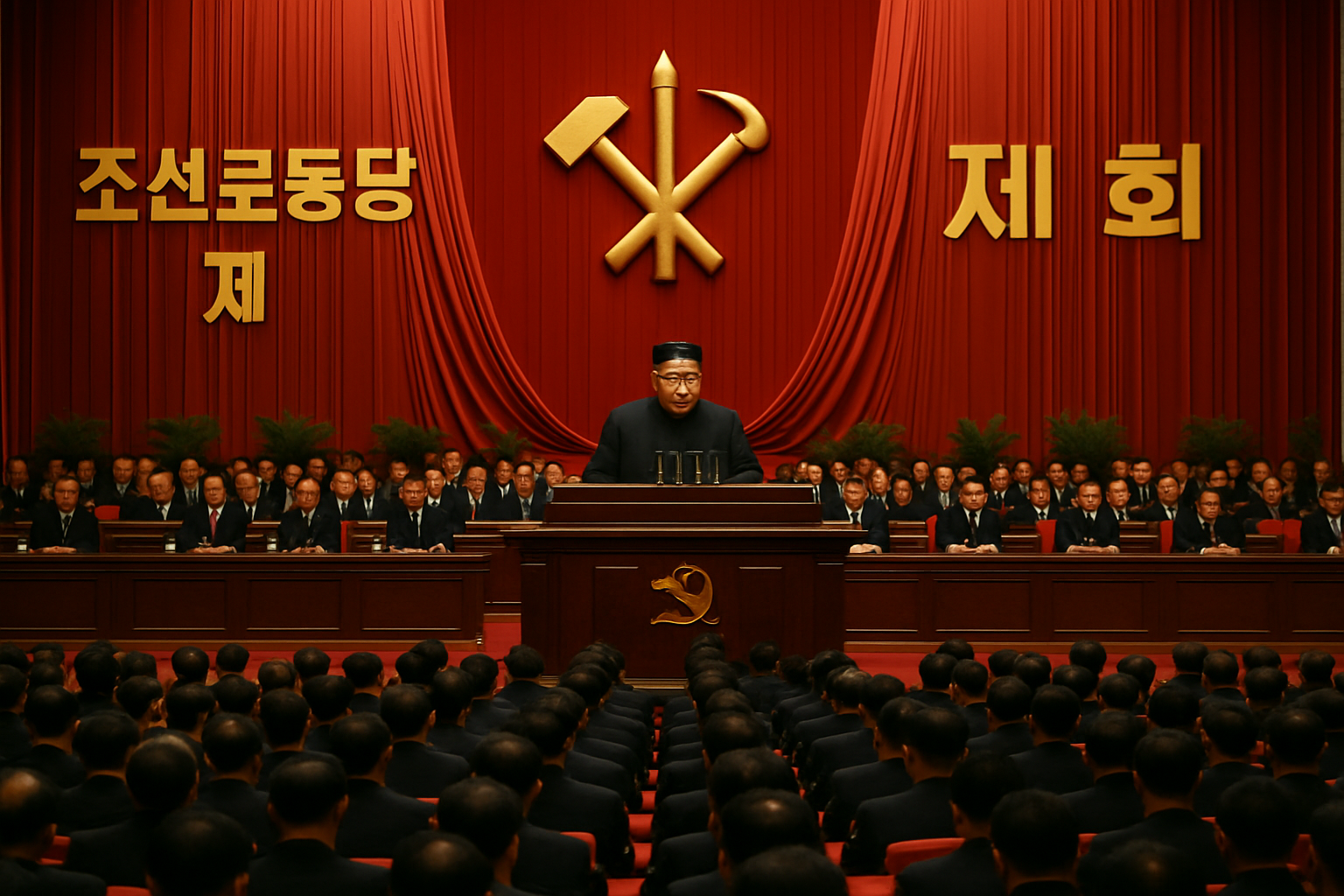
North Korea's ruling Workers' Party has opened its Ninth Congress on Thursday, marking the first major political gathering since January 2021 and setting the stage for significant policy announcements amid unprecedented succession planning and continued nuclear advancement.
According to state media reports from the Rodong Sinmun, approximately 5,000 party members have gathered for the rare five-yearly political event, which represents the longest interval between congresses in recent North Korean history. Leader Kim Jong Un delivered what state media described as an optimistic speech about the country's future while vowing to address "deep-rooted" corruption and incompetence within the party structure.
Historic Succession Dynamics
The Congress convenes against the backdrop of the most significant succession developments in the Kim dynasty's 78-year history. South Korean intelligence sources have definitively confirmed that Kim Jong Un has formally designated his daughter Kim Ju Ae as his successor, marking an unprecedented transition to female leadership within the traditionally masculine Juche ideology system.
Intelligence assessments indicate that Kim Ju Ae, now in her early teens, has moved beyond ceremonial appearances to providing "input on policy matters," representing substantial political involvement preparation. Her systematic elevation since her November 2022 public debut has included attendance at weapons demonstrations, military parades, state functions, and notably, a September 2025 diplomatic visit to Beijing.
"North Korea has entered the stage of designating the leader's daughter Ju-ae as successor,"
— South Korean National Intelligence Service Assessment
This development would represent the fourth generation of Kim dynasty leadership and the first female leader in the regime's history, requiring significant cultural adaptation within North Korea's political elite and military hierarchy.
Strategic Military Preparations
The Congress opening follows the February 19 unveiling of massive 600mm nuclear-capable multiple rocket launcher systems, which state media described as "unique in the world" and "suitable for special attack missions." This terminology indicates nuclear operations capability, representing a significant advancement in tactical nuclear weapons designed for regional conflicts rather than intercontinental deterrence.
The strategic timing of these weapons demonstrations immediately before the Workers' Party Congress serves multiple purposes: strengthening Kim Jong Un's position for major policy announcements, providing military credentials during the succession planning period, and demonstrating regime capabilities despite extensive international sanctions.
Economic Policy Direction
Kim Jong Un's address emphasized an optimistic economic message, highlighting recent domestic achievements including the completion of the massive 50,000-unit Hwasong Area housing project in Pyongyang. State media emphasized modern living standards and consumer amenities, representing tangible benefits for key constituencies in the capital.
This dual approach of maintaining military capabilities while providing domestic benefits demonstrates the regime's strategy of balancing security priorities with legitimacy-building among the population. The housing project completion provides a model for future large-scale construction initiatives and demonstrates state capacity for domestic development amid continuing diplomatic isolation.
Regional and International Implications
The Congress occurs during a critical period for Korean Peninsula diplomacy, with multiple international developments affecting regional security dynamics. The combination of advanced weapons capabilities, succession planning, and a major political gathering creates a volatile period requiring effective international diplomatic responses.
Intelligence sources indicate the Workers' Party Congress will likely provide Kim Ju Ae with her first official title or recognition, cementing her successor status through formal political elevation within the party hierarchy. This represents uncharted territory for both North Korean politics and regional diplomatic engagement.
Policy Expectations and Analysis
The Congress is expected to define domestic and foreign policy direction for the next five years, addressing economic development strategies amid international sanctions, nuclear program directions, foreign policy approaches toward major powers, and internal party organizational changes.
Historical context shows that the Eighth Congress in 2021 acknowledged economic plan failures while Kim Jong Un assumed the General Secretary title. This Congress will be closely monitored for signals about nuclear negotiations, economic reforms, and regional diplomacy affecting broader East Asian security dynamics.
Unprecedented Female Leadership Transition
The systematic preparation of Kim Ju Ae represents the most significant adaptation in North Korean political culture since the regime's founding. Success depends on political elite and military acceptance within the male-dominated hierarchy while maintaining regime stability and dynastic continuity principles.
Expert analysis suggests this choice is "unique for a patriarchal society" and potentially requires early public announcement to build legitimacy. The strategy appears focused on building "the myth around her" through sustained exposure to policy processes, military demonstrations, and international diplomacy.
"This represents a fundamental shift in North Korean political dynamics, requiring careful navigation of traditional power structures while adapting to unprecedented gender transition."
— Regional Security Analyst
International Monitoring and Response
The international community is closely monitoring the Congress proceedings for indicators of policy direction and succession formalization. The combination of nuclear weapons advancement, unprecedented succession planning, and major political gatherings creates complex challenges for diplomatic engagement with the regime.
Regional allies including South Korea, Japan, and the United States face renewed challenges in addressing North Korea's continued weapons development through diplomatic channels amid a broader global nuclear governance crisis following the expiration of arms control treaties.
Looking Ahead
The Ninth Workers' Party Congress represents a critical juncture for North Korea's domestic and international trajectory. The formal recognition of Kim Ju Ae as successor, combined with continued nuclear advancement and economic policy adjustments, will shape the regime's approach to regional relations and internal governance for years to come.
The success of this unprecedented female succession within North Korea's rigid political system will be closely watched as a potential model for authoritarian regime adaptation, while the international community grapples with effective responses to the regime's continued nuclear capabilities development and regional security challenges.
As the Congress continues, the world watches for concrete policy announcements that will determine North Korea's path forward in an increasingly complex regional security environment, with implications extending far beyond the Korean Peninsula to broader questions of nuclear governance, diplomatic innovation, and authoritarian regime evolution in the 21st century.