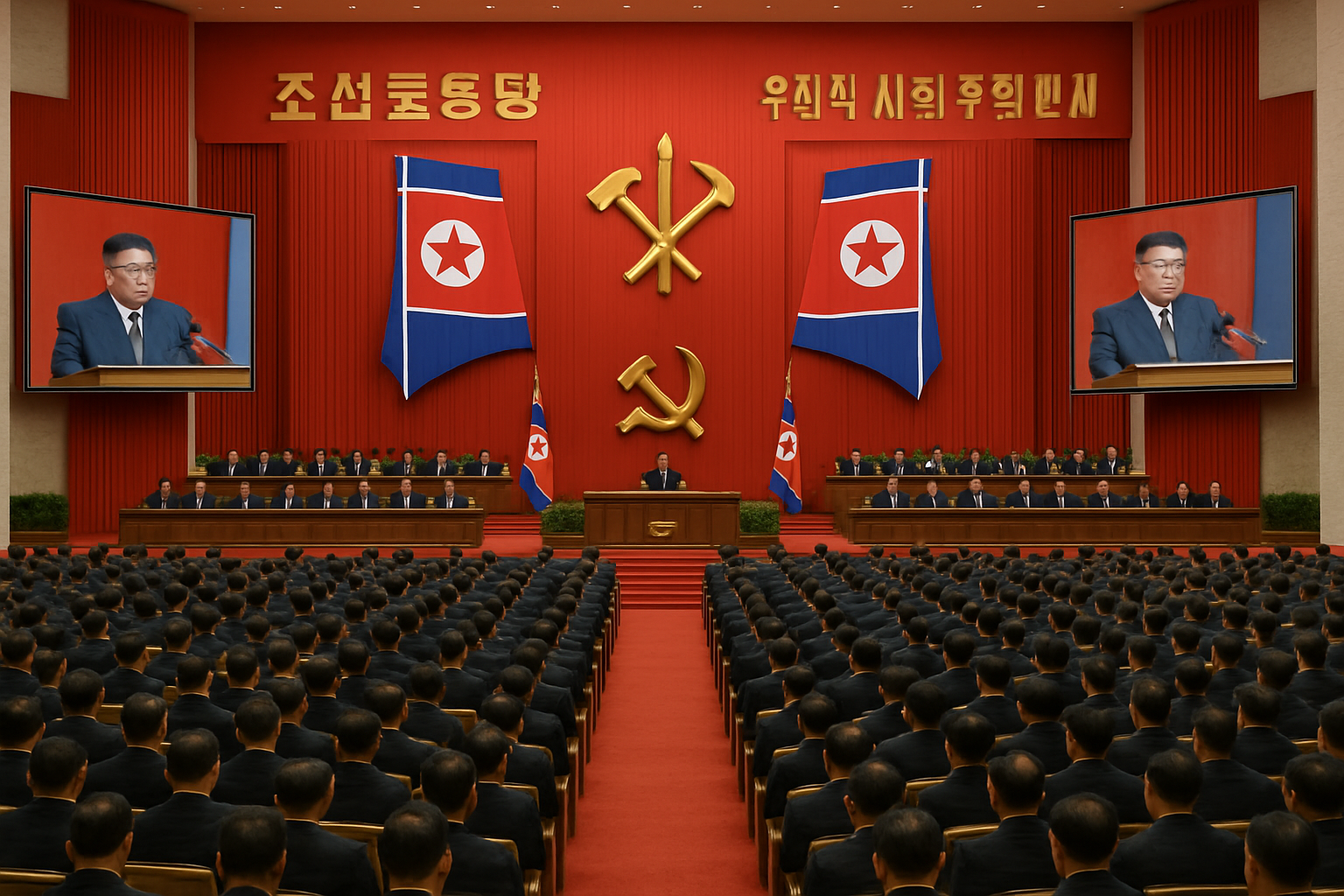
North Korea's ruling Workers' Party has announced plans to convene the Ninth Party Congress in late February 2026, marking the first such major political gathering since January 2021 and representing the longest interval between congresses in recent North Korean history.
The decision to hold the congress was unanimously approved at a politburo meeting attended by Kim Jong Un and senior party officials on Saturday, February 7, according to an announcement by the Korean Central News Agency (KCNA) on Sunday, February 8. The congress is expected to serve as a platform for defining the regime's domestic and foreign policy direction for the next five years.
Significance of the Workers' Party Congress
The Workers' Party Congress represents the ruling party's highest decision-making body and most significant political set-piece, serving to reinforce the regime's authority while providing a platform for major policy announcements and elite personnel changes. Leader Kim Jong Un is expected to unveil his regime's military and foreign policy goals for the next five years at this rare gathering.
The five-year gap between the Eighth Congress in January 2021 and the upcoming Ninth Congress represents the longest interval in recent North Korean history, underscoring the exceptional nature of this political event. Historically, party congresses have served as critical junctures for announcing major policy shifts, economic development strategies, and leadership appointments.
Policy Expectations and Strategic Implications
The upcoming congress is anticipated to address several critical areas of North Korean governance and international relations. Key agenda items are expected to include economic development strategies amid ongoing international sanctions, nuclear program directions, foreign policy approaches toward major powers, and internal party organizational changes.
The timing of the congress carries particular significance given the current geopolitical landscape. North Korea faces mounting economic challenges due to international sanctions, COVID-19 trade impacts, natural disasters, and heavy dependence on Chinese trade relationships. The congress will likely outline strategies for addressing these multifaceted challenges while maintaining the regime's political stability.
Historical Context and Previous Congress Outcomes
The Eighth Congress in January 2021 acknowledged failures in the previous economic plan and saw Kim Jong Un assume the title of General Secretary, cementing his central leadership role since taking power in 2011. That gathering served as a comprehensive review of domestic and foreign policy amid unprecedented challenges facing the regime.
Party congresses typically take place in major Pyongyang ceremonial halls with extensive state media coverage, though international access remains severely limited. The gatherings serve not only as policy forums but also as demonstrations of regime unity and strength to both domestic and international audiences.
Regional and International Implications
The announcement of the Ninth Congress comes at a time of heightened regional tensions and evolving international dynamics. The gathering's outcomes will have significant implications for North Korea's relationships with South Korea, China, Russia, and the broader international community.
Regional powers are closely monitoring the congress preparations, particularly given North Korea's continued nuclear program development and its role in broader East Asian security dynamics. The policy directions announced at the congress could influence diplomatic engagement strategies and regional security calculations for years to come.
Economic Challenges and Development Strategies
The congress is expected to address North Korea's persistent economic challenges, including the impact of international sanctions, trade disruptions, and infrastructure needs. The regime has historically used party congresses to announce major economic initiatives and development goals, though implementation has often fallen short of ambitious targets.
Given the five-year interval since the last congress, economic policy announcements are likely to be particularly significant. The gathering may outline strategies for technological advancement, agricultural development, and industrial modernization within the constraints of the current sanctions regime.
Looking Ahead: Congress Preparations and Timeline
While the specific date and detailed agenda for the Ninth Congress are expected to be announced in the coming weeks, preparations are already intensifying across North Korea's political apparatus. The congress venue will typically be one of Pyongyang's major ceremonial halls, with state media providing extensive coverage of the proceedings.
The international community will be watching closely for signals about North Korea's policy directions, particularly regarding nuclear negotiations, economic reforms, and regional diplomacy. The congress outcomes could significantly influence the trajectory of Korean Peninsula politics and broader regional security dynamics for the next five years.
As Kim Jong Un's attendance underscores his continued central leadership role, the Ninth Workers' Party Congress represents both a domestic political milestone and a critical opportunity for North Korea to signal its strategic intentions to the international community during a period of global political transition and regional uncertainty.