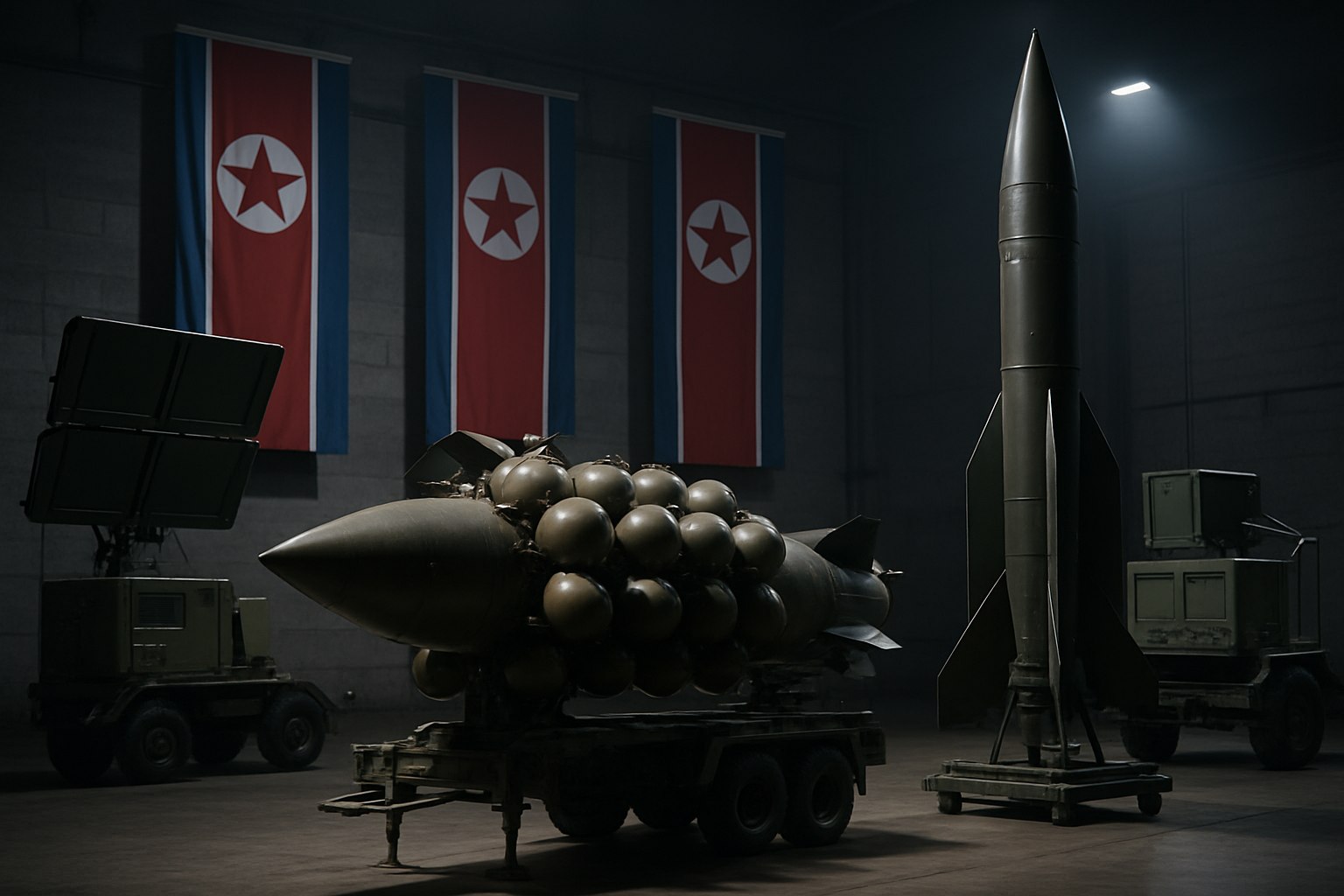
North Korea announced successful tests of sophisticated new weapons systems over a three-day period this week, including ballistic missiles equipped with cluster munition warheads and advanced electronic warfare capabilities designed to target enemy electrical grids, marking a significant escalation in the regime's military modernization program.
The Korean Central News Agency (KCNA) reported Thursday that research agencies under the Missile Administration tested a new Hwasong-11A short-range ballistic missile (SRBM) equipped with a cluster munition warhead and a graphite bomb specifically designed to target enemy electrical infrastructure. The tests were personally supervised by Army General Kim Jong-sik, a member of the Central Military Commission and First Deputy Director of the Workers' Party of Korea Munitions Industry Department.
Advanced Weapons Systems Unveiled
The Academy of Defense Science and the Missile Administration conducted comprehensive testing of multiple weapons systems, including carbon-fiber bombs and a mobile short-range anti-aircraft missile system. According to KCNA reports, General Kim Jong-sik characterized the electromagnetic weapon system and carbon-fiber bombs as "special assets" for North Korea's military capability.
The graphite bomb, also known as a "blackout bomb," represents a particularly concerning development in North Korea's arsenal. These weapons are designed to disable electrical power grids by dispersing conductive carbon fiber strands that short-circuit electrical equipment, potentially causing widespread blackouts across enemy territory.
"The electromagnetic weapon system and carbon-fibre bombs were 'special assets' for North Korea's military."
— General Kim Jong-sik, North Korean Military Leadership
Strategic Context and Regional Implications
These weapons tests come ahead of Chinese Foreign Minister Wang Yi's visit to North Korea beginning Thursday, marking his first trip to the country in more than six years. The timing appears calculated to demonstrate North Korea's advanced military capabilities during a period of heightened regional tensions and ongoing diplomatic maneuvering.
South Korea's Joint Chiefs of Staff confirmed on Wednesday that Pyongyang had test-fired multiple missiles over several days, corroborating the North Korean claims of extensive testing activities. The tests represent a significant advancement in North Korea's conventional warfare capabilities, particularly in the realm of modern electronic warfare.
Analysts view these developments as North Korea's attempt to showcase cutting-edge conventional weapon systems to both adversaries and allies, demonstrating the regime's capacity to conduct sophisticated modern warfare operations beyond its nuclear capabilities.
Cluster Munition Technology Advancement
The successful test of cluster munition warheads on ballistic missiles represents a notable technological achievement for North Korea's weapons program. Cluster munitions are designed to disperse multiple smaller submunitions over a wide area, making them particularly effective against personnel and soft targets such as airfields, military installations, and troop concentrations.
The integration of cluster munitions with short-range ballistic missiles enhances North Korea's tactical strike capabilities, providing more flexible options for potential conflict scenarios on the Korean Peninsula. This development complements the regime's existing nuclear deterrent with sophisticated conventional weapons that could be deployed in various military situations.
Electronic Warfare Capabilities
The announcement of electromagnetic weapon systems and graphite bombs signals North Korea's entry into advanced electronic warfare domains. These capabilities could potentially neutralize modern military systems that rely heavily on electronics and electrical power, including command and control systems, radar installations, and communication networks.
Such weapons represent a cost-effective means of achieving strategic effects against technologically advanced adversaries, potentially leveling the playing field in conflicts where North Korea might face superior conventional forces equipped with modern electronic systems.
International Response and Concerns
The weapons tests have drawn attention from regional powers and the international community, particularly given their timing coinciding with ongoing diplomatic efforts and security discussions in Northeast Asia. The demonstrations of advanced conventional weapons capabilities add new dimensions to regional security calculations.
These developments occur during a period when North Korea continues to advance its nuclear program while simultaneously modernizing its conventional forces. The combination of nuclear deterrence with sophisticated conventional capabilities creates a more complex security environment for regional actors.
Historical Context of North Korean Weapons Development
This latest round of testing builds upon North Korea's systematic military modernization efforts that have accelerated significantly over recent years. The regime has consistently pursued technological advancement in weapons systems despite international sanctions, demonstrating remarkable indigenous development capabilities.
Previous weapons tests have included nuclear-capable multiple rocket launchers described as "unique in the world" for "special attack missions," naval-launched cruise missiles from destroyer platforms, and high-thrust solid-fuel engines for intercontinental ballistic missiles. These efforts reflect a comprehensive approach to military modernization across multiple domains.
The current succession planning involving Kim Ju Ae, formally designated as Kim Jong Un's heir and representing the first potential female leader in the dynasty's 78-year history, occurs parallel to these weapons advancement programs, suggesting long-term strategic planning that extends beyond the current leadership.
Implications for Regional Security
The development of cluster munition missiles and electronic warfare capabilities represents a qualitative advancement in North Korea's military posture. These weapons could significantly complicate defensive planning for South Korea, Japan, and U.S. forces in the region, requiring adaptations to existing security strategies.
The electronic warfare capabilities, in particular, pose challenges for modern military forces that depend heavily on electronic systems for coordination, communication, and weapons guidance. The ability to target electrical infrastructure could have implications extending beyond military targets to civilian infrastructure.
Regional allies face the challenge of addressing these advancing weapons programs through diplomatic channels while maintaining effective deterrence. The demonstration of sophisticated conventional capabilities alongside nuclear advancement creates multiple levels of security concerns requiring comprehensive response strategies.
Looking Forward
The successful testing of advanced cluster munition missiles and electronic warfare systems marks another milestone in North Korea's military development trajectory. These capabilities enhance the regime's strategic options while complicating regional security dynamics.
As North Korea continues to advance both nuclear and conventional capabilities, the international community faces the ongoing challenge of addressing these developments through diplomatic engagement while maintaining regional stability. The regime's demonstrated ability to develop sophisticated weapons systems despite international pressure underscores the complexity of contemporary security challenges on the Korean Peninsula.
The timing of these tests, coinciding with high-level diplomatic visits and ongoing regional tensions, reflects North Korea's continued strategy of using military demonstrations as tools of diplomatic signaling while advancing genuine military capabilities that serve long-term strategic objectives.