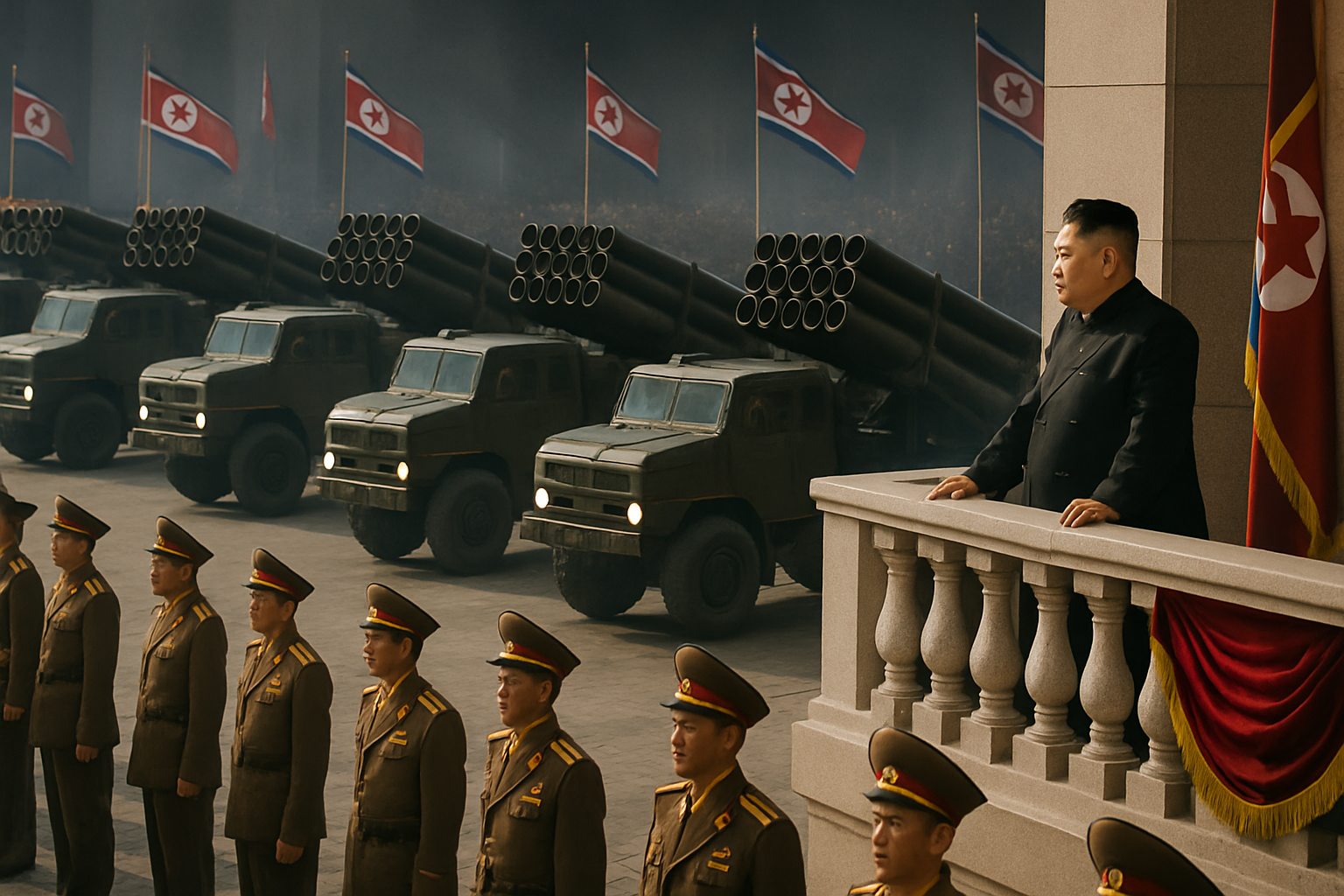
North Korean leader Kim Jong-un has unveiled a formidable array of nuclear-capable multiple rocket launchers in a dramatic display of military might, signaling a dangerous escalation in regional tensions as Pyongyang advances its weapons program ahead of a crucial Workers' Party Congress.
At a ceremony held Wednesday, Kim oversaw the formal unveiling of massive 600mm multiple rocket launcher systems capable of firing nuclear warheads, according to state media reports. The North Korean Central News Agency (KCNA) described the weapons system as "unique in the world" and "suitable for special attack missions," using terminology typically associated with nuclear operations.
Strategic Timing and Political Context
The weapons unveiling comes at a critical juncture, strategically timed before North Korea's upcoming Workers' Party Congress - the first major political gathering since January 2021. This five-year gap represents the longest interval between congresses in recent North Korean history, heightening expectations for major policy announcements.
The timing appears deliberately calculated to strengthen Kim Jong-un's position ahead of the congress, where he is expected to outline five-year policy goals and potentially make significant announcements regarding succession planning. Recent intelligence from South Korea's National Intelligence Service has confirmed that Kim has formally designated his daughter Kim Ju Ae as his successor, marking an unprecedented female leadership transition in the dynasty's 78-year history.
Technical Capabilities and Military Implications
The newly revealed rocket launcher systems represent a significant advancement in North Korea's military capabilities. Intelligence assessments indicate these 600mm multiple rocket launchers can deliver nuclear warheads to targets across South Korea and potentially reach U.S. military installations in the region.
Kim Jong-un praised the weapons system during his speech, describing it as uniquely positioned for "strategic missions" - a euphemism consistently used by North Korean officials to reference nuclear weapons deployment. The systems were displayed in large formations, suggesting mass production capabilities that could fundamentally alter the regional security balance.
"This system is suitable for special attack missions, suitable for achieving strategic tasks"
— Kim Jong-un, via KCNA
Regional Response and International Concerns
The weapons demonstration has triggered immediate concern among regional allies and international observers. South Korean intelligence agencies are closely monitoring the developments as indicators of North Korea's resource allocation priorities and military modernization strategy.
The revelation comes amid broader regional tensions, including ongoing U.S.-Iran nuclear negotiations and the recent expiration of the New START treaty between the United States and Russia. UN Secretary-General António Guterres has warned that nuclear weapon use risks are "higher than at any time in decades," making North Korea's latest display particularly alarming.
Historical Context and Succession Dynamics
This latest weapons unveiling must be understood within the context of North Korea's evolving political landscape. The formal designation of Kim Ju Ae as successor represents a historic shift in dynastic continuity, requiring careful political positioning to ensure regime stability.
The demonstration serves multiple purposes: showcasing military strength to domestic audiences, projecting deterrent capabilities to regional adversaries, and establishing Kim Jong-un's credentials as a strong leader capable of advancing North Korea's strategic interests during a period of internal transition.
International Sanctions and Diplomatic Challenges
The weapons program advancement continues despite extensive international sanctions designed to curtail North Korea's nuclear and missile development. The display suggests Pyongyang has successfully maintained indigenous production capabilities while developing increasingly sophisticated delivery systems.
Regional powers including China, South Korea, Japan, and the United States face renewed challenges in addressing North Korea's weapons development through diplomatic channels. The timing of this revelation, coinciding with multiple global nuclear crises, complicates international efforts to strengthen non-proliferation frameworks.
Strategic Implications for Regional Security
The unveiling of nuclear-capable rocket systems fundamentally alters the strategic calculus on the Korean Peninsula. These weapons provide North Korea with enhanced first-strike capabilities and complicate defensive planning for South Korea and U.S. forces in the region.
Military analysts suggest the 600mm systems represent a new category of tactical nuclear weapons designed for regional conflicts rather than intercontinental deterrence. This development could lower the threshold for nuclear weapons use in potential conflicts, creating additional instability in an already volatile region.
Economic Priorities and Resource Allocation
The sophisticated weapons development occurs alongside North Korea's completion of major domestic projects, including a massive 50,000-unit housing construction program in Pyongyang's Hwasong Area. This dual approach demonstrates Kim Jong-un's strategy of maintaining military capabilities while providing tangible benefits to key constituencies in the capital.
The resource allocation toward advanced weapons systems, despite ongoing economic constraints and international sanctions, underscores the regime's prioritization of military strength over economic development - a calculation that may prove crucial for regime survival during the upcoming leadership transition.
Looking Ahead: Workers' Party Congress and Beyond
As North Korea prepares for its Workers' Party Congress, the weapons unveiling serves as a powerful demonstration of the regime's capabilities and intentions. International observers will closely monitor the congress proceedings for additional policy announcements and potential escalatory rhetoric.
The combination of advanced weapons development, succession planning, and major political gatherings creates a particularly volatile period for Korean Peninsula security. Success in managing these intersecting challenges will largely determine regional stability and the effectiveness of international diplomatic efforts.
The nuclear-capable rocket launcher unveiling represents more than a military demonstration - it constitutes a strategic message to both domestic and international audiences about North Korea's determination to advance its weapons program regardless of external pressure. As regional tensions continue to escalate, the international community faces renewed urgency in developing effective responses to North Korea's evolving nuclear capabilities.