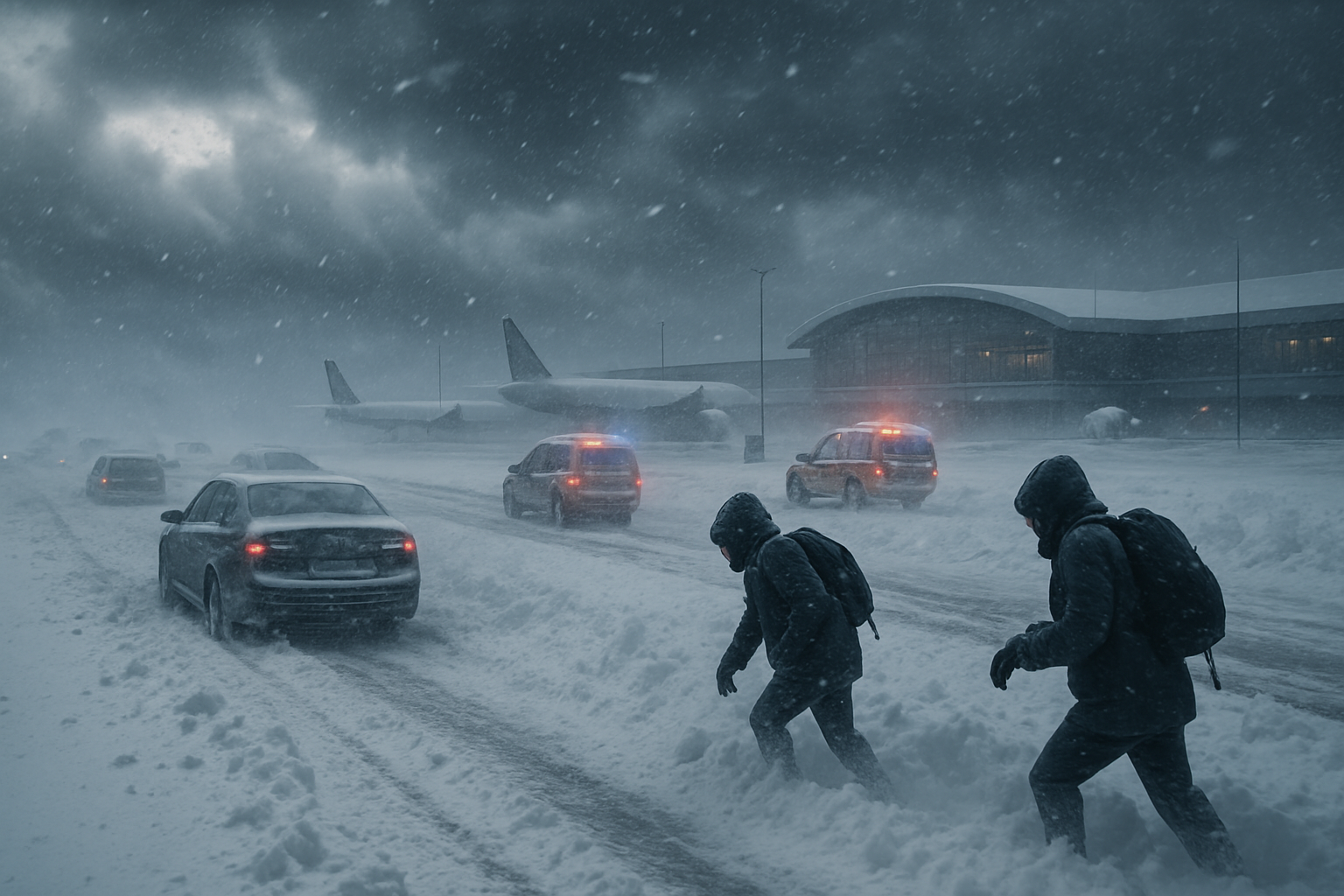
A catastrophic winter storm dubbed "Hernando" has paralyzed the northeastern United States, dumping up to 60 centimeters of snow across major metropolitan areas and forcing authorities to declare states of emergency from Maryland to Massachusetts as millions of Americans brace for what officials are calling the worst blizzard in a decade.
New York City Mayor Zohran Mamdani declared a state of emergency on Sunday evening, implementing a citywide travel ban effective from 9:00 PM Sunday through noon Monday. The unprecedented measure prohibits all non-essential vehicle traffic, including cars, trucks, motorcycles, and even bicycles, leaving streets clear for emergency services and the city's 700 salt-spreading machines.
"This storm represents a magnitude we have not experienced in the last decade," Mayor Mamdani warned during a press briefing. "We are taking all necessary measures to protect the safety of New York's 8 million residents and ensure our emergency response capabilities remain intact."
Massive Transportation Disruption
The aviation industry has been hit hardest by Storm Hernando, with over 5,000 flights cancelled across major northeastern airports. John F. Kennedy International Airport, LaGuardia Airport, and Newark Liberty International Airport have implemented severe flight restrictions, stranding thousands of passengers.
International carriers have also felt the impact, with flights to and from Dublin, Ireland cancelled as the storm system disrupts transatlantic routes. Multiple flights between Jamaica's Sangster International Airport and U.S. cities including New York have been cancelled or delayed, affecting Caribbean tourism during the peak winter season.
Broadway shows were cancelled Sunday evening for the first time in recent memory due to weather conditions, demonstrating the storm's unprecedented impact on the city's cultural life. The Metropolitan Transportation Authority suspended all subway service to New Jersey, cutting critical commuter links between the two states.
Emergency Response and Public Safety
New York State Governor Kathy Hochul declared a statewide emergency, coordinating with federal authorities and neighboring states to manage the crisis. Thirteen New York City schools have been converted into warming centers to shelter vulnerable populations during the storm.
The National Weather Service issued blizzard warnings from Maryland through southeastern New England, with Boston projected to receive between 30-60 centimeters of accumulation. Wind gusts exceeding 100 kilometers per hour have created near-zero visibility conditions, making travel extremely dangerous.
Emergency services have positioned additional resources throughout the region, with thousands of power crews pre-positioned to respond to expected outages. In New Jersey, thousands of residents are already without electricity as heavy snow and ice damage transmission lines.
Regional Impact and School Closures
The storm has forced the closure of hundreds of schools across the Northeast, affecting millions of students. Public transportation systems in multiple states have suspended operations, while alternate-side parking rules remain suspended in New York City to facilitate snow removal operations.
The economic impact is already mounting, with businesses forced to close and supply chains disrupted. The timing of the storm during the workweek has compounded its effects, as millions of workers face impossible commutes or are forced to work remotely.
"We are seeing conditions that exceed our infrastructure's design parameters. This is not just about snow removal – it's about maintaining essential services during an extreme weather event."
— Emergency Management Official, Northeast Region
Climate Context and Historical Significance
Storm Hernando occurs in the broader context of increasingly volatile weather patterns. Despite January 2026 being confirmed as the hottest month on record globally – the 18th consecutive month exceeding 1.5°C above pre-industrial levels – the storm demonstrates how climate change can enable both extreme heat and severe winter conditions through disruptions to the polar vortex.
This weather pattern paradox has been observed across multiple continents, with Europe simultaneously experiencing devastating flooding and avalanches that have claimed over 30 lives in Portugal, Spain, and France throughout February. The phenomenon illustrates how global warming can override natural cooling patterns while enabling extreme regional weather events.
International Implications
The storm's impact extends beyond U.S. borders, affecting international travel networks throughout the Caribbean and Europe. Tourism-dependent Caribbean economies face significant revenue losses during peak February travel periods, as major hub airports remain closed or severely restricted.
European weather authorities are monitoring the storm system for potential transatlantic effects, as similar extreme weather patterns have recently devastated multiple European nations, requiring unprecedented international emergency response coordination.
Recovery and Long-term Implications
Recovery operations are expected to take days or potentially weeks, with full infrastructure damage assessment pending. The storm represents a critical test of the Northeast's emergency preparedness capabilities and infrastructure resilience in an era of increasingly frequent extreme weather events.
Transportation authorities have prioritized safety over service restoration, advising residents to avoid unnecessary travel and monitor official weather warnings. The comprehensive nature of the emergency response, including the first citywide travel ban in New York City in recent memory, underscores the storm's historic severity.
Climate scientists warn that such extreme weather events are likely to become more frequent as atmospheric patterns continue to shift. The February 2026 winter storm crisis may prove to be a watershed moment, forcing fundamental reconsideration of infrastructure design and emergency preparedness for an era of permanent climate volatility.
As Storm Hernando continues to batter the Northeast, millions of Americans remain under emergency advisories, with authorities emphasizing that public safety takes precedence over economic concerns. The full scope of the storm's impact will likely not be known for several days as recovery operations begin and the true extent of infrastructure damage becomes apparent.